
You don’t need a big budget or a fancy studio to get the perfect sound. Many musicians find it hard to capture their live sound digitally. But, the right tools can make a huge difference. This beginner guide makes it easy to get studio-quality sound from home.

Knowing how different gear affects your sound is key to clear tones. By picking the right equipment, you can control your mix and save time. Our Best Microphones for Recording Guitar Amps (Beginner Guide) gives you the basics to start confidently.
Key Takeaways
- Learn to capture professional tones without expensive studio gear.
- Understand the fundamental differences between dynamic and condenser models.
- Discover how microphone placement drastically alters your final sound.
- Save time by choosing the correct equipment from the start.
- Gain the confidence to produce high-quality tracks in any home environment.
Understanding the Basics of Guitar Amp Recording
If you’re new to home recording, learning to mic an amp is key. Getting a pro sound starts with choosing the right microphone. It’s important to know how different capsules handle sound waves, as this is crucial for any beginner guide.
Dynamic microphones are top picks for electric guitar cabinets. They can handle loud sounds without getting distorted. This makes them reliable for loud amps. They give a strong, focused sound that works well in busy mixes.
Condenser microphones, on the other hand, are very sensitive and pick up more detail in high frequencies. Ribbon microphones are also liked for their natural, warm character. They soften harsh treble sounds. The right choice depends on the tone you aim for.
| Microphone Type | Best For | Key Strength |
|---|---|---|
| Dynamic | Loud Amps | High SPL Handling |
| Condenser | Clean Tones | Detailed Clarity |
| Ribbon | Vintage Warmth | Natural Smoothing |
Choosing the right microphone is a creative choice that affects your final sound. By trying out these types, you’ll find the perfect guitar tone for your music.
Dynamic vs. Condenser Microphones for Amps
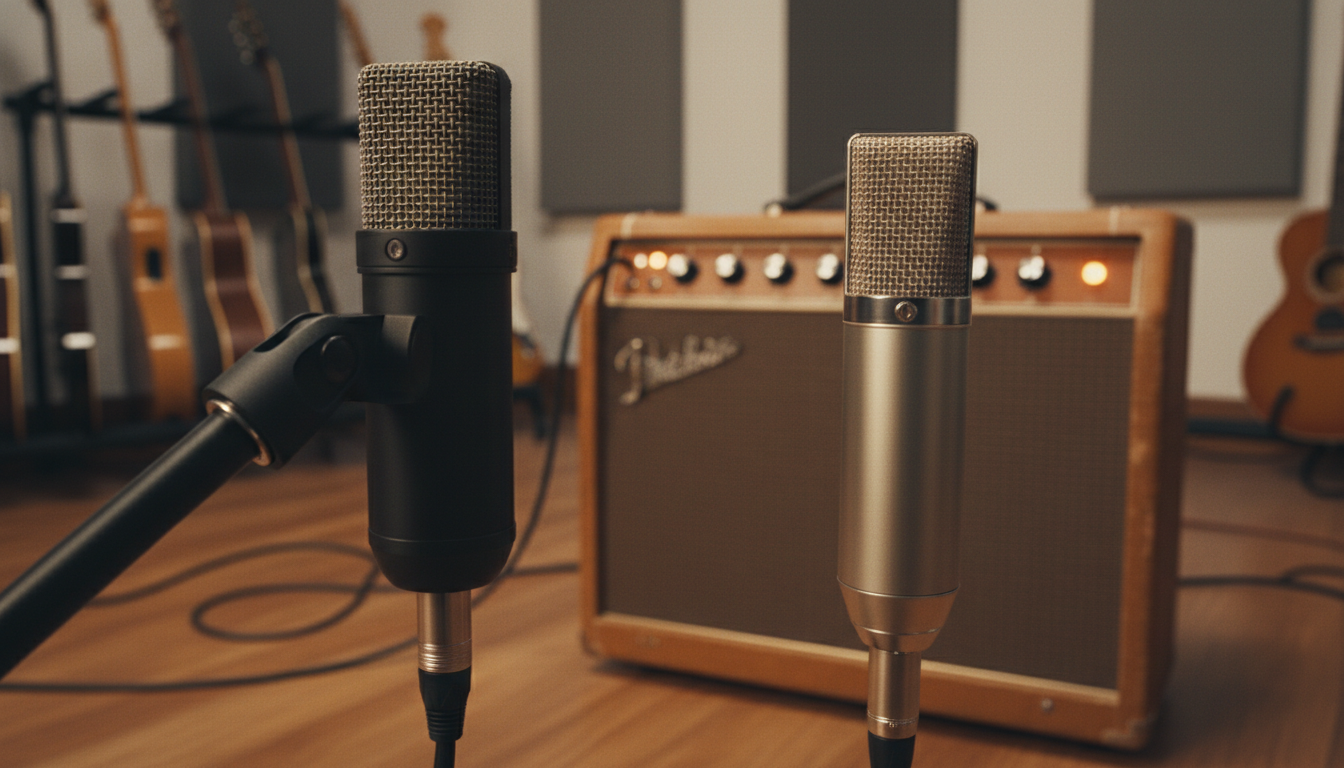
When you start recording electric guitars, picking between dynamic and condenser microphones is key. Choosing the right microphone isn’t just about cost. It’s about how the mic handles your amp’s sound pressure levels.
Dynamic recording microphones are top picks for guitar cabinets. They’re tough and can handle loud sounds without losing quality. Their sound focuses on the mid-range, making your guitar stand out in a busy mix.

Condenser microphones, on the other hand, pick up a wider range of sounds. They’re super sensitive and catch details that dynamic mics might miss. But, they need extra care to avoid harsh sounds when recording loud sources.
So, choosing the right microphone depends on the sound you want. Many engineers like dynamic guitar amp microphones for their bold sound. But, adding a condenser mic can add a touch of high-end clarity, making your recordings sound more professional.
| Feature | Dynamic Microphone | Condenser Microphone |
|---|---|---|
| Durability | High (Rugged) | Moderate (Fragile) |
| Sensitivity | Low | High |
| Best Use | Loud Amps | Room/Detail |
| Frequency Focus | Mid-range | Full Spectrum |
Best Microphones for Recording Guitar Amps (Beginner Guide)
Starting your recording journey? Choosing the right gear is key. Our Best Microphones for Recording Guitar Amps (Beginner Guide) highlights tools that offer great sound and easy use. This way, you can focus on playing, not fixing tech problems.
Many beginners make the mistake of buying cheap, low-quality gear. This gear often can’t capture your amp’s true sound. Instead, invest in proven equipment for clear, punchy recordings. This choice adds long-term value to your home studio.
We’ve picked the most reliable options for you. These best microphones for recording guitar amps are top choices for a reason. They’re durable for daily use and clear for professional-sounding tracks.
Choosing the right microphone is crucial for your creative process. Starting with quality gear helps you avoid common frustrations. You’ll find these picks make recording rewarding and efficient.
Shure SM57 Dynamic Microphone
Starting your recording microphones collection? The Shure SM57 is a must-have. It’s famous for capturing the raw energy of electric guitars.
Overview
The Shure SM57 is known for its rugged build and clear sound. It’s a favorite in both professional studios and home setups. It’s perfect for beginners who want quality without spending a lot.
“The SM57 is the workhorse of the audio industry; it is nearly impossible to find a studio that doesn’t have at least one.”
Pros
This mic is incredibly durable. It can handle drops and loud guitar cabinets.
- Affordable price for all budgets.
- Consistent sound with different amplifiers.
- Compact design fits in tight spaces.
Cons
It has some downsides. Some find the presence peak in the upper-mid frequencies too harsh.
It also lacks the deep, natural low-end warmth of more expensive mics. But, this harshness can be what a mix needs to stand out.
Features
The SM57 has a tight cardioid polar pattern. This helps block out room noise. Its frequency response is designed to highlight electric guitar frequencies.
| Feature | Specification | Benefit |
|---|---|---|
| Transducer Type | Dynamic | No phantom power needed |
| Polar Pattern | Cardioid | Excellent off-axis rejection |
| Frequency Range | 40Hz – 15kHz | Captures guitar punch |
| Max SPL | High | Handles loud cabinets |
Sennheiser e609 Silver Dynamic Microphone
The Sennheiser e609 Silver is a top pick for best microphones for beginners. It offers professional sound quality without the complexity. This dynamic microphone has a unique sound that stands out from the usual.

Overview
The e609 is made for guitar cabinets. It has a clever side-address capsule. This lets you hang the mic over your amp using the cable.
Its flat design ensures consistent placement. This results in a natural sound that captures your guitar’s true tone.
Pros
Setting up the e609 is easy. You don’t need a big boom stand, saving space in small rooms.
- It has great off-axis rejection for a clean signal.
- Its flat profile is ideal for tight spaces.
- It’s built to last, perfect for years of studio use.
Cons
The e609 is great for beginners, but it has a unique sound. If you prefer the classic “bite” of other mics, you might find it too smooth.
Its side-address design takes some getting used to. You need to make sure the capsule is right to avoid phase issues.
Features
The e609 has features that help guitarists get a great sound fast. Its super-cardioid polar pattern focuses on the amp, ignoring room noise.
| Feature | Specification | Benefit |
|---|---|---|
| Transducer Type | Dynamic | Rugged and reliable |
| Polar Pattern | Super-cardioid | High isolation |
| Frequency Response | 40Hz – 18kHz | Full range capture |
| Connection | XLR | Standard compatibility |
Audix i5 Instrument Microphone
Many guitarists see the Audix i5 as a top choice for recording guitar amps. It’s known for its durability and clear sound. This mic can handle loud cabinets well, giving a clean signal that captures your performance’s true essence.
Overview
The Audix i5 is a go-to in studios for its versatility. It’s built to give a balanced frequency response. This means your guitar tracks will sound great in any mix, whether you’re playing heavy riffs or soft acoustic pieces.
Pros
- Exceptional SPL handling lets you record loud without distortion.
- Its all-metal build means it lasts for years, even with heavy use.
- It’s also very affordable compared to other top mics.
Cons
Some users find the high-end sound a bit too sharp, depending on the amp. You might need to play around with placement to get the right tone. The unique shape can also make it hard to place on some amp grilles.
Features
This mic has a cardioid polar pattern to cut out room noise. Its frequency response focuses on mid-range, where guitars sound best. As a top pick for recording guitar amps, it’s a must-have for anyone serious about studio quality.
Royer R-10 Ribbon Microphone
Modern ribbon technology has made the Royer R-10 a go-to for recording. It’s a great addition to any setup, offering a unique sound. It’s known as one of the best microphones for recording guitar amps for its smooth, vintage vibe.
Overview
The Royer R-10 is a passive ribbon mic made for today’s studios. It’s tough, unlike old ribbons, and can handle loud sounds. It captures the guitar’s natural warmth without the harshness of other mics.
Pros
- Delivers a natural and smooth high-frequency response.
- Built to withstand high volume levels from loud guitar amplifiers.
- Compact design allows for easy placement in tight studio spaces.
- Internal shock mounting reduces unwanted vibrations and handling noise.
Cons
The ribbon element is delicate and needs careful handling. Avoid direct air blasts or strong gusts. It’s a figure-8 pattern mic, so it picks up sound from both sides.
Features
This mic uses a high-quality transformer for a clean signal. It’s great for taming harsh high-end frequencies. The table below shows how it stacks up against other mics.
| Microphone Type | Sound Character | Best Use Case |
|---|---|---|
| Ribbon (R-10) | Warm, Smooth | Electric Guitar Amps |
| Dynamic | Punchy, Focused | Live Stage/Close Miking |
| Condenser | Bright, Detailed | Acoustic Instruments |
Essential Microphone Placement Techniques
Getting the right microphone placement is key to shaping your guitar’s sound before mixing. Your gear choice is important, but where you place the mic affects sound waves. Moving the mic a few inches can change your track’s sound a lot.
On-Axis Positioning for Brightness
Pointing the mic straight at the speaker cone is called on-axis positioning. This method captures a clear and bright sound from your cabinet. It’s great for making your sound cut through a busy mix.
If your sound feels too dark, try moving the mic closer to the dust cap. This will make your sound clearer. It’s a common microphone placement for amp recording for clean tones and lead lines.
Off-Axis Positioning for Warmth
For a softer sound, try angling the mic away from the center. This off-axis method softens high frequencies and brings out the speaker’s warmth. It makes your sound smoother and more natural, perfect for rhythm guitar.
Adjusting the mic’s angle can help balance your sound. Even a small change can reduce harshness from high-gain amps. This method helps achieve a balanced sound without needing digital EQ plugins.
Distance Miking for Room Ambience
Capturing the interaction between your amp and the room can create amazing sound. Distance miking involves placing a second mic far from the cabinet to record room reflections. This adds depth and realism to your sound.
When mixing this signal with your main mic, check for phase alignment. This ensures your low end stays tight. Using this technique can make your guitar tracks sound professional and three-dimensional.
Managing Phase and Room Acoustics
Even the best microphone setup for guitar amps can fail if you ignore the basic physics of sound. When using more than one microphone, they must work together. If not, your guitar tone will sound hollow or weak.
Understanding Phase Cancellation
Phase cancellation happens when two microphones capture the same sound at slightly different times. This causes some frequencies to cancel out, leading to a thin, anemic sound. Moving one microphone a bit closer or further from the speaker can often fix this.
The proximity effect also plays a big role. Placing a microphone close to the amp boosts bass frequencies. But, it can make the low end muddy if not managed well.
Treating Your Recording Space
Your room is part of your instrument when recording. Unwanted reflections from hard surfaces can make your sound messy. Proper microphone placement for amp recording is easier in a controlled environment.
You don’t need a professional studio for great results. Simple things like heavy blankets, acoustic foam panels, or a thick rug can help. These changes can make your sound tighter and more focused.
| Acoustic Issue | Common Symptom | Recommended Solution |
|---|---|---|
| Phase Cancellation | Thin, hollow tone | Adjust mic distance |
| Room Reflections | Muddy or “boxy” sound | Add absorption panels |
| Proximity Effect | Excessive bass buildup | Move mic back slightly |
| Standing Waves | Uneven frequency response | Use bass traps in corners |
Troubleshooting Common Recording Issues
Fixing your signal chain is key for any home recording guitarist. Even top-notch gear can hit roadblocks. Use these tips for recording guitar amps to keep your workflow smooth and your sound professional.
Eliminating Unwanted Hum and Noise
Background noise often comes from simple electrical problems. First, check your cables for frayed shielding or bad connections. These are common causes of buzz.
If the hum won’t go away, make sure your guitar and amp are on the same power outlet. This avoids ground loops.
Also, look at your gain settings. High gain on pedals or amp heads can make noise worse. Try lowering your pedal outputs and increasing your interface volume for a cleaner signal-to-noise ratio.
Fixing Thin or Harsh Guitar Tones
A thin or harsh sound often means your mic is too close to the speaker cone’s center. The center produces the most aggressive, high-frequency sounds. Move the mic slightly away from the center toward the dust cap’s edge.
If the tone feels lacking in body, check the mic’s distance from the grille. Moving it back by an inch or two can add natural room resonance and warmth. These tips for recording guitar amps help balance your distortion’s bite with the needed low-end weight.
Lastly, watch out for phase issues if you’re using more than one mic. If the sound becomes hollow or disappears when you mix signals, try flipping the phase switch on your preamp. Small mic placement tweaks can make a big difference in your mix.
Conclusion
Capturing the perfect tone is a rewarding journey. It combines technical skill with creative vision. You now have the knowledge to pick the right guitar amp microphones for your needs.
Great recordings come from trying out different gear and positions. These tips are a starting point for your unique sound. Trust your ears to find the perfect spot in your room.
Every session is a chance to improve and learn something new. Keep exploring how your instrument and the space around it interact. Your journey to professional-sounding tracks begins with the next take you record.
Share your progress with other musicians for new insights. Building a reliable collection of guitar amp microphoneswill benefit every project. Use these tips to take your music to the next level today.
FAQ
What are the best microphones for recording guitar amps for a beginner?
For beginners, the Shure SM57 is top-notch. It’s tough and can handle loud sounds. For a beginner guide, try the Sennheiser e609 for ease or the Audix i5 for a modern sound.
How does microphone placement for amp recording affect my final tone?
Where you place the mic is key. Pointing it at the speaker cone gives a bright sound. Moving it off-axis gets you a warmer tone. Try different spots to find the best sound without EQ.
Why should I choose a dynamic mic over a condenser mic for my guitar cabinet?
Dynamic mics are best for loud amps because they’re strong and handle high sound levels well. Condenser mics are more detailed but might not handle the loudness of a cranked amp.
What is the easiest microphone setup for guitar amps in a home studio?
The Sennheiser e609 is easy to set up. Just hang the mic cable over your amp for a simple setup. It saves space in a small studio.
Do you have any tips for recording guitar amps to avoid a thin or hollow sound?
Watch out for phase issues with multiple mics. Make sure they’re in sync or flip the phase to keep the sound strong.
Is the Royer R-10 suitable for a beginner guide to guitar amp microphones?
Yes, the Royer R-10 is great for beginners. It’s durable and smooth, perfect for taming harsh sounds. It’s a workhorse for guitar amps.
What are the best microphones for beginners who want to record both clean and heavy tones?
The Shure SM57 and Audix i5 are perfect for beginners. They handle both clean and heavy sounds well. They’re essential for any beginner’s collection.