
Mixing tracks well is key to a professional sound. Many producers face the challenge of muddy frequencies. These hide the true sound of their recordings.
Learning how to EQ electric guitar in Logic Pro for a clean & powerful tone is crucial. It helps your music shine on any speaker. Clarity and impact are what every studio aims for.
This guide will teach you how to shape your sound. We’ll look at key frequency ranges for better mixing. Soon, you’ll turn dull recordings into polished, radio-ready tracks with Logic Pro’s tools.
Key Takeaways
- Identify the core frequency ranges that define your instrument’s character.
- Use high-pass filters to remove unwanted low-end rumble effectively.
- Apply surgical cuts to eliminate harsh resonances without losing body.
- Boost high-mid frequencies to add presence and definition to your mix.
- Balance your processing to maintain a natural, authentic sound profile.
Preparing Your Electric Guitar Signal for Mixing
Your final mix starts with the signal you capture at the source. Before you start how to eq electric guitar in logic pro, make sure your input chain is set up right. A clean signal means less need for heavy processing later.
Setting Proper Gain Staging Before EQ
Gain staging is key to a professional sound. Aim for a healthy input level that avoids digital clipping. Always monitor your meters to keep your levels in check.
“The secret to a great mix is not in the plugins, but in the decisions made before the recording starts.”
Consistent levels prevent unwanted distortion. This step helps your electric guitar tone tips stand out during mixing.
Choosing the Right Amp Designer or Pedalboard Settings
Logic Pro has powerful tools for sound shaping. With Amp Designer, mic placement greatly affects the sound. Moving the mic closer to the speaker increases focus and bite.
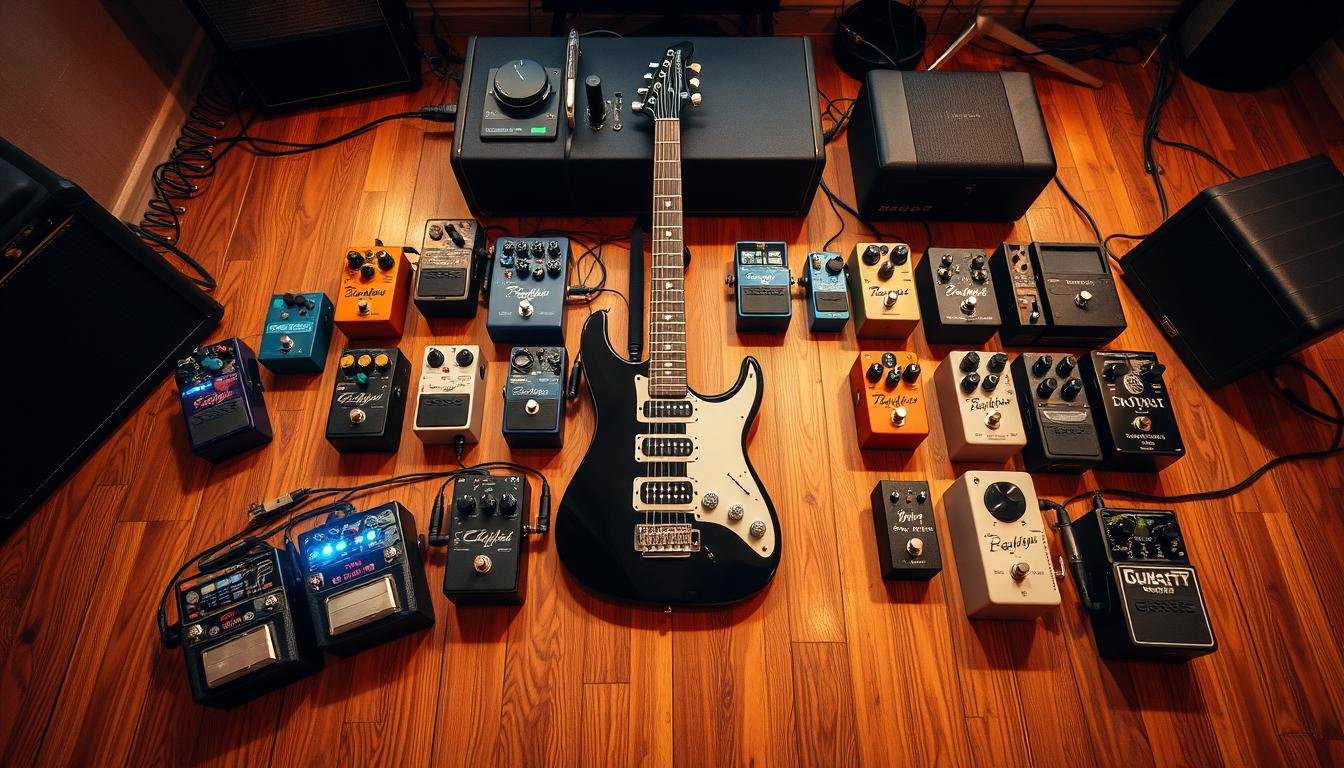
Try different mic positions to find the right tone. If using a pedalboard, balance your drive and modulation effects before hitting the virtual amp. This avoids a muddy or compressed sound.
The Importance of Phase Alignment in Multi-Mic Setups
Using multiple microphones adds depth to your sound. But, it risks phase cancellation, making your guitar sound thin. Phase alignment is critical when mixing these signals.
To keep your tracks strong, follow these tips:
- Check for phase issues by flipping the polarity on one of your tracks.
- Zoom in on your waveforms to ensure the peaks and valleys align.
- Use a phase alignment plugin if manual adjustment feels too tedious.
Mastering these electric guitar tone tips sets up a professional mix environment. Proper preparation is key to confidently how to eq electric guitar in logic pro with clarity.
Understanding the Logic Pro Channel EQ Interface
Starting your journey to a better guitar mix means diving into the Channel EQ interface. To effectively how to eq electric guitar in logic pro, you need to understand the tools at your disposal. This interface is made for precise adjustments on every track.

Navigating the Frequency Spectrum for Guitars
The electric guitar’s sound ranges from 82 Hz to 5 kHz. The low notes are in the lower end, while the essential harmonicsare in the higher frequencies. Knowing this helps avoid too much low-end in your mix.
Visualizing these frequencies helps you decide where to make cuts or boosts. A good logic pro eq tutorial will tell you to trust your ears. Focus on the core range to get your guitar right in the mix.
Utilizing the Analyzer to Identify Problematic Resonances
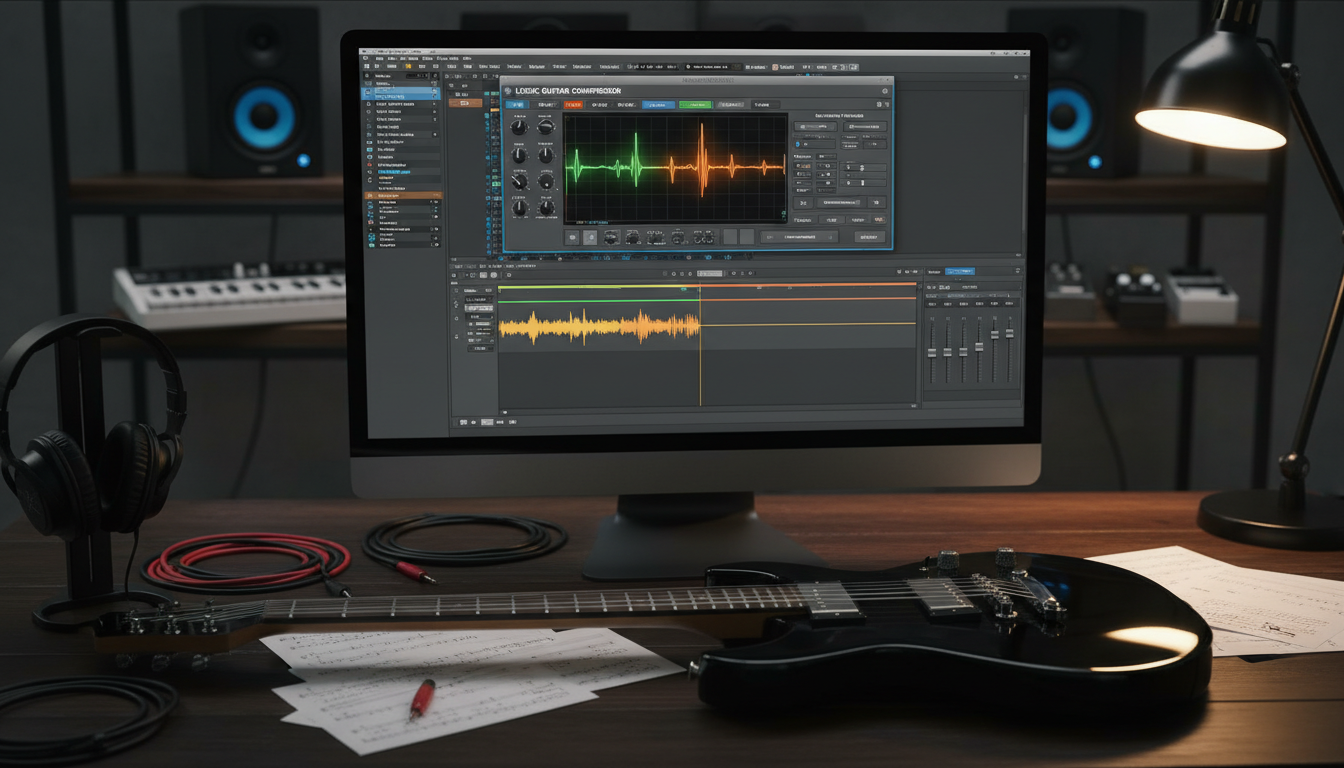
The analyzer is great for finding harsh frequencies in your recording. A sharp spike on the display means a resonant frequency that sounds bad. You can quickly fix these peaks to improve your tone.
Using the analyzer lets you clean up your signal without guessing. Just hover over the peak to see the exact frequency and apply a narrow cut. This logic pro guitar equalization guide suggests using this tool to remove boxiness or harsh metallic ringing.
Switching Between Minimum Phase and Linear Phase Modes
Logic Pro has two EQ modes: Minimum Phase and Linear Phase. The right choice depends on your mixing needs. Most of the time, the default mode is perfect for standard adjustments.
| EQ Mode | Best Use Case | Phase Response | Latency |
|---|---|---|---|
| Minimum Phase | General tone shaping | Natural | Low |
| Linear Phase | Mastering/Parallel | Perfect | High |
| Natural Phase | Analog emulation | Balanced | Medium |
Minimum Phase is the go-to for most guitar tracks because it sounds natural with low latency. But for complex parallel processing, Linear Phase mode keeps phase integrity. Always think about timing when switching between these modes.
How to EQ Electric Guitar in Logic Pro (Clean & Powerful Tone)
If you want to know how to eq electric guitar in logic pro (clean & powerful tone), you’re in the right spot. This logic pro eq tutorial teaches you key techniques to refine your recordings. By cleaning up the sound, your guitar will stand out in a crowded mix.
Applying High-Pass Filters to Remove Mud
Guitar recordings often have unwanted low-end rumble. This “mud” can hide your instrument’s sound and clash with bass or kick drum. Use a high-pass filter to cut frequencies below 70Hz and make your sound tighter.
Try raising the filter to 100Hz if your guitar is busy. Always listen in context to avoid losing the instrument’s body. A clear low end is key to a strong mix.
Managing Low-Mid Buildup for Clarity
Next, tackle the low-mid range, between 200Hz and 400Hz. This area can get crowded, making your sound “boxy” or “hollow.” Use a narrow Q setting for a gentle cut to clear these frequencies.
By reducing this buildup, your guitar’s natural sound will shine through. This is a crucial logic pro eq setting for guitarthat works across genres. Small tweaks here can make a big difference in clarity.
Enhancing Presence Without Harshness
After fixing the low end and midrange, you might want to boost your guitar’s presence. The 2kHz to 5kHz range is where pick attack and string definition are found. A slight boost here can help your guitar cut through a busy mix.
But be careful not to overdo it, as too much boost can be harsh. Opt for a wide bell curve for a natural lift, not a sharp spike. Here’s a quick guide for your EQ adjustments:
| Frequency Range | Action | Result |
|---|---|---|
| Below 70Hz | High-Pass Filter | Removes mud and rumble |
| 200Hz – 400Hz | Subtractive Cut | Reduces boxiness |
| 2kHz – 5kHz | Gentle Boost | Increases presence |
| Above 8kHz | High Shelf | Adds air and sparkle |
Sculpting the Clean Guitar Tone
Creating a clean guitar tone is like a work of art. It’s all about finding the right balance between warmth and clarity. In your DAW, aim to keep your instrument’s natural sound while adding a professional touch. Getting a great logic pro clean guitar tone needs a careful approach and a clear idea of your mix.
Boosting the Air Frequencies for Sparkle
To make your guitar sound like it’s from a top studio, focus on the high frequencies. A small high-shelf boost around 10kHz adds a lovely air and openness. This trick makes your guitar sound great in the mix without being too harsh.
Controlling Dynamic Peaks with Surgical Cuts
Some notes or resonances can stand out too much. Use logic pro eq settings for guitar to find these trouble spots with the analyzer. Then, use a narrow Q-factor for precise cuts. This method tames harsh peaks while keeping the rest of the sound intact.
Balancing the Fundamental Frequencies
The heart of your sound is in the lower frequencies. For clean tones, a boost around 80Hz by +2 to +4 dB adds warmth and depth. This tweak makes your guitar sound full and solid, giving your mix a strong foundation.
Achieving a Powerful and Punchy Guitar Sound
Turning a thin guitar sound into a strong, aggressive mix is key for any modern mixer. To get a logic pro powerful guitar tone, you need to mix energy with clarity. This means paying close attention to how your frequencies work together in a full mix.

Adding Weight in the Low-Mids
The low-mid range, between 200Hz and 400Hz, gives your guitar its body. If it sounds too thin, a small boost here can add the necessary thickness. But, don’t overdo it, as too much can make the mix muddy.
Using Mid-Range Emphasis for Cutting Through the Mix
To make your guitar pop out, focus on the upper-midrange. Boosting around 3kHz by +3 to +6 dB adds edge and bite. This logic pro guitar tone shaping trick helps your guitar shine without raising the overall volume.
- Focus on 3kHz: This is the sweet spot for adding definition and aggressive character.
- Use a wide Q: A broader bell curve often sounds more natural than a narrow, surgical cut.
- Check the context: Always listen to the guitar alongside the lead vocal to ensure they aren’t fighting for the same space.
Managing High-End Harshness in Overdriven Tones
High-gain tones can have unwanted fizz or piercing sounds. Use a gentle high-shelf cut or a narrow notch filter in the 4kHz to 7kHz range. This smooths out peaks, keeping your sound aggressive yet pleasant and professional.
Advanced EQ Techniques for Electric Guitar
Professional guitar mixes often use advanced techniques beyond simple frequency balancing. These methods help you create a logic pro powerful guitar tone that really stands out. They offer more precision and creative control over your sound.
Using Mid-Side EQ to Widen Your Guitar Tracks
Mid-Side EQ is a game-changer for creating a massive stereo image. It lets you process the center and sides of your signal separately. Boosting high frequencies on the side channel makes your guitars feel wider and more immersive.
This technique is great for double-tracked guitars. It keeps the core of your performance solid while adding a professional polish. Using it in Logic Pro helps you achieve a logic pro powerful guitar tone that’s both intimate and expansive.
Automating EQ Changes for Different Song Sections
Static EQ settings don’t work for every part of a song. Automating your EQ lets you adjust the frequency response for different sections. For example, you might brighten the guitars during a chorus to make them cut through, then pull back the presence during a verse.
This dynamic approach keeps the listener engaged. It prevents the guitar from sounding repetitive or fighting with other instruments. Automation is the secret weapon for maintaining a consistent energy level from start to finish.
Parallel EQ Processing for Added Texture
Parallel EQ involves blending a heavily processed signal with your original, clean track. This method adds unique texture and depth that standard EQ can’t replicate. You can apply aggressive boosts to the parallel channel to bring out specific harmonics or grit.
By mixing this processed signal back in, you retain the natural character of your guitar while gaining extra punch. This technique is key for producers who want to craft a logic pro powerful guitar tone that feels rich and layered. It adds a sophisticated flair that elevates your entire production.
Common Mistakes to Avoid When EQing Guitars
Even experienced producers can make mistakes when working on guitar tracks. It’s crucial to know what not to do. By following these electric guitar tone tips, you can keep your recordings full of life and impact.
Over-EQing and Losing Natural Character
One common mistake is over-processing a signal. Too many cuts or boosts can take away the natural character of the instrument. This can make your guitar sound thin or artificial.
Start with small adjustments. If you need extreme settings, think about changing your source tone or microphone placement. Don’t rely too much on heavy EQ.
Ignoring the Context of the Full Mix
It’s easy to focus too much on a single track while tweaking. But a guitar that sounds great alone might not fit well with other instruments.
Always think about the whole mix. If your guitar is too loud, use your logic pro guitar equalization guide to make space for other sounds.
Relying Solely on Visuals Instead of Your Ears
Modern software has great frequency analyzers, but they can be misleading. Relying only on what you see can lead to choices based on perfection rather than music.
Your ears are the best tool. Close your eyes and listen to how changes affect the emotional impact of the music. Trust your instincts. If it sounds good, it’s good, no matter what the graph shows.
Integrating EQ with Compression and Saturation
Mastering EQ, compression, and saturation is key to a polished mix. In a logic pro mixing guitar tutorial, you learn they work best together. Always start with a clean signal by using a gate or expander to remove noise.
EQing Before Versus After Compression
Where you place your EQ in the signal chain affects your sound. EQing before compression lets you shape the tone before leveling. It’s great for removing harsh frequencies.
EQing after compression fixes tonal shifts caused by compression. If compression makes your guitar sound dull, a high-shelf boost can restore sparkle. Try both positions to find what works best for logic pro guitar tone shaping.
Using Saturation to Complement EQ Adjustments
Saturation adds warmth and richness to your guitar tracks. When boosting high frequencies, the sound might become brittle. Adding saturation smooths out these edges and adds warmth.
Think of saturation as the glue that holds your EQ adjustments together. It fills in gaps, creating a natural, analog texture. This is great for overdriven or distorted guitar parts.
Creating Space for Vocals and Other Instruments
Your guitar tracks should support the song, not compete for attention. Use subtractive EQ to carve out space for vocals or snare drum. This makes the mix clear and balanced.
Compression also helps by keeping the guitar’s volume steady. This prevents it from overpowering other instruments. Use the table below to see how these tools improve your mix clarity.
| Processor | Primary Function | Impact on Mix |
|---|---|---|
| EQ | Frequency Balance | Removes mud and enhances clarity |
| Compression | Dynamic Control | Keeps levels steady and punchy |
| Saturation | Harmonic Depth | Adds warmth and perceived loudness |
Workflow Tips for Faster Guitar Mixing in Logic Pro
Mastering your workflow in Logic Pro lets you focus more on creativity and less on technical details. Being efficient is as crucial as quality in a professional studio. By adopting a few smart habits, you can cut down the time spent on repetitive tasks.
Creating and Saving Custom EQ Presets
Creating and saving custom EQ presets helps you quickly apply your favorite settings to new guitar tracks. This is great for maintaining a consistent logic pro clean guitar tone across different sessions. Just set your preferred settings, go to the preset menu, and save it for later use.
Using Track Stacks for Group EQ Processing
Managing multiple guitar layers can get complicated if you adjust each track separately. Track Stacks let you group your guitars and apply EQ to the whole group at once. This streamlined approach makes sure your rhythm guitars sound great together without extra adjustments.
Comparing Your Mix with Reference Tracks
Using professional reference tracks in your project is a reliable way to stay on track. By switching between your mix and a high-quality commercial song, you can spot any frequency balance issues. This method is key in any logic pro mixing guitar tutorial because it gives you a clear goal for your sound.
| Workflow Method | Primary Benefit | Time Saved |
|---|---|---|
| Custom EQ Presets | Instant Starting Points | High |
| Track Stacks | Group Consistency | Medium |
| Reference Tracks | Objective Accuracy | High |
Conclusion
Learning to EQ your electric guitar in Logic Pro is a big step for home studio producers. It turns raw recordings into tracks that grab listeners’ attention. This skill is key to making your music stand out.
Your ears are the most important tool in this process. Every guitar sound is unique and needs special tweaks to sound great. Trust your gut when adjusting frequencies and dynamics.
Regular practice helps you get better at EQing fast. Soon, you’ll know how to EQ your guitar in Logic Pro without thinking. This frees you up to focus on the music, not just the technical stuff.
Try out different settings on Apple plugins or tools from FabFilter or Waves. Share your music with others to get new ideas on your mix. Every session you do brings you closer to becoming a pro audio producer.
FAQ
Is there a comprehensive logic pro mixing guitar tutorial for beginners?
Yes, beginners should start with the Logic Pro Channel EQ and Amp Designer. This guide covers both the technical and creative aspects of EQ.
Where can I find the best logic pro eq settings for guitar?
Good EQ settings for guitar often include a high-pass filter at 80Hz and a small cut at 300Hz. A subtle boost at 3kHz adds clarity. You can also use the “Factory Presets” for different genres.
What are your top electric guitar tone tips for a muddy mix?
Use a “sweep” technique to remove mud. Boost a narrow band in the low-mids and then cut it by 3dB. Also, avoid too much gain on your amp sim.
How do I achieve a professional logic pro clean guitar tone?
For a clean tone, focus on the “Air” frequencies. Boost around 8kHz and control the 500Hz region for a glassy sound. Add a touch of compression after EQ for sustain.
What is the secret to a logic pro powerful guitar tone in rock music?
For a powerful tone, manage the mid-range. Boost around 1.2kHz and use a low-pass filter at 10kHz to avoid a fizzy sound.
Why should I follow a logic pro guitar equalization guide instead of just using presets?
A guide teaches you why certain frequencies matter. Presets don’t adapt to your guitar’s unique sound. Understanding frequency relationships helps fix specific problems.
What exactly is logic pro guitar tone shaping?
Tone shaping involves EQ, saturation, and amp modeling to change a guitar’s sound. It’s about carving space for other instruments and sculpting the guitar for the song’s mood.
Can you recommend a logic pro eq tutorial for mastering the analyzer?
The analyzer is a visual map in any EQ tutorial. Watch how peaks change with different chords. A consistent spike in the low-mids means it’s time for a cut.