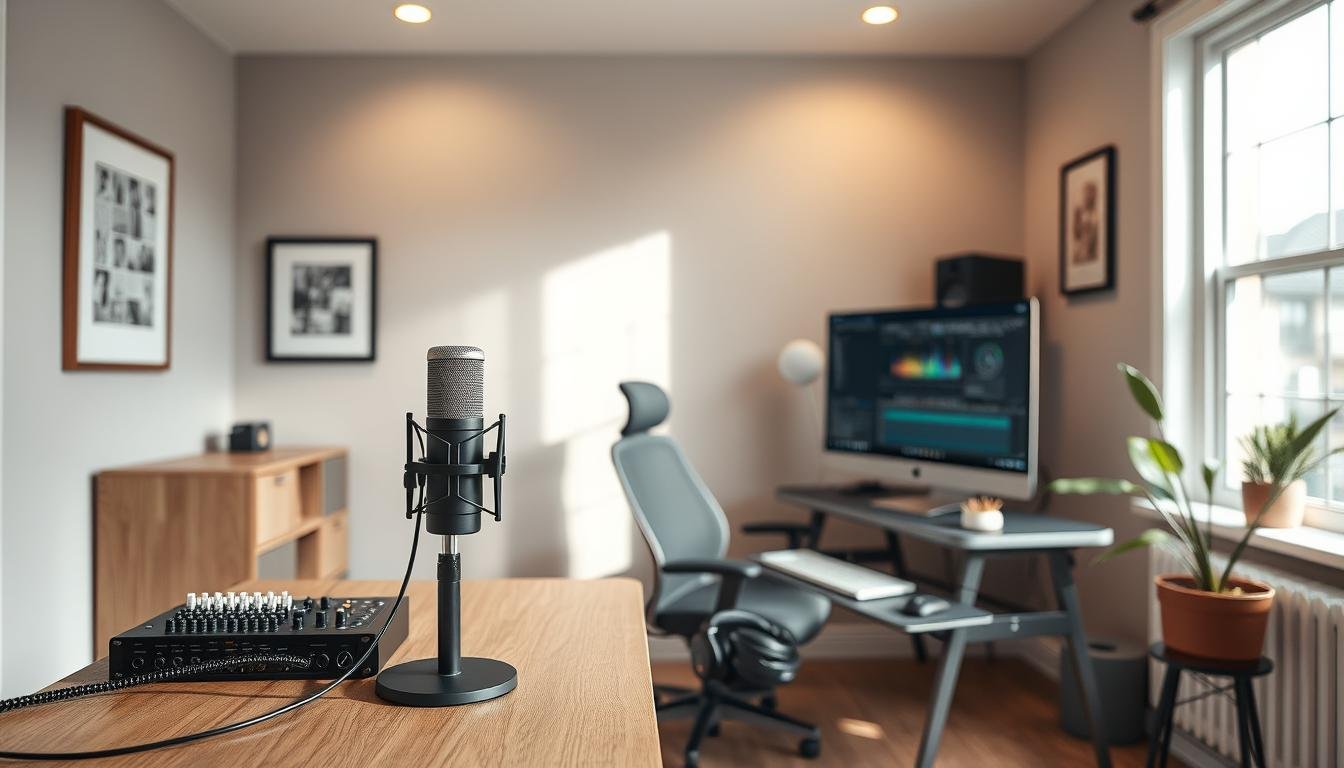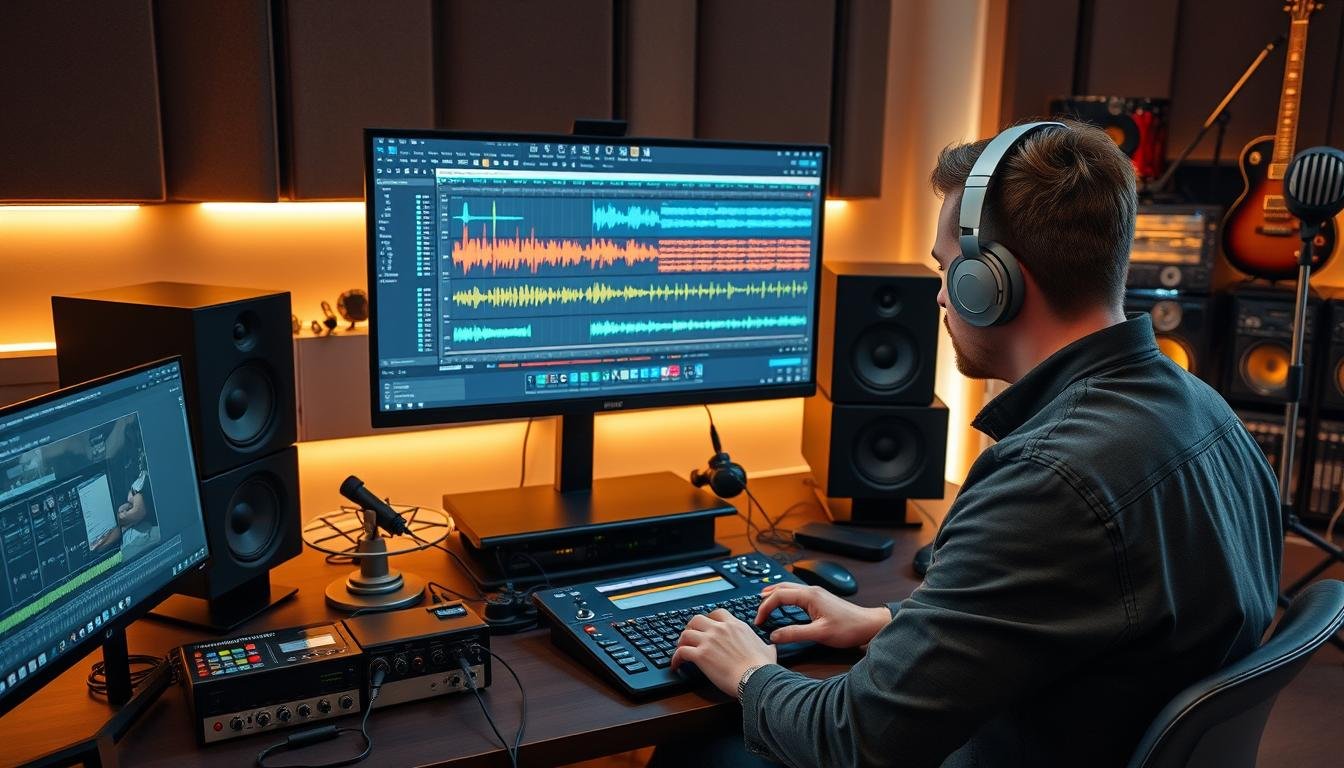


Capturing high-quality sound is key for music production or live shows. Microphone placement plays a big role in sound quality. The right spot can make vocals and instruments sound clear and full.

Whether you’re an experienced audio engineer or new, knowing vocal miking and instrument miking is vital. Good recording techniques depend on placing microphones correctly to get the best sound.
Key Takeaways
- Proper microphone placement is crucial for high-quality sound.
- Understanding vocal and instrument miking techniques is essential.
- Effective recording techniques rely on correct microphone positioning.
- Microphone placement can significantly impact the overall audio output.
- Capturing clear and rich sound is the goal of proper microphone placement.
Understanding Microphone Technology and Types
Knowing about microphone technology is key for top-notch sound in different recording spots. The type of microphone used greatly impacts the sound quality. So, picking the right one is very important.
Dynamic vs. Condenser Microphones
Dynamic microphones are tough and can handle loud sounds well. They’re great for drums and guitar amps. On the other hand, condenser microphones are more sensitive and capture a wider range of sound. They’re perfect for studio work.
Polar Patterns and Their Applications
Microphones have different polar patterns, like omnidirectional, cardioid, and figure-eight. The cardioid pattern is great for isolating sounds and cutting down background noise. Omnidirectional microphones pick up sound from all sides, ideal for capturing ambient sounds.
Frequency Response Considerations
The frequency response of a microphone shows how well it captures different sounds. A microphone with a flat response captures sound accurately. But, one with a tailored response might focus on specific sounds. Knowing this helps choose the right microphone for the task.
The Science Behind Sound Capture
Capturing high-quality sound is a complex process. It involves understanding sound waves and how they interact with microphones. The quality of sound captured depends on the microphone type and the acoustic environment.
How Sound Waves Interact with Microphones
Sound waves make a microphone’s diaphragm vibrate. These vibrations turn into electrical signals. The quality of sound captured is affected by how sound waves interact with the diaphragm. The direction and intensity of sound waves impact the microphone’s performance.
The Importance of Acoustic Environments
The acoustic environment is key in sound capture. The room or space where recording happens can affect sound quality. Things like reverberation time and reflective surfaces play a big role.
Reflection and Absorption Principles
Sound reflection and sound absorption are important in sound behavior. Sound reflection happens when sound wavesbounce off surfaces. Sound absorption occurs when sound energy is absorbed, reducing echoes. Knowing these principles helps improve the acoustic environment for sound capture.
Essential Equipment for Optimal Microphone Placement
To get the best sound, you need more than just to know where to put your mic. You also need the right tools. The quality of your recording depends a lot on the equipment you use.
Microphone Stands and Shock Mounts
Microphone stands keep your mic steady. Shock mounts help block out vibrations and handling noise. Together, they are key to getting clear, clean sound.
Pop Filters and Windscreens
Pop filters cut down on plosive sounds like “p” and “t,” stopping distortion. Windscreens reduce wind noise when you’re outside. Both are vital for a smooth sound.
Acoustic Treatments and Isolation Shields
Acoustic treatments cut down on echo and reverberation. Isolation shields help block out more noise around your mic. This makes for a cleaner recording.
| Equipment | Purpose |
|---|---|
| Microphone Stands | Provide stability |
| Shock Mounts | Isolate from vibrations |
| Pop Filters | Reduce plosive sounds |
| Windscreens | Minimize wind noise |
| Acoustic Treatments | Control sound environment |
General Principles of Microphone Placement
To get the best sound, knowing how to place microphones is key. These basics help get a balanced and clear sound in different settings.
The 3:1 Rule Explained
The 3:1 rule is a simple but powerful guide for placing microphones. It says the distance between microphones should be at least three times the distance to the sound source. This rule helps avoid sound interference and gets a clearer sound.

Phase Coherence Considerations
When using multiple microphones, phase coherence is very important. Sound waves from different microphones can either add up or cancel each other out. To keep sound in sync, it’s crucial to position microphones carefully and adjust their timing.
Distance and Proximity Effect
The distance between a microphone and its source greatly affects the sound. The proximity effect makes low frequencies stronger when the microphone is close. Knowing how distance changes your recording can help you get the right sound.
Some key things to think about for microphone distance are:
- Close miking isolates the sound and reduces bleed.
- Distant miking captures natural room ambiance.
- Try different distances to find the best for your recording.
By understanding and using these microphone placement principles, you can greatly improve your recordings.
Microphone Placement Techniques for Vocals and Instruments
To get the best sound, it’s key to try out different ways of placing microphones for vocals and instruments. The right way can really improve your recordings.
Close vs. Distant Miking
Close miking means putting the mic close to the sound, just a few inches away. It’s great for getting a clear, strong sound, perfect for vocals and loud instruments. Distant miking, on the other hand, puts the mic farther away. This captures both the direct sound and the room’s ambiance, making the sound more natural and wide.
Choosing between close and distant miking depends on what sound you want and the type of instrument or voice. Close miking can cut down on sound from other instruments. Distant miking adds depth to the recording.
Stereo Recording Techniques
Stereo recording aims to create a wide, immersive sound. XY stereo uses two mics at a 90-degree angle for a broad soundstage. ORTF uses mics 17 cm apart for an even wider sound. These methods are great for recording groups, orchestras, and ambient sounds.
Multi-Microphone Setups
Using more than one mic can make the sound more detailed and rich. Multi-microphone setups involve placing several mics around the sound source. This method needs careful planning to avoid sound mixing issues. By mixing signals from different mics, engineers can create a complex, detailed sound that captures the full performance.
By mastering these microphone placement techniques, you can greatly improve your recordings of vocals and instruments. You’ll get a more professional and polished sound.
Vocal Microphone Placement Mastery
To record vocals that stand out, you need to know how to place your microphone. The right placement can greatly improve your vocal recordings. This is true for both lead and backing vocals.
Lead Vocal Techniques
For lead vocals, the microphone’s position is key. Start by placing it 6-8 inches from the singer’s mouth, a bit off-center. This helps avoid harsh sounds. Try different angles and distances to find the perfect tone.
Backing Vocal Arrangements
Backing vocals aim to blend well with the lead. Use a similar microphone and placement as the lead. For multiple backing vocalists, you can use one microphone or blend signals from multiple.
Addressing Plosives and Sibilance
Plosives and sibilance can be tough to handle in recordings. A pop filter can soften hard consonants. For harsh “s” and “t” sounds, adjust the mic or use a de-esser in your software.
| Technique | Description | Benefit |
|---|---|---|
| Off-center miking | Positioning the mic slightly off-center | Reduces plosive impact |
| Pop filter use | Using a pop filter between the singer and mic | Minimizes plosive sounds |
| De-essing | Adjusting mic placement or using software | Reduces sibilance |
Microphone Placement for String Instruments
Recording string instruments is all about finding the right spot for microphones. This is true for acoustic guitars, electric guitars, violins, violas, cellos, double basses, and harps. The correct placement can greatly enhance the sound.
Acoustic Guitar Miking Techniques
When recording acoustic guitars, where you place the microphone matters a lot. A mic near the sound hole brings out the bass. Moving it closer to the neck gives a brighter sound. Try different spots to find the perfect tone.
- Use a condenser microphone for a clearer sound.
- Play with polar patterns to get the sound you want.
Electric Guitar Amp Miking
Recording electric guitars means focusing on the amp miking. Where you put the microphone changes the sound a lot. Putting it right in front of the speaker gives a strong, clear sound.
Violin, Viola, and Cello Placement
Violins, violas, and cellos need careful microphone placement. A common spot is near the f-hole for a balanced sound.
Double Bass and Harp Considerations
Double basses sound best with a mic near the bridge or a clip-on. Harps need a mic to catch both string and soundbox sounds for a rich sound.
Key Considerations:
- Try different microphone spots to get the best sound.
- Think about the room’s acoustics and how it affects the recording.
Capturing Percussion and Drums Effectively
Recording drums and percussion needs the right microphone placement. This ensures we get the full sound of these instruments. We also want to reduce bleed and ambient noise.
Drum Kit Miking Strategies
To record a drum kit, we use a mix of microphones. This includes overhead, room, and close miking of specific drums. It helps capture the overall sound and each drum’s unique tone.
| Miking Technique | Description | Application |
|---|---|---|
| Overhead Miking | Captures the overall drum kit sound | Used for a balanced sound |
| Close Miking | Focuses on individual drums | Ideal for emphasizing specific drums |
| Room Miking | Captures the drum kit and room ambiance | Enhances the overall recording with spatial characteristics |
Individual Drum Microphone Placement
For each drum, where we place the microphone matters a lot. A mic close to the drumhead highlights the attack. Moving it back captures more of the drum’s resonance.
“The key to great drum sounds is experimentation and patience. Don’t be afraid to try different mic placements and techniques.” –
Legendary Recording Engineer
Percussion Instrument Techniques
Percussion instruments like congas, bongos, and tambourines need special miking. A dynamic microphone placed close to the instrument captures its unique tone and dynamics.

By using these drum miking strategies, engineers can capture the energy and detail of percussion and drums in their recordings.
Wind and Brass Instrument Miking Approaches
Capturing the rich tones of wind and brass instruments needs careful thought. These instruments bring a special touch to music recordings. Knowing how to mic them well is key for top-notch sound.
Saxophone and Clarinet Placement
For saxophones and clarinets, where you place the mic makes a big difference. Putting it near the bell brings out the low notes. But near the keys, it gets a brighter, more detailed sound. Try different angles and distances to find the right tone.
Trumpet and Trombone Techniques
Trumpets and trombones have a strong sound. Miking them right is important to avoid distortion. Try placing the mic off-axis to cut down on bleed and get a cleaner sound. For trombones, aim for the bell but not straight on to capture the full sound.
Flute and Woodwind Considerations
Flutes and other woodwinds have a soft sound. They need a miking method that catches their subtlety. A condenser mic is good for picking up these instruments’ details. Place the mic near the embouchure hole for a clear, detailed recording.
| Instrument | Miking Technique | Recommended Microphone |
|---|---|---|
| Saxophone | Near bell or keys | Dynamic or Condenser |
| Trumpet | Off-axis to bell | Dynamic |
| Flute | Near embouchure hole | Condenser |
Piano and Keyboard Instrument Techniques
Miking pianos and keyboards is an art that requires understanding their sound production. Each instrument, from grand pianos to harpsichords, has its own challenges and opportunities.
Grand Piano Miking Methods
Microphone placement is key for grand pianos. A common method is to place microphones inside, near the hammers. This captures the full resonance of the instrument. Try different mic positions to find the right tone.
Upright Piano Challenges
Upright pianos need a different approach due to their size. Place a microphone near the sound hole or use room miking. Be careful of the proximity effect to avoid a boomy sound.
Organ and Harpsichord Approaches
Organs and harpsichords require special miking techniques. Use both close and room miking to capture their rich tones. Recording engineer Bruce Bartlett says, “The goal is to get the full range of sound while cutting down on background noise.”
“The key to recording organs is to capture the instrument’s full frequency range while minimizing ambient noise.” – Bruce Bartlett
Understanding each instrument’s unique sound and using the right miking techniques can lead to excellent recordings. These recordings will truly showcase the beauty of these complex instruments.
Common Microphone Placement Mistakes to Avoid
Capturing great sound starts with avoiding common microphone placement errors. Even seasoned recording engineers can make mistakes. Knowing these pitfalls can greatly improve your recordings.
Positioning Errors and Their Solutions
One big mistake is placing the mic wrong. For vocals, being too close can make the sound harsh and too bassy. Try different mic distances and angles to find the right spot. For instruments, the mic’s position greatly affects the sound. For example, a mic near an acoustic guitar’s sound hole can sound boomy, while aiming at the neck can make it brighter.
- For vocals, keep the mic 6-8 inches away to avoid too much bass.
- For instruments, try different mic placements to get the best sound.
Dealing with Unwanted Room Reflections
Room reflections can mess up your recordings. Using acoustic treatment in your space can help. You can also use directional microphones and place them to block out room sounds.
Overcoming Bleed and Isolation Issues
Bleed happens when sound from one instrument or singer gets into another mic. To fix this, use isolation shields or carefully place your mics. For drums, using room mics along with close mics can balance the sound and cut down on bleed.
- Use isolation shields to lessen bleed between instruments.
- Position mics to catch less unwanted sound.
By knowing these common mistakes and how to avoid them, you can greatly improve your recordings.
Conclusion: Perfecting Your Microphone Placement Skills
Mastering microphone placement is key to making great recordings. You need to know about microphone technologyand how sound works. Also, learning about different instruments’ recording techniques is important.
Getting good at microphone placement takes practice and trying new things. You’ve seen how different microphones and methods can change your sound. Keep working on your skills by trying out new techniques and seeing what works for you.
With the right recording methods and microphone placement, you’re ready to make professional-sounding recordings. Whether it’s vocals, instruments, or a whole band, your skills will help you create top-notch audio. This is what the music industry looks for.
FAQ
What is the best microphone placement for recording vocals?
The best spot for a microphone to record vocals varies. It depends on the mic type and the sound you want. For a close and personal sound, place a condenser mic 6-8 inches from the singer’s mouth. Position it slightly off-center.
How do I reduce bleed when recording instruments?
To cut down on bleed, use smart mic placement. Place the mic close to the instrument. Use directional mics and keep the instrument away from other sounds.
What is the 3:1 rule in microphone placement?
The 3:1 rule helps with mic placement in recording. It says the distance between mics should be three times the distance to the sound source. This helps avoid phase issues.
How do I mic a drum kit for a balanced sound?
For a balanced drum kit sound, mix close and room miking. Start with mics on each drum. Then, add room mics to catch the kit’s overall sound.
What are some common microphone placement mistakes to avoid?
Avoid common mistakes like mic placement too close or far. Don’t ignore the mic’s polar pattern. Also, use acoustic treatments to manage room reflections.
How do I reduce plosives and sibilance when recording vocals?
To lessen plosives and sibilance, use a pop filter or windscreen. Adjust mic placement to minimize these issues.
What is the best way to mic a grand piano?
Mic a grand piano based on the sound you want and the recording space. A common method is to use a pair of mics inside the piano, near the soundboard. This captures the natural resonance.
How do I choose the right microphone for a specific instrument?
Pick a mic based on the instrument’s sound and the recording environment. For loud sounds like drums, use a dynamic mic like the Shure SM57. For detailed sounds like vocals, choose a condenser like the Neumann U87.