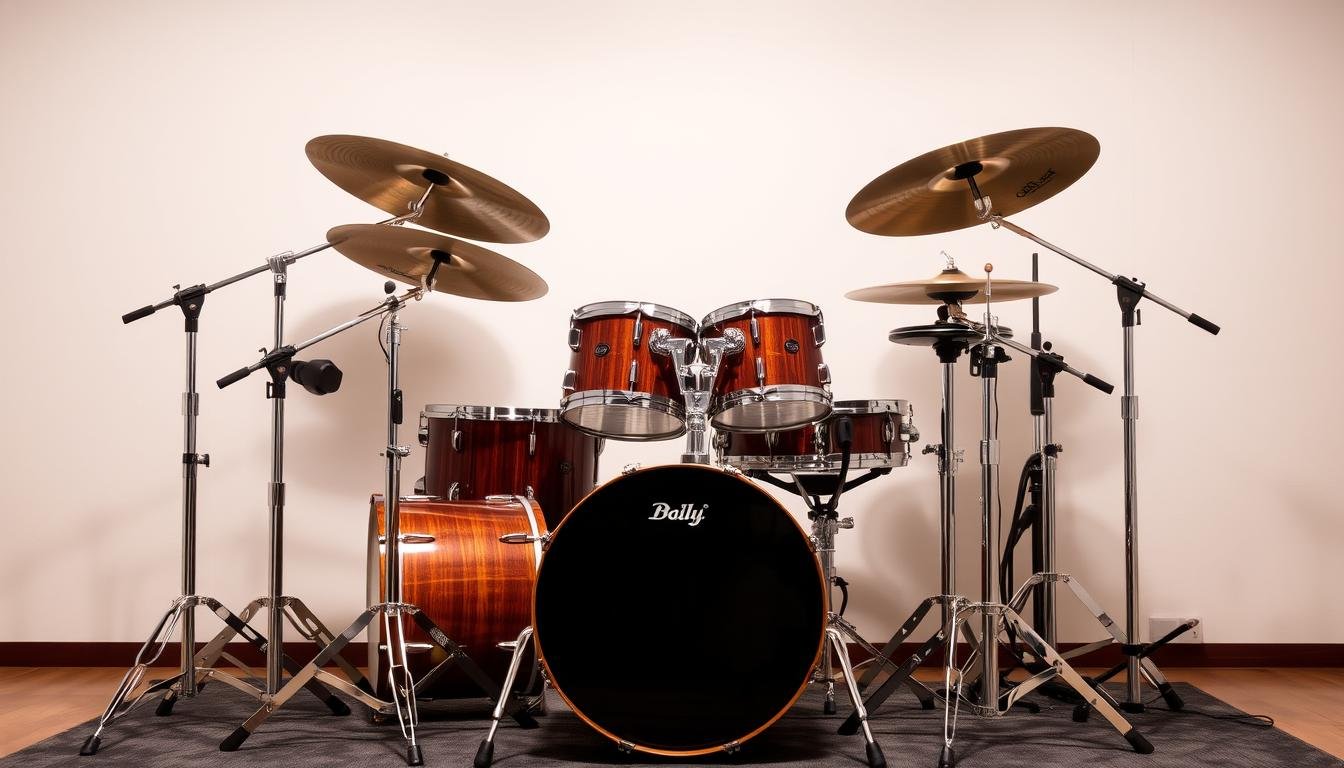

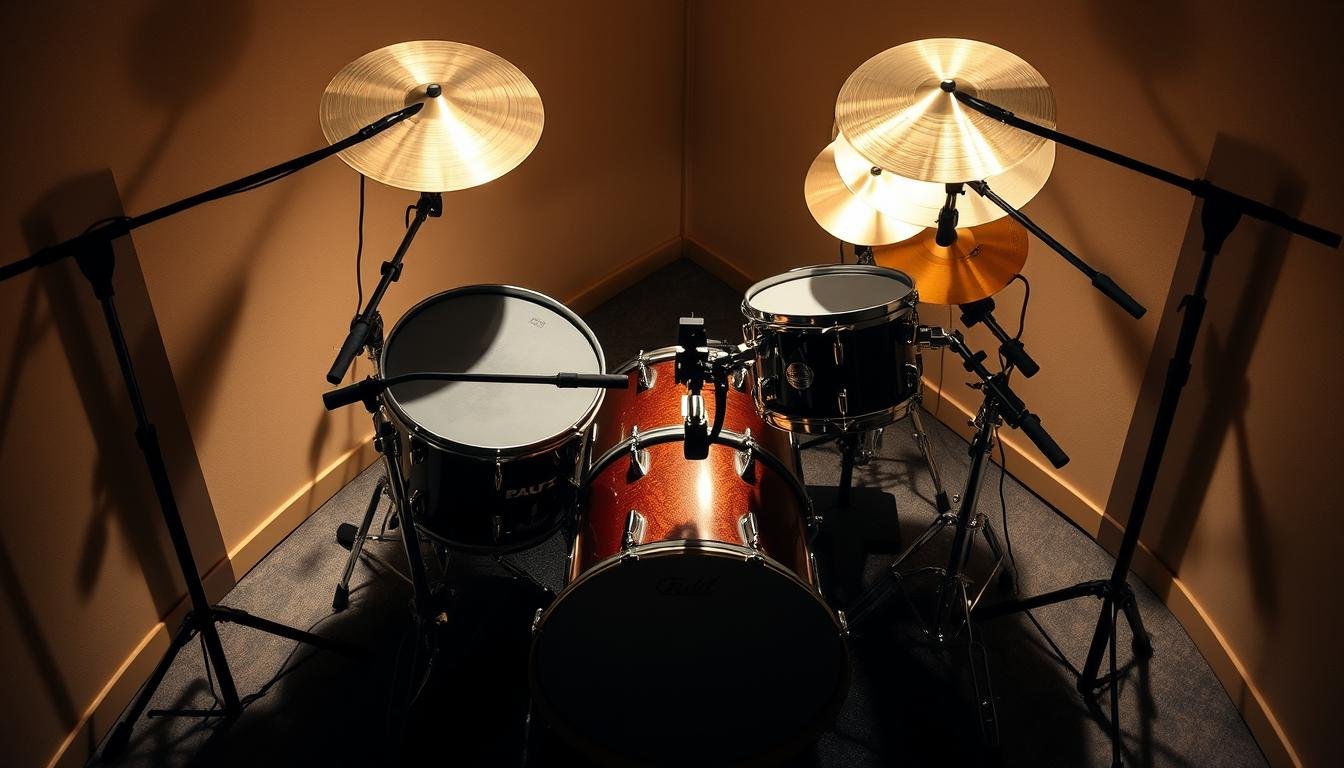
Getting your drum kit setup right is key to playing with confidence. It doesn’t matter if you’re new or have been drumming for years. The way you arrange your drums affects your comfort and sound quality. Here are some essential drum kit setup tips to consider.
Many drummers face unnecessary fatigue, sore muscles, and bad sound because of wrong kit setup. A good ergonomic drum setup stops injuries and lets you play longer without pain.
This drum setup guide shows you how to create a drum setup that fits your body. You’ll learn about optimal drum positioning, where to place your equipment, and how to adjust it like pros.
By using these tips, you’ll make a setup that feels natural, sounds great, and helps you grow as a musician. Your kit should help you, not hinder you.
Key Takeaways
- Proper drum kit setup prevents injuries and reduces physical fatigue during extended playing sessions
- Ergonomic positioning allows you to execute techniques more efficiently and with better control
- Correct drum configuration produces consistent, professional-quality sound from your instrument
- A personalized setup based on your body mechanics improves comfort and natural movement patterns
- Taking time to properly arrange your kit supports long-term skill development and playing enjoyment
- Both beginners and experienced drummers benefit from understanding setup fundamentals and fine-tuning methods
1. Why Proper Drum Kit Setup Matters for Your Playing and Essential Drum Kit Setup Tips
Your drum kit setup affects your comfort and sound quality. Many drummers skip setup or copy others without knowing the risks. This can hurt your playing and health.
The drum setup importance is clear. A bad setup makes your body uncomfortable during practice. Over time, this can lead to serious physical problems.
Incorrect drumming ergonomics causes physical strain. Your shoulders might hurt after 20 minutes. Your wrists could get tendonitis from cymbal reach. Lower back pain often comes from sitting or leaning wrong.
These issues aren’t just annoying—they can end your drumming career. Professional musicians know setup is key to avoid injuries. Your body wasn’t made for twisting and straining during every play.
Setup affects your technique development too. Drums that are too high, low, or far away lead to bad habits. These habits are hard to change later.
A bad snare drum placement affects your stick technique. If it’s too low, you’ll drop your wrists awkwardly. If angled wrong, you’ll hit the rim more than the head. These problems get worse over time.
Sound quality also suffers from bad placement. Performance optimization needs consistent striking angles and positions. When you’re stretching, your hits are uneven, leading to bad tones and volumes.
The drum setup importance also affects your music. Drummers with bad setups spend time on discomfort instead of creativity. You can’t focus on timing and feel with a sore back.
Professional drummers take setup seriously, like practicing rudiments. They see drumming ergonomics as crucial for skill and expression. It’s not just about comfort.
Correct positioning improves your speed and endurance. When drums and cymbals are within reach, you move better. This means faster fills and playing longer without getting tired.
| Setup Aspect | Improper Configuration Impact | Proper Setup Benefits |
|---|---|---|
| Physical Health | Back pain, wrist tendonitis, shoulder strain, muscle fatigue within 20-30 minutes | Natural posture, balanced weight distribution, ability to play 2+ hours comfortably |
| Technique Development | Compensatory movements become bad habits, inconsistent striking angles, limited speed | Clean technique patterns, consistent muscle memory, unrestricted movement development |
| Sound Quality | Uneven tones, frequent rim shots, inconsistent volume across kit | Consistent tonal quality, optimal strike zones, balanced volume levels |
| Playing Endurance | Fatigue sets in quickly, reduced practice time, mental focus on discomfort | Extended playing sessions, mental focus on musicality, efficient energy use |
Setup should be personal, not copied. Your body and playing style are unique. What works for one drummer won’t work for you.
Genre also plays a role in setup. Metal drummers need different spacing than jazz players. Proper drum setup fits your music and body.
Good positioning improves your playing. When everything is in the right place, you play better with less effort. This lets you focus on your music.
Utilizing these drum kit setup tips will not only improve your comfort but also enhance your overall sound quality.
Investing in drumming injury prevention through setup is worth it. Prevention takes minutes, but recovery from injuries takes months or years. Some drummers never recover from preventable injuries.
The reason for proper drum setup is clear. It’s not just about arranging equipment. It’s about creating a foundation for better sound, technique, comfort, and enjoyment.
Every setup step builds on this foundation. Taking time to learn about positioning means making informed decisions. These decisions shape your drumming journey for years.
2. Essential Tools and Preparation Before Setup
Starting a drum setup right is key. Without the right tools and preparation, it can be frustrating. Taking a few minutes to gather everything you need saves hours of trouble later.
This stage is like laying the groundwork for your setup. With the right tools and approach, your setup will go smoothly.
Gathering Your Setup Tools
Every drummer needs a set of basic tools. The most important is the drum key. It adjusts tension rods on your drums. This tool is crucial for tuning and making adjustments.
Keep several drum keys around since they can get lost easily. Many attach one to their keychain or keep spares in stick bags and cases.
- Adjustable drum throne for the right seating position
- Bubble level for even setup on different surfaces
- Measuring tape for precise positioning
- Drum tuner for accurate pitch
- Allen wrenches and screwdrivers for hardware changes
- Stick tape or grip enhancers for better playing
Having these tools organized makes setup easier. Store them in a toolbox or bag that goes with your kit.
Choosing the Right Space for Your Kit
Your practice space affects comfort and sound quality. Good drum room acoustics are crucial for great practice sessions.
The ideal space has enough room for your kit. A five-piece setup needs at least 10 feet by 10 feet of floor space. This ensures you can move around comfortably.
Ceiling height is also important. Aim for a minimum of 8-foot ceilings to avoid hitting obstacles during play.
Where you place your kit in the room affects sound. Avoid walls and corners to prevent muddy tones. Keep your kit at least two feet from walls for better sound.
Adding acoustic treatment helps control sound. Simple items like area rugs or foam panels can improve acoustics without breaking the bank.
Think about your neighbors when choosing a spot. Sound travels more than you think. If noise is a concern, consider soundproofing options.
Preparation before setup saves a lot of trouble. With the right tools and space, setting up your kit will be smooth.
3. How to Set Up Your Drum Kit for Maximum Comfort and Sound
Setting up your drum kit from scratch might seem hard, but it’s easier with a clear plan. The right approach makes all the difference. By understanding the basics of professional drum setup, you’ll create a space that feels right and sounds great.
Many drummers place parts wherever they fit, then feel awkward playing. This trial-and-error method wastes time and can lead to bad habits. A systematic drum setup removes guesswork and gives consistent results every time.
The Step-by-Step Setup Philosophy
The key to a good drum setup is simple: your body determines everything else. Instead of forcing yourself to adapt to poorly positioned drums, you build the kit around your natural posture and movement patterns.
This player-centered approach puts ergonomic positioning first. You start with a comfortable seated position, then place each component within easy reach. This setup reduces fatigue, prevents injury, and lets you play longer without discomfort.
Taking time during the initial systematic drum setup saves countless hours of frustration later. Rushing through placement decisions means you’ll constantly readjust components when you discover problems during practice sessions. Patience now prevents problems later.
Professional drummers know that while general guidelines provide an excellent starting point, your ideal configuration remains unique to you. Your body proportions, arm length, flexibility, and playing style all influence optimal positioning. Learning to think critically about each placement decision helps you create the perfect setup anywhere you play.
Building from the Ground Up
The recommended setup sequence follows a logical progression that creates stability and balance. Each component you add relates properly to the ones already in place. This methodical approach ensures nothing feels out of reach or awkwardly positioned.
Here’s the proven setup sequence that professional drummers follow:
- Drum throne first – Establish your seated position before anything else, as this becomes your reference point for all other components
- Bass drum and pedal – Position your foundation piece directly in front of you, ensuring stability and proper alignment with your dominant foot
- Snare drum placement – Add your most frequently used component within comfortable reach between your legs
- Tom-toms arrangement – Build outward from the snare, positioning rack toms above and floor toms beside you based on natural reach patterns
- Cymbal positioning – Place hi-hats, crashes, and rides last, ensuring they don’t interfere with drum access while remaining easy to strike
This inside-out drum configuration method creates a cohesive playing environment where transitions feel smooth and natural. You’re not stretching awkwardly or contorting your body to reach components. Everything flows from your center position outward.
The beauty of this setup sequence lies in its flexibility. While the order remains consistent, the exact distances and angles adjust to fit your specific needs. A drummer with longer arms might space components differently than someone with a shorter reach, yet both use the same fundamental approach.
Remember that your first setup won’t be perfect, and that’s completely normal. As you play and develop your skills, you’ll naturally refine component positions. The drum kit setup process becomes intuitive with practice, allowing you to optimize your configuration quickly whether you’re in your practice space, on stage, or in a recording studio.
The key takeaway is simple: build methodically from your seated position outward, and let your body’s natural movements guide each placement decision. This systematic approach transforms setup from a frustrating chore into a straightforward process that consistently delivers comfort and optimal sound quality.
4. Setting Your Drum Throne for Optimal Posture
The right seat is key to comfortable drumming. It affects how you play every part of the kit. Adjusting your throne correctly makes everything else better.
Many drummers face back pain or leg tiredness because of a bad throne. Even small changes can make a big difference. Adjusting your throne is the most crucial setup choice.
Finding the Perfect Throne Height
Your throne height affects your power and back health. The right height lets your legs work well and keeps your back straight. The wrong height can cause long-term problems.
Start by sitting with your feet on the pedals. Your thighs should be almost parallel to the floor. This balance is key for control and comfort.

Most drummers sit with knees at a 90-degree angle. This is the best spot for leg movement and power. Some players sit higher or lower for different styles.
Play at different levels to find the right height. Too high means less power and hard hi-hat control. Too low restricts leg movement and hurts your back.
Proper Sitting Position and Weight Distribution
How you sit on your throne is just as important as its height. Use only the front third to half of your throne seat. This keeps you moving and connected to the kit.
Your weight should be evenly distributed on your sit bones. Lean forward from your hips, not shoulders. This keeps you straight and prevents back pain.
Think of sitting as active, not relaxed. You’re getting ready for movement. This mindset helps keep your posture right during practice or shows.
The 90-Degree Rule for Your Legs
The 90-degree rule is a good starting point for throne height. When your feet are on the pedals, your knees should form a right angle. This helps your pedal technique.
Check your knee angle by sitting naturally. Your thighs should be level or slightly angled. If your knees are too high or your legs too straight, adjust your throne.
This rule is a guide, not a rule. Jazz players might sit higher, while rock players sit lower. Use the 90-degree position as a starting point and adjust for your style.
Throne Positioning Relative to the Bass Drum
Your throne’s distance from the bass drum is important. Position yourself centered on the bass drum for easy pedal reach. Avoid sitting too close or too far.
Sit on your throne and place your foot on the bass drum pedal. Your leg should bend slightly. If you must extend fully, move your throne forward. If your knee is too close, move it back.
Sitting centered gives you easy access to both pedals. Some players sit closer to their hi-hat. But center alignment is best for balanced playing.
Play a simple beat to test your throne position. You should feel comfortable moving between pedals. The right distance makes your playing smooth.
5. Bass Drum and Pedal Setup for Power and Precision
Getting your bass drum setup right makes playing easy and powerful. First, make sure your throne is at the right height and position. Then, adjust your kick pedal adjustment to feel just right.
Your bass drum is the heart of your sound. It needs to feel natural and respond well to your foot. Taking time to get these settings right will improve your playing.
Bass Drum Positioning and Stability
Your bass drum must stay put on the floor, even when you play hard. Modern drums have adjustable spurs to keep them in place. These spurs dig into the floor to stop the drum from moving.
For hard floors, use the spurs’ rubber feet. This protects your floor and keeps the drum stable. Some drummers angle their bass drum for better access to toms, but it’s up to you.
Place your bass drum in front of your throne, so your foot can rest comfortably. Your leg should be at a natural angle. Adjust your bass drum setup and throne together for the best feel.
Pedal Adjustment and Beater Alignment
Once your bass drum is stable, adjust your pedal. The clamp on your pedal affects how it feels. Try different positions to find what works best for you.
Your foot should hit the footboard without straining. The pedal should move smoothly. These small details make a big difference in your playing.
Adjusting Spring Tension
Spring tension changes how hard your pedal is to press and how fast it returns. Tighter pedal tension means more effort but quicker rebound. It’s great for fast playing.
Looser tension is easier on your muscles and feels softer. It’s good for beginners or those who want more control. Find the right tension for your playing style.
Beater Angle and Distance Settings
The beater should hit the drumhead straight and rebound cleanly. Adjust the beater angle for better power and tone. Aim for a 90-degree angle for the best sound.
Changing the beater distance affects how fast it responds and the sound it makes. Closer distances are quicker but farther distances have more power. Experiment to find what works best for you.
Try different spring tensions and beater distances to find your perfect setup. Play at various speeds and volumes to see what sounds best. Your ideal bass drum setup should feel comfortable and sound great.
6. Snare Drum Placement for Comfort and Control
Getting your snare drum placement right makes playing easier. It’s the most played drum, so it needs the right spot. Every beat and fill depends on it being in the right place.
The snare is at the heart of your playing area. When placed right, you’ll feel better control and less tiredness. But, a wrong placement can make playing hard and hurt your body over time.
Height Adjustments for Natural Reach
Your snare height is key for easy arm movement. It should be between your waist and lower chest when sitting. This lets your arms strike down naturally, without straining your shoulders.
Try for 90 to 110 degrees elbow bend when hitting the drum. This angle helps power transfer and keeps your shoulders and back relaxed. Setting your snare too low can hurt your back and neck over time.
But, if the snare is too high, your arms fight gravity. Your shoulders will get tired fast. Start with belly button height and adjust based on your arm length and style.
Snare placement also affects sound. The height changes the stick angle, altering the sound. Find the perfect spot where comfort and sound meet.
Snare Angle and Strike Zone Optimization
The snare angle greatly affects sound and comfort. Most drummers prefer a flat or slightly tilted snare. More than 5 to 10 degrees can cause problems with your technique and sound.
Extreme angles lead to uneven striking. You’ll hit rim shots on one side and barely touch the other. This makes it hard to develop good technique or sound.
A flat or nearly flat snare ensures even rebound. Your wrists stay natural, allowing full access to snare techniques. This setup enhances your playing from ghost notes to powerful backbeats.
The strike zone should be in the middle of the drum head. Position the snare so this zone is under your sticks when arms are relaxed. You shouldn’t need to stretch or pull to hit your main playing area.
Positioning Between Your Legs
Positioning your snare between your legs is key for your kit layout. Place it directly in front of your body, not offset. This keeps your reach balanced to all drums and maintains body symmetry.
The snare should be close but not too close to your legs. You need room for your knees and thighs, mainly for the bass drum pedal. Position the snare just behind your bass drum from your seat, forming a natural triangle.
This triangle setup makes moving between drums easy. Your right hand can move smoothly from hi-hat to snare to toms. Your left hand has clear access to the snare center without hitting your leg or the bass drum rim.
Make sure you can reach all parts of the snare comfortably without leaning or shifting. Your stick tips should move in smooth arcs from your hand to the drum. If you’re twisting or bending, adjust the snare until it feels natural.
7. Tom-Tom Positioning for Smooth Transitions
Your tom-toms are the melodic voice of your drum kit. Where you place them affects how fills sound. Proper placement makes fills easy and enjoyable.
Setting up your toms with care makes playing easier. This reduces fatigue and boosts precision. Many drummers overlook this, but it makes a big difference in playing complex drum transitions.
Rack Tom Height and Angle Settings
Your rack tom setup starts with the right height. Place the rims of your mounted toms slightly below or at the same level as your snare drum. This makes playing more comfortable.
The angle of your rack toms is also key. Tilt them gently toward you at about 10 to 20 degrees. This angle provides a natural striking surface and prevents awkward contact.
Spacing between rack toms is important. Keep them close for quick drum transitions but not too close. A gap of 1 to 3 inches between tom rims works well for standard drums.
Here are some tips for the best rack tom setup:
- Mount toms at snare rim height or slightly lower for comfortable reach
- Angle drums 10-20 degrees toward your playing position
- Space toms 1-3 inches apart for quick transitions without crowding
- Ensure all mounting hardware is secure to prevent movement during playing
- Test reach to each tom from your natural playing position before finalizing
Floor Tom Placement and Accessibility
Floor tom placement varies, but some rules apply. Place your floor tom to your right side at a comfortable distance. Most drummers put it about 6 to 12 inches from their right thigh.
The height of your floor tom should match your rack toms. This creates a smooth playing plane across all toms.
Set the floor tom angle to match your rack toms. Consistent tom angles across your kit improves accuracy and reduces mental effort.
Creating Natural Motion Paths
The concept of natural motion paths focuses on positioning toms for smooth fills. Arrange your toms so your arms move in arcs. This makes playing easier and more natural.
Imagine drawing a curve through the center of each tom. This curve should mirror the natural arc your arms create. Avoid placing toms at dramatically different distances from your body.
Test your motion paths by playing slow fills across all toms. Your arms should move smoothly without hitting unusual angles. If you notice awkward movements, adjust tom positioning until the path feels natural.
Maintaining Consistent Rim Heights
Keeping all your tom rims at similar heights improves fills. When rim heights vary, your hands must adjust vertically, disrupting rhythm and reducing accuracy.
Use a drum key and measuring tape to fine-tune rim heights. The difference between any two tom rims should not exceed 1 to 2 inches. This consistency allows your hands to maintain a stable height plane as they move across the drums.
Consistent rim heights reduce the cognitive load during complex fills. This lets drummers focus on musical expression rather than physical adjustments.
Remember, slight variations in rim height are okay. The goal is general consistency, not perfect uniformity. Your aim is smooth drum transitions that feel effortless, not precise.
After positioning all your toms, play through various fills and patterns. Pay attention to any moments where reaches feel uncomfortable or transitions seem difficult. These moments indicate areas where minor adjustments can yield significant improvements in your playing experience.
8. Cymbal Setup for Reach and Tonal Quality
How you place your cymbals around your kit affects how easy they are to reach and how long they last. Cymbals add shimmering accents and rhythmic textures to your music. Getting your cymbal setup right balances comfort, accessibility, and sound quality, enhancing your playing experience.
Each cymbal in your kit has a unique role and needs careful placement. The arrangement should allow easy movement between cymbals without awkward arm angles. Your cymbal positioning also affects the tones you produce and protects these often expensive components from premature wear.

Hi-Hat Positioning and Height
Your hi-hat stand is the base for your left-side cymbal setup. For right-handed players, place the hi-hat to the left of your snare drum at a comfortable distance. Your left foot should rest naturally on the pedal without stretching or creating an uncomfortable knee angle.
The distance between your hi-hat and snare typically ranges from 6 to 10 inches, depending on your body size and playing style. This spacing allows your hands to move freely between both instruments without collision. Test the position by playing alternating patterns between your snare and hi-hat to ensure smooth transitions.
Hi-hat positioning also involves vertical adjustment of the cymbals themselves. A common starting point places the closed hi-hat slightly above your snare drum rim level. This height allows easy stick access while maintaining control over your strokes.
Some players prefer lower hi-hat settings for a tighter sound and quicker response. Others position them higher for a more open playing feel. Adjust the tension setting so your cymbals close completely when you press the pedal and open to your desired gap when released.
Crash Cymbal Placement for Easy Access
Crash cymbals need strategic placement for both accessibility and safety. Position your crashes within comfortable reach so you can strike them with natural arm extension. They shouldn’t be so close that you hit them accidentally during regular playing.
Most drummers place their primary crash cymbal between the hi-hat and first rack tom. This location provides easy access for your dominant hand during fills and accents. The height typically sits at or slightly above the level of your rack toms.
Consider these crash cymbal placement guidelines:
- Position crashes 12-18 inches from your body for comfortable reach
- Angle cymbals slightly away from you to improve sound projection
- Leave adequate clearance above toms to prevent accidental strikes
- Add secondary crashes to the right side for easy right-hand access
- Maintain consistent height relationships between multiple crashes
Your crash cymbal placement should feel natural when you execute fills that transition from toms to cymbals. Practice common patterns to verify that your positioning supports fluid movement without awkward reaches or body adjustments.
Ride Cymbal Position and Angle
The ride cymbal is often the most played cymbal in many musical styles. It usually sits to the right of your floor tom in right-handed setups. Position it at a height and distance that allows comfortable reach to all three playing zones.
You should access the bow (main playing surface) without stretching your arm fully extended. The bell (raised center) should be reachable for accent notes. The edge should also be accessible when you want brighter, crashier sounds from your ride.
The ride cymbal angle affects both your comfort and the sounds you produce. Many drummers position their ride relatively flat compared to crash cymbals, which is common in jazz. Rock and pop players often angle their rides more steeply for varied tonal options.
Test your ride cymbal angle by playing sustained eighth-note or quarter-note patterns. Your stick should contact the cymbal cleanly without feeling like you’re reaching down or up at an uncomfortable angle. The ride cymbal angle you choose should support relaxed shoulders and natural wrist motion throughout extended playing.
Cymbal Tilt for Sound and Durability
Cymbal tilt is a crucial yet often overlooked aspect of cymbal setup. Instead of mounting your cymbals completely flat, angle them approximately 15-30 degrees away from you. This small adjustment creates significant benefits.
Proper tilt allows air to escape from under the cymbal when you strike it. This air movement improves the cymbal’s natural resonance and produces a fuller, more musical tone. Flat-mounted cymbals can sound choked because trapped air restricts their vibration.
The tilted position also enhances stick response and creates a more forgiving playing surface. Your sticks glance off angled cymbals more naturally, reducing strain on your wrists and forearms. This setup supports better technique development over time.
Most importantly, cymbal tilt dramatically extends cymbal life. When you strike a flat cymbal directly, the rigid impact focuses stress on specific points, leading to cracks and keyholing. Angled cymbals absorb impacts more gradually, distributing force across a wider area and significantly reducing the risk of damage.
Here’s a comparison of flat versus tilted cymbal mounting:
| Aspect | Flat Mounting | Tilted Mounting (15-30°) |
|---|---|---|
| Sound Quality | Choked, restricted resonance | Full, open, natural tone |
| Stick Response | Harder impact, less forgiveness | Natural glancing motion |
| Cymbal Longevity | Higher crack risk from rigid impacts | Extended life through stress distribution |
| Playing Comfort | Increased wrist strain | Reduced physical stress |
Adjust each cymbal’s tilt individually based on its size and your playing style. Larger cymbals generally benefit from more pronounced angles. Smaller splash cymbals might require less tilt due to their compact size and different playing techniques.
Your complete cymbal setup should create a comfortable arc around your playing position. Each cymbal should be easily accessible without requiring significant body movement or arm stretching. Take time to fine-tune these positions, as proper cymbal positioning transforms both your sound quality and playing enjoyment.
9. Tuning and Sound Optimization Techniques
Getting your drums right is just the start. The real magic happens when you learn to tune and dampen. This makes your drums sound amazing.
Even if your drums are in the right spot, they won’t sound great without the right tuning. Learning to tune and choose the right heads is key. It makes your drums sound rich and controlled, perfect for any music.
Basic Drum Tuning Methods
Learning to tune your drums is a crucial skill. It involves adjusting the tension rods to control the sound. This makes your drums sound better.
Start by loosening all the tension rods on your drum. Then, remove the head and check the bearing edge for damage. Put the head back on carefully to ensure even tension.
The star pattern method is a good way to tune your drums. Tighten opposite rods in a star shape, not in a circle. This keeps the head even and prevents warping.
Begin by tightening each rod until it touches the rim lightly. Then, use your drum key to tighten each rod a quarter-turn, following the star pattern. After each round, tap the drumhead and listen to the pitch.
Your goal is to get the same pitch at each point on the drum. If one area sounds different, make small adjustments until they match. This creates a clean, clear sound.
The batter head (top) and resonant head (bottom) greatly affect your drum’s sound. Tuning them to the same pitch makes your drums sound full and sustained. Tuning the resonant head higher gives a focused attack, while tuning it lower makes the sound warmer.
Try different tunings to find the sound that fits your music style. Jazz players often prefer open, resonant tuning, while rock players like tighter batter heads for a punchier sound.
Head Selection for Different Sounds
Choosing the right drum heads is key to getting different sounds. Different heads have different tones, letting you customize your kit’s sound.
Single-ply heads are bright and open, with lots of sustain. They’re great for jazz and music where you want a natural sound. Double-ply heads are warmer and more controlled, with less sustain. They’re perfect for rock and pop music.
The coating on drumheads also affects the sound. Coated heads sound warmer than clear heads. They’re good for brush playing because they create friction.
Clear heads sound brighter and more open. They’re great for toms in loud settings because they project well.
Modern drum heads come in special types for specific needs. Pre-muffled heads have built-in dampening for controlled tones. Hydraulic heads have oil between the plies for deep, dark sounds.
| Head Type | Construction | Tonal Character | Best Applications |
|---|---|---|---|
| Single-Ply Clear | One 10-mil layer | Bright, open, maximum sustain | Jazz, studio recording, lighter styles |
| Single-Ply Coated | One 10-mil layer with coating | Warm, controlled, brush-responsive | Jazz, acoustic music, brush work |
| Double-Ply Clear | Two 7-mil layers | Focused, punchy, reduced overtones | Rock, pop, high-volume playing |
| Double-Ply Coated | Two 7-mil layers with coating | Warm, controlled, durable | Versatile all-purpose use |
| Pre-Muffled | Single or double-ply with dampening | Dry, focused, minimal sustain | Studio recording, controlled environments |
Choosing the right drum heads makes a big difference in how your kit sounds. Many drummers keep different heads for different music styles.
Dampening and Sound Control Options
Even with great tuning, you might need to dampen your drums. Drum dampening techniques help control unwanted sounds without losing the good ones.
Dampening is key in recording to prevent clutter. It’s also useful in live shows with bad acoustics to focus your sound.
The trick to good dampening is using just enough. Too much makes your drums sound dead and lifeless.
Internal dampening uses felt, cloth, or foam inside the drum. This reduces sustain and controls low sounds. Bass drums often use pillows or blankets for a punchy sound.
External dampening options are more flexible. You can adjust them quickly for different songs or during shows. They target specific problem frequencies without losing your drum’s character.
Using Moon Gels and Dampening Rings
Moon Gels are a popular choice for drum dampening techniques. They stick to your drumhead without residue and can be moved or removed easily.
Apply Moon Gels near the drumhead’s edge to reduce high sounds and shorten sustain. Start with one gel and add more if needed. Most drummers find one or two per drum is enough.
The position of your dampening material affects its effect. Gels closer to the center dampen more, while edge placement is subtler. Try different positions to find what works best for each drum.
Dampening rings sit on top of your drumhead around the edge. They control edge frequencies and reduce sustain without the extreme effect of tape or internal muffling. They’re great for snare drums and toms.
Commercial dampening systems attach to your drum’s rim. You can adjust the dampening by moving a padded arm closer to or farther from the drumhead. This makes them perfect for drummers who need different sounds for different songs.
Remember, proper tuning comes first. If your drums sound bad, adding dampening won’t help. Learn to tune well, then use dampening to refine your sound.
When you combine the right positioning with these drum sound optimization techniques, your kit will feel great and sound amazing. This inspires confident, expressive drumming.
10. Conclusion
Your journey with drum setup tips doesn’t end after your first try. Think of your kit as something that grows with you. As your skills grow, you’ll find new ways to make drumming more comfortable.
Start every setup with your throne position. This is your foundation. Then, add the bass drum, snare, toms, and cymbals. Let your body’s natural movement guide each placement.
Proper drum kit optimization removes obstacles between you and great playing. When everything feels right, you can focus on music. Your energy goes into playing and expressing yourself.
Check your hardware regularly. Tighten loose connections. Make small adjustments when something feels off. Your ideal setup might change as you practice different styles or techniques. That’s normal. Stay flexible.
The principles in this guide come from professional experience, but drumming is a personal art form. Experiment within these guidelines. Find what supports your unique voice behind the kit. Your setup should serve your musical goals, whether you’re practicing in your bedroom, recording tracks, or playing live shows.
Time spent on proper setup pays back every time you sit down to play. You’ll enjoy drumming more, sound better, and protect your body from strain. Your optimized kit becomes a true extension of your creative expression.
FAQ
How high should I set my drum throne for proper playing posture?
Your drum throne height should create a 90-degree angle at your knees. Your thighs should be parallel to the floor or slightly angled down. This setup helps with pedal control and prevents back strain.Some drummers prefer higher or lower positions. Experiment to find what feels best for you.
What’s the most important piece of equipment to position first when setting up my drum kit?
Start with your drum throne. It sets the foundation for your kit’s layout. Once your throne is right, you can arrange the rest of your kit.This approach ensures comfort and reduces injury risk. It makes your kit work with your body, not against it.
How do I know if my snare drum is positioned correctly?
Your snare drum should sit between your waist and lower chest. This allows for a comfortable striking angle. It should be centered and close enough for easy reach.The playing surface should be flat or slightly tilted. This ensures even tone and prevents awkward wrist positions.
What tools do I absolutely need to set up and maintain my drum kit?
A drum key is essential for adjusting hardware. Keep spares handy since they can get lost easily. You’ll also need a drum throne with height adjustment, a level, and measuring tape.Additional tools include a tuner, allen wrenches, and dampening products like Moon Gels.
Should my cymbals be mounted flat or at an angle?
Mount your cymbals at a slight angle, about 15-30 degrees. This improves sound quality and extends cymbal life. Flat cymbals are more prone to cracking.
How far apart should I position my toms for the best playability?
Keep your toms close but with enough space for clean strikes. Rack tom rims should be at the same height as your snare drum rim. Floor tom rims should match rack tom rims.This setup allows for smooth arm movements, reducing fatigue.
What’s the difference between single-ply and double-ply drumheads?
Single-ply heads produce brighter tones with more sustain. They’re great for jazz and lighter styles. Double-ply heads offer warmer sounds and better durability for rock and louder styles.Your choice depends on your music and playing style. Many use different heads for varied tones.
How tight should I adjust the spring tension on my bass drum pedal?
Spring tension is a personal preference. Tighter springs are better for fast playing, while looser springs offer easier control. Experiment to find the right balance for your style.
Why does my drum kit setup feel uncomfortable even though I followed standard guidelines?
Standard guidelines are a good start, but your setup needs to fit your body and style. What works for others might not work for you. Listen to your body and make adjustments as needed.
How do I prevent my bass drum from sliding forward during playing?
Modern bass drums have spurs to prevent sliding. For hard floors, adjust the spurs for firm contact. Use a drum rug or carpet square for grip. Proper pedal technique also helps.
Should I position my ride cymbal flat or tilted, and at what height?
Angle your ride cymbal slightly, about 15-30 degrees. Position it to the right of your floor tom for easy reach. The height depends on your preference, but it should be accessible for extended playing.
How often should I check and readjust my drum kit setup?
Check your setup before each play and do a thorough check monthly. Regular tightening prevents problems and maintains positioning. Adjustments may be needed as you grow as a drummer.
What’s the best way to dampen my drums without making them sound dead?
Start with proper tuning and then add dampening gradually. Moon Gels are good for experimenting with placement. Dampening rings control edge frequencies without over-muffling.Remember, too much dampening can make your drums sound lifeless. Start with one gel pad and add more as needed.
Can I set up my drum kit in a small bedroom, or do I need a large space?
While a large space is ideal, you can set up drums in small rooms with adjustments. Consider a compact kit or smaller cymbals. Be mindful of space for movement and sound reflection.Acoustic treatment can help control sound in small rooms. Electronic drums or practice pads are good options when space is very limited.
Do I need to position my drums differently for different styles of music?
While ergonomic principles are consistent, some genres inspire specific setups. Jazz drummers use smaller kits for quick movements. Rock and metal drummers prefer larger kits with more components.Funk and R&B drummers focus on easy access to hi-hats and snare. Prioritize your comfort and body mechanics over genre conventions.