
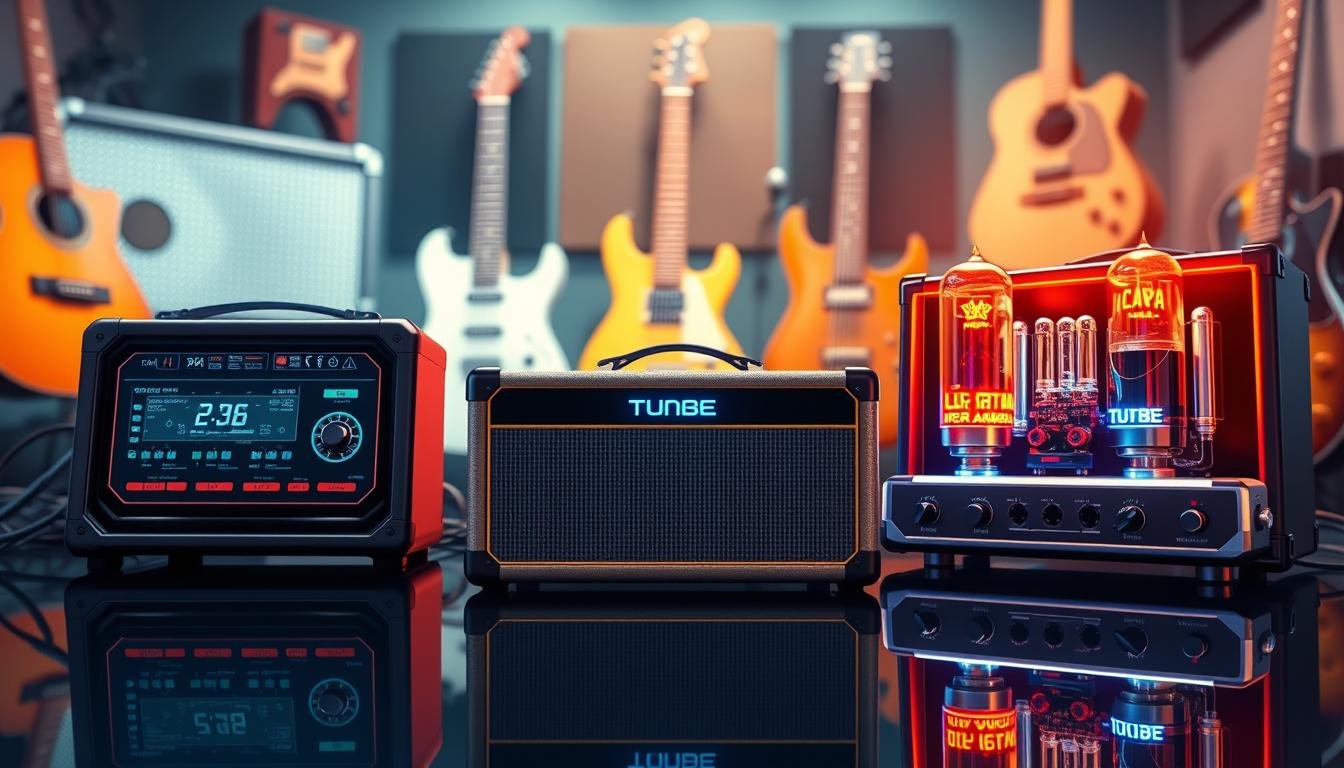
The world of amplifier technology is full of choices for musicians. There’s a big debate between different types of amplifiers. Each has its own special qualities and uses.
The main types are tube, solid-state, and digital. They all have their own good points and fit different music styles and tastes.
Knowing the differences between these amplifiers is key for musicians. Whether you’re an experienced musician or just starting, the right amp can really change your sound.
Key Takeaways
- Amplifier technology is a crucial aspect of music production.
- There are three main types of amplifiers: tube, solid-state, and digital.
- Each amplifier type has its unique characteristics and applications.
- The choice of amplifier depends on musical style and personal preference.
- Understanding amplifier differences is key to optimizing your sound.
Understanding Guitar Amplifiers: The Basics
The world of guitar amplifiers can seem complex, but knowing the basics is essential. A guitar amplifier boosts the signal from your electric guitar, making it loud enough for a speaker to play. Different types of amplifiers change the sound of your guitar in unique ways.
What is an Electric Guitar Amp?
An electric guitar amp does more than just make your guitar louder. It’s a key part of your guitar’s sound. It takes the weak signal from your guitar and makes it strong enough for a speaker. This process also changes the sound, adding the unique tone of your guitar.
Key components of an electric guitar amp include:
In this article, we will explore guitar amps explained in detail, helping you choose the right one for your needs.
- Preamp: Boosts the initial signal
- Power amp: Drives the speaker
- Tone controls: Adjust the sound quality
- Speaker: Converts the electrical signal into sound waves
In this article, we will cover guitar amps explained, helping you navigate your choices.
How Amps Influence Your Sound
The type of amplifier you choose greatly affects your guitar’s sound. Tube, solid-state, and digital amps each have their own sound. For example, tube amps give a warm, rich tone, while solid-state amps are clear and reliable. Digital ampsoffer a wide range of sounds.
Knowing how these technologies affect your sound is key to picking the right amp. Whether you want a vintage or modern sound, the right amplifier is crucial.
Tube Guitar Amps: The Vintage Classic
Tube guitar amps are loved for their warm sound and dynamic response. They have a long history and can create many different tones.
How Tube Amps Work
Tube amps use vacuum tubes to boost your guitar’s signal. These tubes can be pushed to create a warm, distorted sound. This sound is key in many music styles, like rock, blues, and jazz.

Pros and Cons of Tube Amps
Tube amps are known for their warm, rich tone. This tone is crucial for many musicians. They also offer a dynamic response that makes playing more expressive. But, they need more maintenance than solid-state amps. The tubes can wear out and need to be replaced. Also, tube amps are more fragile and can be affected by temperature and physical shock.
- Pros: Warm tone, dynamic response, rich harmonics.
- Cons: Maintenance-intensive, fragile, can be expensive.
Notable Tube Guitar Amps
The Marshall Plexi is famous for its use by Jimi Hendrix and Eric Clapton. The Fender Twin Reverb is loved for its clean tone and versatility. Other notable models include the Mesa Boogie Mark Series and the Vox AC30. Each has its own unique sound that many famous musicians have favored.
Solid State Guitar Amps: The Modern Approach
Solid-state amps are the modern choice for guitarists. They offer consistency and versatility. Unlike traditional tube amps, they use transistors to boost the guitar sound.
The Science Behind Solid State Technology
Solid-state amps use transistor-based circuitry to amplify the guitar signal. This means no vacuum tubes are needed. Transistors are more reliable and consistent than tubes, making these amps a solid choice.
Transistor technology also makes these amps smaller and lighter. This is great for musicians who travel a lot with their gear.
Advantages of Solid State Amps
Solid-state amps are known for their durability and low maintenance. They work well in many environments, no matter the temperature or humidity. This makes them perfect for different playing settings.
- Reliability: Solid-state amps are less likely to fail during performances.
- Consistency: They provide a consistent tone and performance.
- Low Maintenance: No need to replace tubes or adjust bias.
Popular Solid State Amplifiers
Many solid-state amps are popular among guitarists for their quality and performance. Here are a few notable examples:
| Model | Features | Price Range |
|---|---|---|
| Fender Frontman 25R | 25 watts, 8-inch speaker, simple controls | $100-$150 |
| Blackstar ID:Core 100 V3 | 100 watts, digital effects, USB connectivity | $200-$250 |
| Boss Katana-100 | 100 watts, versatile tone, built-in effects | $300-$350 |
These models show the range and quality of solid-state amps. They meet different needs and preferences.
Digital Guitar Amps: The Future of Sound
Digital amps are changing how we play guitar. They use digital tech to mimic many sounds. This lets musicians try out lots of tones easily.
What Are Digital Amps?
Digital guitar amps, or modeling amps, mimic different sounds. They use digital tech to do this. This means you can get many tones from just one amp.
A big plus of digital amps is they can save and recall lots of presets. This makes it easy to switch sounds during a show. It’s great for playing different styles or changing your sound for different songs.
Benefits of Digital Modeling Amps
Digital modeling amps are versatile and convenient. They let you try many tones without needing lots of gear. This saves space and money.
- Access to a vast library of tones and effects
- Ability to store and recall custom presets
- Reduced need for additional equipment
They also come with cool extras like built-in tuners and drum machines. You can even connect them straight to recording devices. This makes them great for both practice and live shows.

Leading Digital Amplifiers on the Market
Many brands are making great digital guitar amps. Line 6 and Fender are leaders in this field. They offer amps that meet different needs and tastes.
Line 6’s Helix series is known for its wide range of sounds and customization options. Fender amps blend classic tones with modern tech.
When picking a digital amp, think about the sound quality, how easy it is to use, and any extra features. These things can really matter for your playing style and needs.
Comparing Sounds: Tube vs Solid State vs Digital
It’s important for musicians to know how different guitar amps sound. The sound quality changes a lot based on the type of amp. This means we need to look at how each type handles clean and distorted sounds.
Tone Characteristics
The sound quality of an amp is its unique ‘voice’. Tube amplifiers are known for their warm, rich sound. A famous guitarist once said, “Tube amps have a certain warmth that’s hard to replicate with other technologies.”
“The tube amp’s ability to compress and soften the signal gives it a very musical quality,”
says a well-known guitar player.
Solid-state amplifiers are clear and precise. They give a clean, sharp sound, perfect for certain music styles. Solid-state technology is also reliable and less affected by temperature and vibration, keeping the sound consistent.
Digital amplifiers can mimic many amp sounds, from tube to solid-state. They use digital processing to model different amp sounds, giving musicians a wide range of tones.
Clean vs Distorted Sounds
How an amp handles clean and distorted sounds matters a lot. Tube amplifiers are loved for their natural distortion. When pushed hard, they create a smooth, overdriven sound that many musicians like.
- Tube amps offer a natural, warm distortion.
- Solid-state amps provide a sharp, clean sound but can sound harsh when distorted.
- Digital amps can model various distortion characteristics, offering flexibility.
In conclusion, choosing between tube, solid-state, and digital amps depends on what you like and how you play. Knowing what each type offers helps musicians make the best choice for their music.
Versatility in Guitar Amps
Knowing how versatile guitar amps are helps musicians pick the right one. These amplifiers do more than just make sound louder. They also shape the tone and add features for various music styles and playing ways.
Genres Suited for Each Type
Each type of guitar amp fits best with certain music genres. Tube amps are loved by blues and rock fans for their warm, rich sound and natural distortion. Famous guitarists like Stevie Ray Vaughan and Eric Clapton used them to get their unique sounds.
Solid-state amps are great for jazz and pop because they offer clear and steady tones. They’re also durable, perfect for musicians who play a lot.
Digital amps are very versatile. They can mimic many amp types and add effects. This makes them perfect for musicians who play many styles or need to change sounds during a show. Modern digital amps have lots of presets and options for customization.
| Amp Type | Suited Genres | Key Features |
|---|---|---|
| Tube Amps | Blues, Rock | Warm tone, natural distortion |
| Solid-State Amps | Jazz, Pop | Clarity, reliability |
| Digital Amps | Multi-genre | Modeling capabilities, presets |
Customization Options
Customizing guitar amps is key, letting musicians shape their sound. Tube amps have controls for gain, bass, mid, treble, and presence. This gives players lots of tone options. Some high-end tube amps even have extra features like multiple channels and built-in effects.
Solid-state amps have EQ controls and sometimes add-ons like reverb and delay. They might not have the same tonal depth as tube amps but offer a steady sound.
Digital amps are top for customization. They come with many amp models, effects, and presets. Musicians can easily change sounds and tweak settings to fit their style. Software and hardware interfaces let for deep customization and saving favorite settings.
Understanding the versatility and customization of guitar amps helps musicians choose the right one for their music.
Portability and Weight Considerations
For many musicians, how easy an amp is to carry is very important. The weight and size of an amp can make a big difference. This section will look at how portable and light different types of guitar amps are.
Tube Amps Weight and Size
Tube amps are often heavy and big because of the vacuum tubes and transformers inside. They can weigh between 20 and over 50 pounds. For example, the Marshall JCM800 is famous for its sound and weight.
Legendary guitarist Jimmy Page once said, “The sound of a good tube amp is unbeatable, but you have to be willing to carry the weight.”
Solid State Amps – Lightweight Champions
Solid-state amps are lighter and smaller than tube amps. They use transistors, which are more efficient and don’t get as hot. Solid-state amps can weigh from a few pounds to 20 pounds, making them great for traveling.
Fender’s Champion series is a good example of solid-state amps that are both sound quality and easy to carry.
Digital Amps for On-the-Go Musicians
Digital amps have changed the music world with their ease of use and light weight. They can be as light as 5 pounds and have cool features like modeling and preset tones. Digital amps are perfect for those who want many sounds without carrying many amps.
“The Line 6 POD is a game-changer for live performers, offering a wide range of tones in a compact package,”
showing how convenient and flexible digital amps are.
In conclusion, choosing a guitar amplifier depends a lot on how portable and light you need it to be. Whether you’re touring or practicing at home, knowing the differences between amp types helps you make the right choice.
Maintenance and Longevity
Keeping your guitar amp in top shape is key to its long life. Regular care not only makes it last longer but also keeps it sounding great. We’ll look at what you need to do for tube, solid-state, and digital amps.
Tube Amp Maintenance Tips
Tube amps need more upkeep than others. A big part of this is replacing tubes regularly. Tubes wear out and can change how your amp sounds.
- Look for signs of wear like a dimmer light or humming.
- Use a tube tester to check your tubes.
- Swap out tubes for matching types to keep your amp’s sound.
As Eric Clapton said, “The tone is in the fingers, but a good amp helps.” Taking care of your tube amp ensures it enhances your playing.
Caring for Solid State Amps
Solid-state amps are more durable and need less care than tube amps. Still, they need some attention to last long.
- Keep the amp clean and dust-free to avoid overheating.
- Avoid extreme temperatures and humidity.
- Check the amp’s circuitry for damage or wear.
Regular cleaning is key for solid-state amps. Dust can make them overheat.
How to Handle Digital Amps
Digital amps, or modeling amps, need special care. They rely on software and updates are important.
- Check for firmware updates to get the latest features.
- Protect the amp’s digital parts from damage.
- Use the amp as the maker suggests to avoid software problems.
By following these tips, you can make your digital amp last longer. It will keep giving you great sounds.
“A good guitar amp is like a good friend – it needs care and attention to perform at its best.” This quote captures the importance of maintaining your amp, no matter its type.
Affordability: Price Points of Each Type
Knowing the cost of different guitar amp types is key to a smart buy. It’s not just the initial price that matters. Long-term costs and overall value are also important in picking the right amp for you.
Initial Costs of Tube Amps
Tube amps usually cost more upfront. This is because of the high-quality parts and the skill needed to make them. Prices start at a few hundred dollars for basic models and can go up to thousands for top-of-the-line ones.
- Entry-level tube amps: $200-$500
- Mid-range tube amps: $500-$1,500
- High-end tube amps: $1,500-$3,000+
Solid State Amps Within Reach
Solid-state amps are more budget-friendly than tube amps. Their prices depend on the brand, quality, and features.
Some important things to remember:
- Basic solid-state amps start at $100.
- Top-quality solid-state amps with extra features can cost up to $1,000.
Budgeting for Digital Options
Digital amps are popular for their flexibility and affordability. Prices vary a lot, depending on the modeling and features.
When planning for a digital amp, think about:
- Basic digital amps: $150-$300
- Advanced modeling amps: $300-$800
- High-end digital amps with lots of features: $800-$1,200+
Choosing a guitar amp means balancing your budget with your needs. Whether you’re new to music or have been playing for years, knowing the prices of different amps helps you find the right one. It should match your musical goals and budget.
Choosing the Right Amp for Your Style
Finding the perfect guitar amp is about knowing what you need and like. It’s important for both professional musicians and hobbyists. The right amp can really improve your sound and playing experience.
Factors to Consider
When picking a guitar amplifier, think about a few key things. Your music style, how you play, and where you play are all important. For example, jazz musicians often prefer cleaner, warmer tones that tube amps can provide. On the other hand, rock guitarists might choose solid-state or digital amps for their versatility and high gain.
The amp’s power and size are also crucial. Big amps can get really loud and are good for big venues. But, they can be hard to move around. Smaller amps are easier to carry but might not be loud enough for big shows.
| Factor | Considerations | Recommended Amp Type |
|---|---|---|
| Musical Genre | Jazz, Blues, Rock, Metal | Tube (Jazz, Blues), Solid State or Digital (Rock, Metal) |
| Playing Technique | Clean, Overdriven, Distorted | Tube (Clean, Overdriven), Solid State or Digital (Distorted) |
| Venue Size | Small, Medium, Large | Small (Practice), Medium (Small Gigs), Large (Big Venues) |
Matching Your Amp to Your Guitar
The kind of guitar you play also affects your amp choice. Guitars with single-coil pickups sound best with amps that have a bright, clear tone. Guitars with humbucker pickups can handle amps with more gain.
Think about the amp’s EQ settings and if they match your guitar’s tone. Some amps have built-in effects and modeling capabilities, offering many tonal options.
The best way to find the right amp is to try different ones with your guitar. This hands-on approach helps you see how amps work with your instrument. It’s the best way to make a choice you’ll be happy with.
Conclusion: Finding Your Perfect Amp
Choosing the right guitar amplifier is key for musicians. It greatly affects their sound and musical experience. We’ve looked into Guitar Amps Explained, covering tube, solid-state, and digital amplifiers.
Key Differences
Each amplifier type has its own traits. Tube amps give a warm, vintage sound. Solid-state amps are reliable and durable. Digital amps offer versatility and many tonal options.
Your Path to the Ideal Sound
Knowing the strengths and weaknesses of each type helps musicians make better choices. Whether you’re experienced or new, finding the perfect amp is a personal journey. Try different types, think about your playing style, and explore new options.
The right amplifier can take your music to new heights. It inspires creativity and helps you find your unique sound.
FAQ
What is the main difference between tube, solid-state, and digital guitar amplifiers?
Tube amps use vacuum tubes, solid-state amps use transistors, and digital amps use digital signal processing. This is the main difference in how they make sound.
Which type of amplifier is best for achieving a warm, vintage tone?
Tube amplifiers are known for their warm, vintage tone. They are a top choice for musicians who want a classic sound.
Are solid-state amplifiers more reliable than tube amplifiers?
Yes, solid-state amps are more reliable. They don’t have fragile vacuum tubes that can burn out. This makes them easier to maintain.
Can digital amplifiers replicate the sound of tube or solid-state amplifiers?
Yes, many digital amps can mimic the sound of tube and solid-state amps. They offer a wide range of tones.
How do I maintain my tube amplifier to ensure its longevity?
To keep your tube amp in good shape, check and replace old tubes regularly. Keep it clean and avoid extreme temperatures or physical stress.
Are digital amplifiers suitable for live performances?
Yes, digital amps are great for live shows. They offer many tonal options and are often lighter and easier to carry than traditional amps.
What factors should I consider when choosing a guitar amplifier?
Think about your playing style, music genre, guitar type, and tone preferences. This will help you find the right amp for you.
How do the price points of tube, solid-state, and digital amplifiers compare?
Tube amps are usually pricier, while solid-state and digital amps vary. They can be affordable or high-end, depending on their features and quality.
Can I use a digital amplifier for recording purposes?
Yes, digital amps work well for recording. Many have direct recording outputs or USB connectivity for easy setup.
What are the advantages of using a solid-state amplifier?
Solid-state amps are reliable, easy to maintain, and often less expensive than tube amps. They are a practical choice for many musicians.