
Welcome to the world of drumming! It’s a rewarding and exciting hobby. As a drumming for beginners, you’ll start with the basics. With patience and practice, you’ll soon play your favorite tunes.

Starting this musical journey needs dedication. But the journey is as important as the goal. You’ll improve your skills and improve your technique. Our guide will help you start your drumming journey.
Key Takeaways
- Understand the basics of drumming
- Learn the importance of patience and practice
- Get familiar with drumming techniques
- Discover the right equipment for beginners
- Start your drumming journey with confidence
Why Learning Drums Is an Awesome Journey
Starting your drumming journey can change your life. It’s not just a hobby; it’s a way to express yourself creatively. Plus, it brings many benefits that can make you feel better overall.
Physical and Mental Benefits
Drumming is great for your body and mind. It makes your hands and feet work together, which is good exercise. It also helps lower stress and anxiety.
Playing drums can make you feel happy and energetic. This is because it releases special hormones in your body.
Creative Expression and Stress Relief
Drumming lets you express your feelings through music. It’s a way to relax and release tension. Many people find it helps them calm down and feel better.
Social Opportunities for Drummers
Being part of a drumming group can help you meet new people. Many cities have clubs or events for drummers. You can also connect online with other drummers.
Essential Equipment for New Drummers
Starting with drumming means you need the right gear. It helps you learn smoothly and enjoy the journey. Investing in good equipment is key for beginners.
Drum Sticks: Your First Investment
Choosing the right drum sticks for beginners is your first step. There are many sizes and materials to pick from. Beginners often start with 5A or 7A sticks, which are balanced and durable.
Practice Pads: Perfect for Quiet Practice
Practice pads are great for new drummers. They let you practice quietly. Look for ones made from rubber or Mylar for durability.

Beginner Drum Kit Options
There are many beginner drum kits to choose from. You can pick between acoustic and electronic kits. Acoustic kits offer a traditional feel, while electronic kits are versatile and quiet. Think about your budget, space, and what you like when deciding.
Headphones and Hearing Protection
Hearing protection for drummers is very important. It keeps your ears safe from loud drumming. Get good drumming headphones or earplugs to protect your hearing while you play.
| Equipment | Key Features | Benefits |
|---|---|---|
| Drum Sticks | Material, Size, Weight | Proper technique, Comfortable grip |
| Practice Pads | Durability, Surface Material | Quiet practice, Technique development |
| Drum Kits | Type (Acoustic/Electronic), Size | Versatility, Space-saving, Budget-friendly |
| Hearing Protection | Noise Reduction Rating, Comfort | Hearing safety, Comfort during play |
Understanding Your Drum Kit: A Complete Breakdown
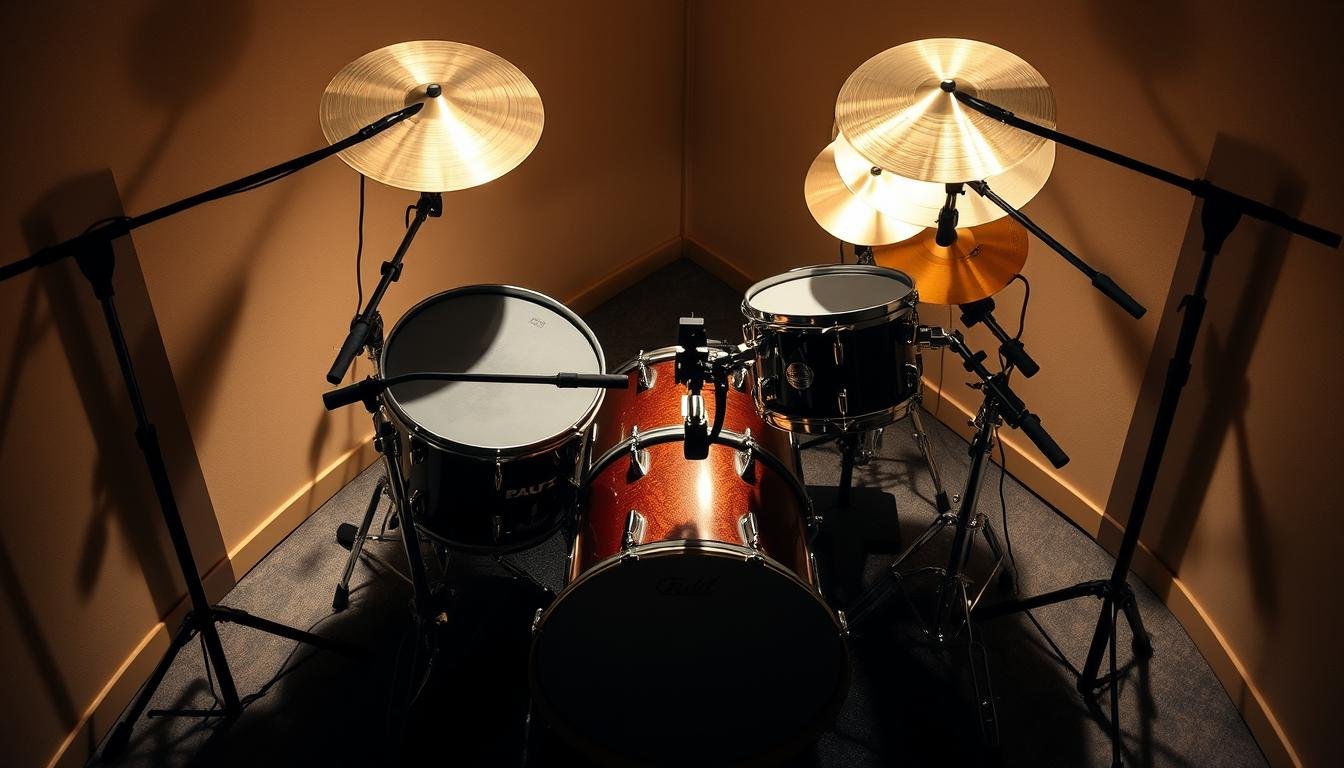
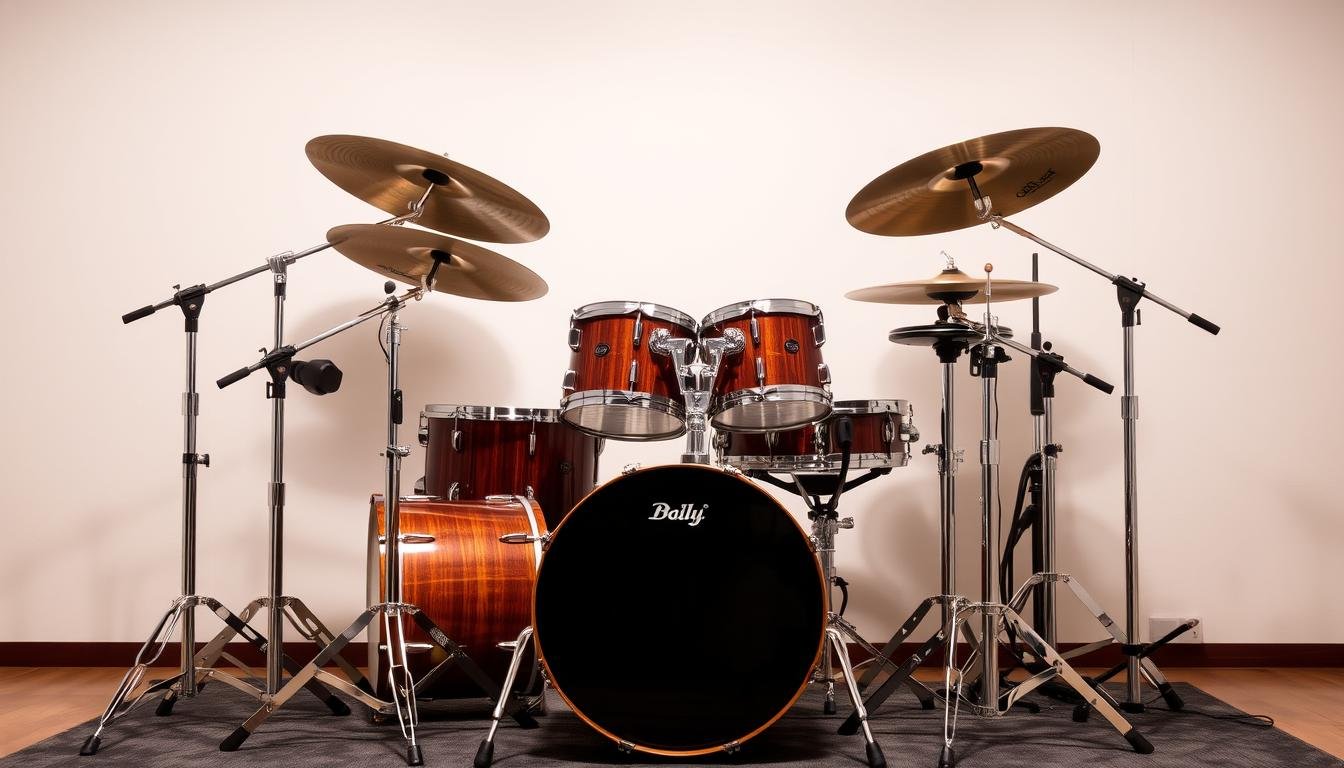
To enjoy drumming, knowing your drum kit is key. It has drums, cymbals, and hardware. Each part plays a special role in making your sound.
Bass Drum, Snare, and Toms
The bass drum, or kick drum, gives the low sound. The snare drum makes a sharp sound, often on the backbeat. Tomsadd melody with their different sizes.
Cymbals: Hi-Hats, Crash, and Ride
Cymbals add a bright sound to your drumming. Hi-hats are versatile, making different sounds. Crash cymbals are for accents, and ride cymbals keep a steady beat.
Hardware: Stands, Pedals, and Throne
The hardware includes stands and pedals. It also has the throne (drum stool). Getting your hardware right makes drumming better and more comfortable.
Electronic vs. Acoustic Options
You can choose between acoustic and electronic drums. Acoustic drums have a natural sound. Electronic drums are good for quiet practice or recording.
Knowing your drum kit’s parts helps you play better. It’s important for setting up and playing your drums.
Setting Up Your First Drum Kit
Setting up your drum kit right is key for a fun drumming experience. A well-organized kit boosts your performance and keeps you comfortable and injury-free.
Proper Positioning and Spacing
Start by placing your drums and cymbals where they’re easy to reach. Make sure your drum throne is set so you can sit comfortably. Your feet should be flat on the pedals, and your knees should be at a good angle.

Height Adjustments for Comfort
Getting the height of your drums and cymbals right is crucial for comfort. Your snare drum should be at a height that lets you hit it at a 90-degree angle. The hi-hats and cymbals should be placed to reduce arm strain.
Creating an Ergonomic Setup
An ergonomic setup is essential to avoid fatigue and injury. Here’s a table to help you set up your kit:
| Component | Ideal Position |
|---|---|
| Drum Throne | Feet flat on pedals, knees at 90 degrees |
| Snare Drum | At a 90-degree angle to your sticks |
| Hi-Hats and Cymbals | Minimize strain on your arms |
By following these tips, you can make an ergonomic drumming setup that improves your drumming.
Proper Drumming Posture and Technique
Learning the right drumming posture and technique is key for beginners. It helps improve your skills and keeps you injury-free. Starting with good habits makes drumming more fun and fulfilling.
Sitting Position and Stick Grip
It’s important to sit comfortably and balanced. Sit on the edge of your drum throne with your feet flat. Hold your drumsticks with a relaxed grip, not too tight or too loose. You can use either the matched grip or the traditional grip.
Hand Technique: Wrists vs. Fingers
Good hand technique uses both wrist and finger movement. For basic strokes, use your wrists for power and keep your fingers relaxed. As you get better, you’ll learn to move your fingers independently, which is important for complex patterns.
Foot Technique: Heel Up vs. Heel Down
Foot technique depends on the pedal type. For a standard bass drum pedal, heel-up is common for better control. Some prefer heel-down for certain styles or with a double bass setup.
Preventing Injury and Strain
To avoid injury, always warm up before playing and take breaks during practice. Keep a relaxed posture and don’t over-tighten your grip on the sticks. Using proper technique and stretching regularly can help prevent strain.
| Technique Aspect | Tips for Beginners |
|---|---|
| Sitting Position | Keep your back straight and feet flat on the floor or footrest. |
| Stick Grip | Hold sticks with a relaxed grip, avoiding excessive tension. |
| Hand Technique | Use your wrists for power and keep fingers relaxed. |
| Foot Technique | Experiment with heel-up and heel-down techniques for different effects. |
Beginner’s Guide to Playing Drums: Basic Beats
Learning basic drum beats is the first step to becoming a good drummer. These beats are the base for more complex rhythms. We’ll cover the basics, like the quarter note rock beat, eighth note variations, simple fills, and your first groove patterns.
The Quarter Note Rock Beat
The quarter note rock beat is a must-know for drummers. It’s a steady beat on the hi-hats, snare on beats 2 and 4, and bass on beats 1 and 3. Start slow and get faster as you get better.
Eighth Note Variations
When you’re good with the quarter note beat, try eighth note variations. This adds complexity by dividing the beat into eighth notes. Eighth note variations add texture and interest to your drumming.
Simple Fill Patterns
Fills are used to move between song sections or highlight parts of the rhythm. Simple fills use snare and tom-toms. Try different fills to find what works for you.
Your First Groove Patterns
Groove patterns are the feel and rhythm of music. Practice with your favorite songs to develop your groove. Here’s a simple table to help you start:
| Beat | Hi-Hats | Snare Drum | Bass Drum |
|---|---|---|---|
| 1 | X | X | |
| 2 | X | X | |
| 3 | X | X | |
| 4 | X | X |
Mastering these basic beats and groove patterns will help you become a skilled drummer. Practice often and enjoy your drumming journey!
Understanding Rhythm and Timing
Rhythm and timing are key in drumming. They form the base for all other skills. To be good at drumming, mastering rhythm and timing is essential.
Counting and Keeping Time
Counting is a basic skill for drummers. It means knowing musical notation and keeping a steady beat. Start with a metronome and practice simple time signatures like 4/4.
Using a Metronome Effectively
A metronome helps improve timing by giving a steady beat. Begin with a slow tempo and increase it as you get better. Focus on playing in time with the metronome, not on speed.
Developing Your Internal Clock
Having an internal clock is vital for drummers. It lets you play in time without a metronome. Practice playing along with your favorite songs to improve your internal clock.
Playing Along with Music
Playing along with music is great for improving timing and rhythm. Pick songs you like and practice staying in time with them.
| Exercise | Purpose | Tips |
|---|---|---|
| Playing with a Metronome | Improve Timing | Start slow, increase tempo gradually |
| Counting Exercises | Enhance Counting Skills | Practice with simple time signatures |
| Playing Along with Songs | Develop Internal Clock | Choose songs you enjoy, focus on staying in time |
By working on these areas and practicing often, you can greatly improve your rhythm and timing. This will make you a more confident and skilled drummer.
Reading Basic Drum Notation
Drum notation is the language of drumming. Learning it can open new doors for drummers. It lets you play along with written music, learn new songs, and even create your own drum parts.
Drum Staff and Note Placement
The drum staff is unique compared to other musical staffs. It has multiple lines, each for a different drum kit part. For example, the bass drum is often at the bottom line, and the snare drum is between the lines. Note placement on the staff tells you which drum or cymbal to play, so it’s key to understand this layout.
Common Notation Symbols
Drum notation uses symbols for different strokes, dynamics, and articulations. An “X” usually means crash cymbal, and an “O” might be an open hi-hat. Knowing these symbols is crucial for reading drum notation correctly.
Translating Notation to Your Kit
After learning the drum staff and symbols, you need to apply them to your drumming. This means matching the written notes to your drum kit. You must play the right drums and cymbals as shown in the notation.
Alternative: Learning by Ear
Reading drum notation is valuable, but it’s not the only way to learn. Many drummers learn by ear, listening to songs and mimicking the drum parts. This method is just as effective, great for those who learn better through sound or prefer to imitate.
Effective Practice Routines for Beginners
To get better at drumming, you need a practice routine that’s fun and focused. A good schedule helps you improve and stay excited about playing.
15-Minute Daily Warmups
Start with a 15-minute warmup each day. Begin with basic strokes and then move to more complex ones. This gets your muscles ready for more challenging practice.
30-Minute Skill-Building Sessions
Next, spend 30 minutes on exercises that build your skills. Work on coordination exercises, dynamic control, or basic grooves. Try playing along with a metronome to improve your timing.
Tracking Your Progress
It’s important to track how you’re doing. Use a journal or app to log your practice. Write down what you did, how fast you played, and any challenges.
| Date | Exercise Practiced | Tempo Achieved | Notes |
|---|---|---|---|
| 2023-04-01 | Basic Strokes | 120 BPM | Focused on evenness |
| 2023-04-02 | Rudiments | 100 BPM | Worked on single-stroke roll |
| 2023-04-03 | Groove Playing | 110 BPM | Practiced with metronome |
Balancing Technical Exercises with Fun
It’s key to mix technical exercises with fun. Set aside time to play your favorite songs or try improvising. This keeps your practice sessions fun and prevents getting bored.
By following these tips, you’ll not only get better at drumming but also stay excited about it.
Essential Drum Maintenance for Beginners
Keeping your drums in good shape is crucial. It makes them sound better and last longer. Regular care boosts sound quality and protects your drums from damage.
Tuning Your Drums
Tuning is a key part of drum care. It means adjusting the drumheads to get the right pitch. Begin with the batter head, then tweak the resonant head. Use a tuning key and make small adjustments, checking the pitch each time.
Cleaning and Care Basics
Cleaning your drums often keeps them looking fresh. Use a soft cloth and gentle soap for the shells. Stay away from harsh chemicals. For cymbals, a cymbal cleaner and soft cloth remove smudges and fingerprints.
| Component | Cleaning Method |
|---|---|
| Drum Shells | Mild Soap & Soft Cloth |
| Cymbals | Cymbal Cleaner & Soft Cloth |
When to Replace Heads and Sticks
Knowing when to swap out drumheads and sticks is important. Replace heads when they’re worn, like dented or frayed. For sticks, change them when they crack or chip.
Learning Resources to Accelerate Your Progress
Starting your drumming journey? It’s key to have the right tools to speed up your progress. With so much info out there, you can boost your skills with the best methods and tools.
Top YouTube Channels for Drum Lessons
YouTube is a top spot for drummers, with lots of tutorials and lessons. Drumeo and Mike Johnston are great, covering everything from basics to advanced patterns.
Recommended Books and Online Courses
For a more organized learning path, check out books and online courses. “The Drummer’s Bible” by Jim Rupp is a top pick. Sites like Drumeo and TakeLessons have courses for all skill levels.
Drum Apps and Software Tools
Drum apps and software are great for practice and learning. Apps like Drum Pad and Yousician offer interactive lessons. Software like Toontrack EZdrummer helps you make realistic drum tracks.
Finding the Right Drum Teacher
Finding a drum teacher can give you personalized feedback. Look for teachers who match your skill level. Many offer online lessons, making it easier to find the right one.
Conclusion: Your Drumming Journey Starts Now
Starting your drumming journey is exciting and rewarding. You’ll need the right equipment, technique, and practice routine to become skilled. As a beginner, focus on good habits and a strong foundation.
Beginner drumming tips include setting up a comfortable drum kit and practicing regularly. Seek help from online resources or a drum teacher. These steps will help you progress quickly and enjoy drumming’s benefits.
Drumming is more than playing the right notes; it’s about having fun and being creative. Stay patient, motivated, and enjoy learning. With dedication, you’ll play your favorite songs and enjoy drumming’s rewards.
FAQ
What is the best way to start learning drums as a beginner?
To start learning drums, first learn the basics. This includes how to stand, hold the sticks, and keep a rhythm. Use a beginner drum kit and practice every day. Lessons from a teacher or online tutorials can also help.
How often should I practice drumming?
Practice drumming daily, even if it’s just for a short time. Aim for 15-20 minutes a day. This helps you get better and improve your skills.
What are the essential pieces of equipment I need to get started with drumming?
You’ll need drum sticks, a practice pad or a beginner drum kit, and headphones. A good drum throne and a metronome are also useful.
How do I tune my drums?
Tuning drums means adjusting the drumheads to the right pitch. You can use a tuner or tune by ear. Online resources or a drum teacher can help you tune correctly.
Can I learn to play drums without reading music?
Yes, you can learn drums without reading music. Many learn by ear or tablature. But knowing basic drum notation can help you learn more.
What are some effective ways to improve my timing and rhythm?
Improve timing and rhythm by practicing with a metronome and playing along with songs. Focus on your internal clock. Regular practice and listening to different music also helps.
How do I prevent injury while drumming?
Prevent injury by playing with the right posture, warming up, and taking breaks. Listen to your body and stop if you feel pain.
What are some good resources for learning drums?
Good resources include online lessons on YouTube, drum apps like FXPansion and Yousician, and online courses. Books and a qualified drum teacher are also great resources.