
Welcome to the ultimate beginner’s guide to playing bass guitar! This guide is here to help you start your musical journey. It covers the basics of the bass guitar, the gear you need, and how to play.
With a friendly tone and step-by-step instructions, you’ll soon become a skilled bass player. This guide is perfect whether you want a new hobby or a music career. It gives you the basics to get started.
Key Takeaways
- Understanding the basics of the bass guitar
- Choosing the right equipment for beginners
- Learning fundamental playing techniques
- Getting started with beginner bass lessons
- Tips for effective practice and progress
Understanding the Bass Guitar: Anatomy and Function
The bass guitar adds deep tones to music, making it essential for bands. To fully appreciate its role, knowing its anatomy and function is key.
Parts of the Bass Guitar
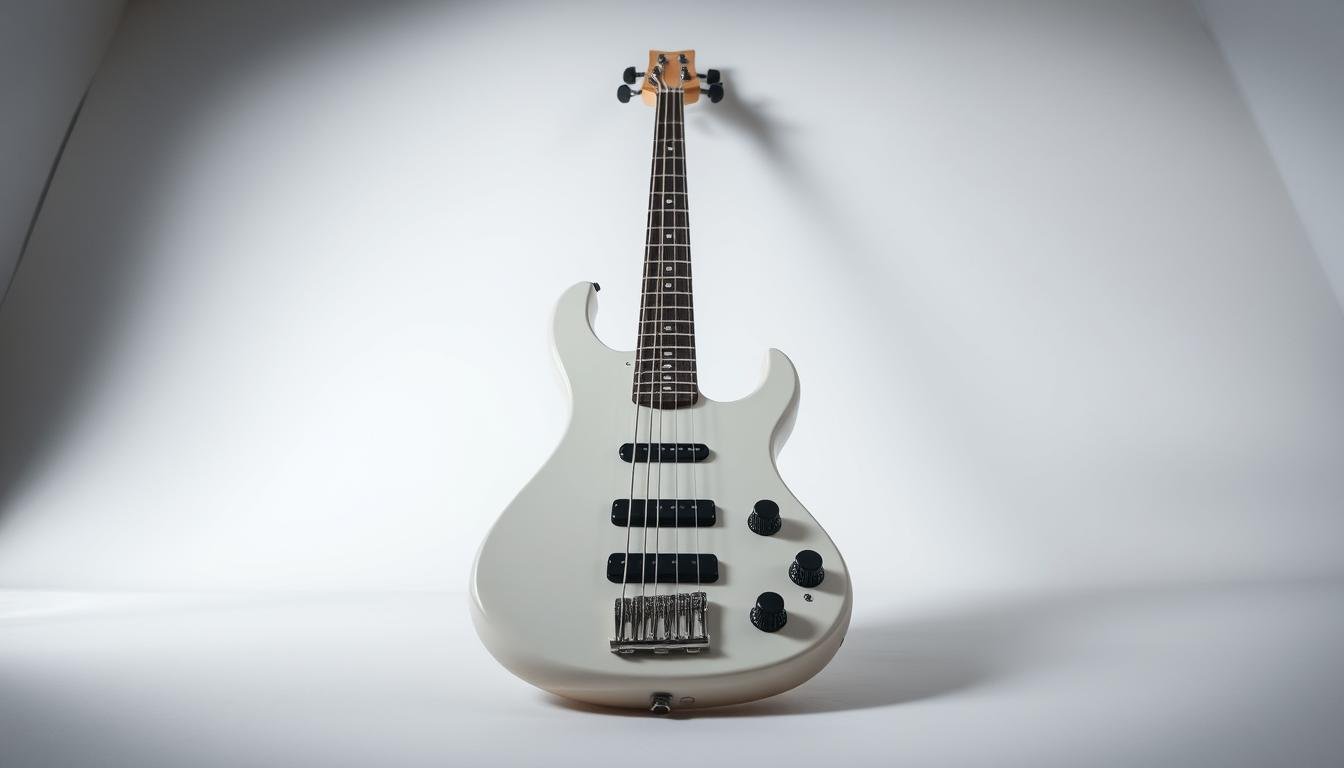
The bass guitar has several important parts. The body is usually made of wood and holds the electronics. The neck has the fretboard, used to play different notes. The headstock has the tuning machines that adjust the strings’ pitch.
Different Types of Bass Guitars
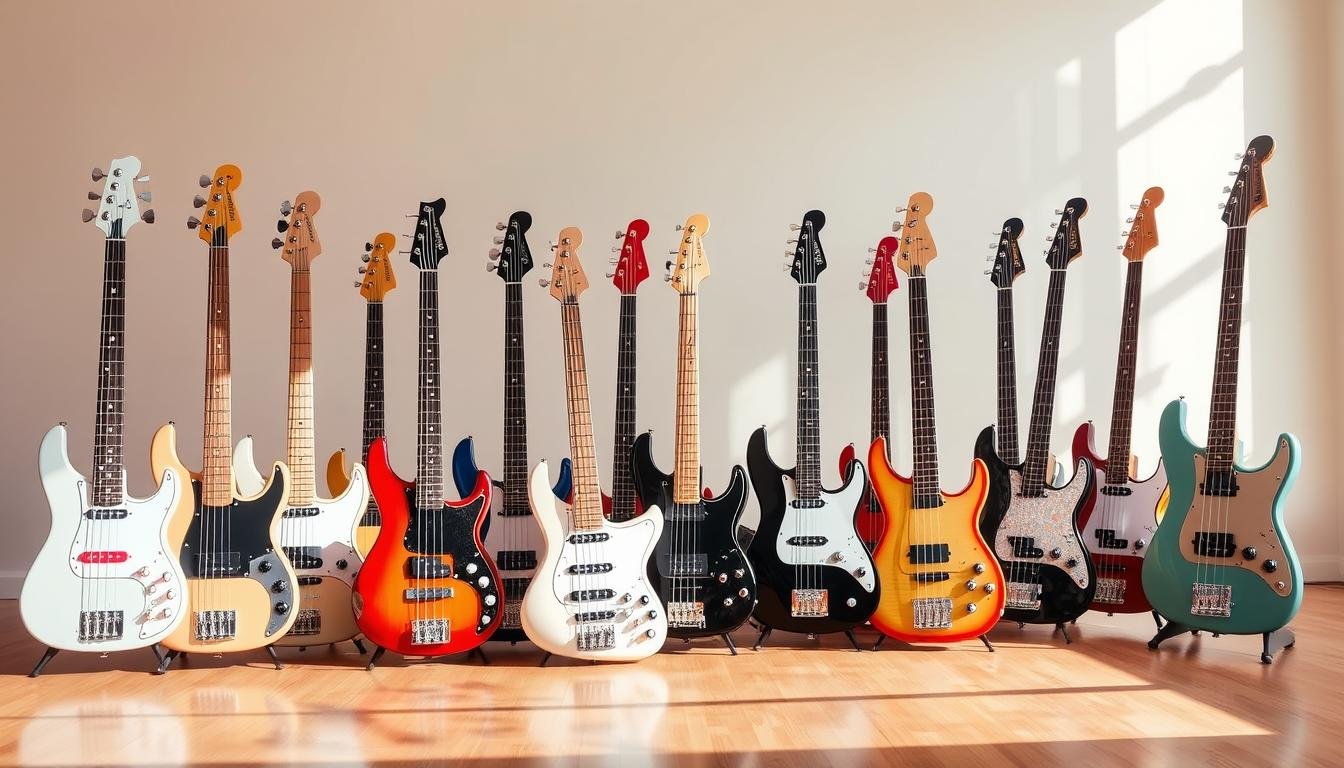
Bass guitars vary, including four-string and five-string models. The four-string is tuned to E-A-D-G, while the five-string adds a B string for more range. There are also acoustic and electric bass guitars, each for different music styles.
| Type of Bass Guitar | Tuning | Common Use |
|---|---|---|
| Four-String | E-A-D-G | Rock, Pop, Jazz |
| Five-String | B-E-A-D-G | Metal, Progressive Rock |
| Acoustic | Varies | Folk, Unplugged Sessions |
The Role of Bass in Music
The bass guitar is crucial in music, providing low-end frequencies. It gives songs rhythm and depth. It works with drums to support the melody and harmony.
In different genres, the bass has various roles. It can be subtle in jazz or a driving force in rock.
Essential Equipment for New Bass Players
New bass players need to know the essential gear to start their musical journey. The right equipment makes learning better and boosts performance.
Choosing Your First Bass Guitar
When choosing a bass guitar, think about your budget, size, and style. Beginners might like a short-scale bass for easier playing. Make sure the action and intonation are good for a smooth play.
Amplifiers and Accessories
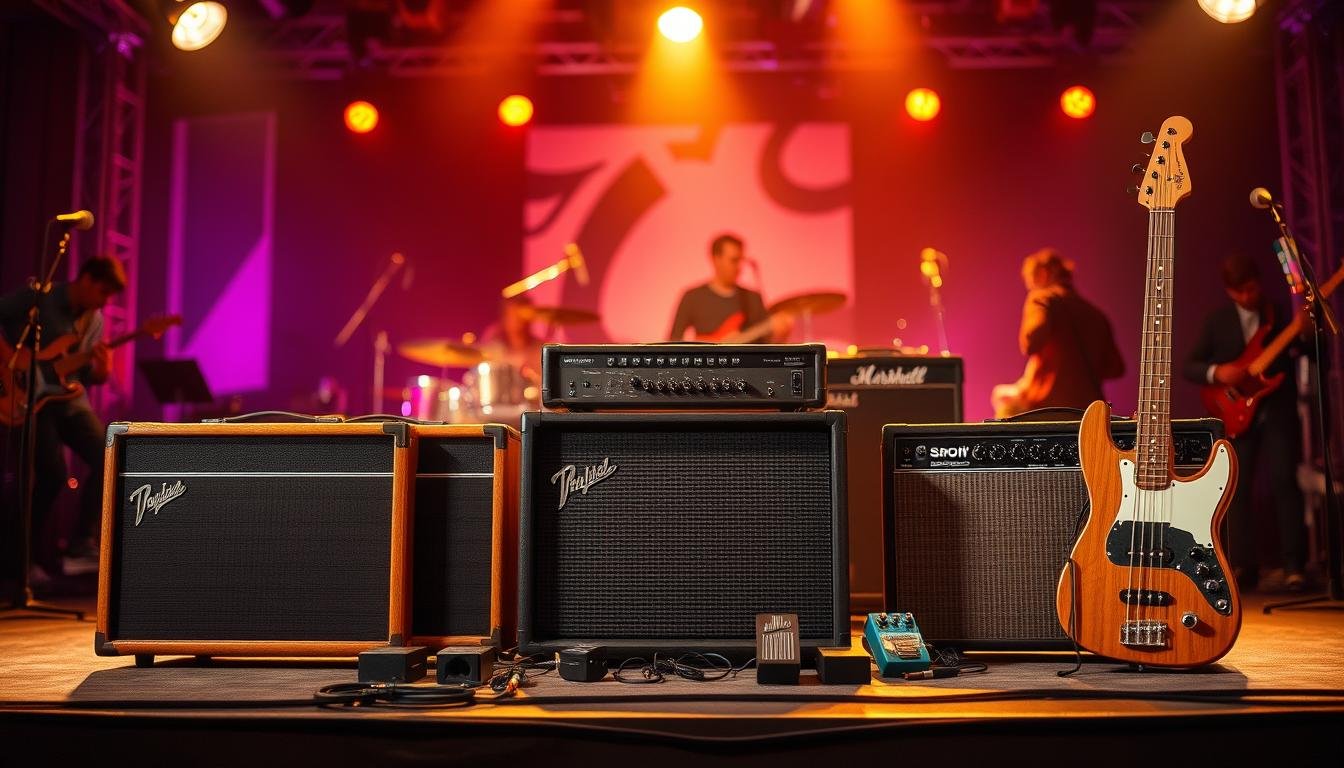
A good bass amplifier is key for great sound. Find an amp that fits your bass’s power needs. You’ll also need a quality strap, tuner, and cable as bass accessories.

Must-Have Tools for Maintenance
Keeping your bass guitar in good shape is important. You’ll need a string winder, cutters, and a soft cloth for cleaning. Knowing how to use these tools will help keep your bass in top shape.
Getting Started: Holding and Positioning Your Bass
Starting to play bass? It’s key to learn how to hold it right. Good posture and positioning help you play comfortably and well.
Proper Posture and Ergonomics
Good posture is important to avoid getting tired or uncomfortable. Stand or sit straight with your bass at a comfy angle. Keep your back straight and avoid leaning forward, as this can strain your back and neck.
Strap Height and Adjustment
The bass strap’s height affects your comfort. Adjust it so the bass feels right on your body, letting you play without straining. Try different strap heights to see what feels best.
| Strap Height | Playing Position | Comfort Level |
|---|---|---|
| High | Neck angle is more vertical | May cause strain on the shoulder |
| Low | Neck angle is more horizontal | May cause strain on the wrist |
| Medium | Neck angle is balanced | Most comfortable for playing |
Sitting vs. Standing Techniques
Playing sitting or standing depends on what you like and the music you play. Sitting can be steadier, while
Focus on posture, strap height, and playing techniques. This will help you develop good habits and improve your bass-playing.
How to Play Bass Guitar: A Complete Beginner’s Guide
To start playing bass guitar, you need to learn how to hold your hands and fingers. These basics are important for your musical growth.
Hand Positioning and Basic Fingering
Playing the bass guitar well starts with the right hand position. Place your fretting hand near the fretboard. Your fingers should curl over the fretboard, and your thumb should be behind the neck. For your plucking hand, put your thumb on the pickup or the bass’s body. Use your index and middle fingers to pluck the strings.

Your First Notes and Strings
Begin by playing the open strings to feel the bass. The standard tuning is E-A-D-G. Practice playing each string cleanly. Once you’re comfortable, start playing notes on the fretboard.
Steve Swallow, a famous bassist, said, “The bass is not just a rhythm instrument; it’s also a melodic instrument.”
Reading Bass Tablature and Notation
Bass tablature (tab) is a simple way to write bass music. It has four lines for the bass’s four strings. Numbers on these lines tell you which fret to press on the string.
| String | Open Note | 1st Fret | 2nd Fret |
|---|---|---|---|
| E | E | F | F# |
| A | A | A# | B |
| D | D | D# | E |
| G | G | G# | A |
For beginner bass lessons, mastering these basics is crucial. Regular practice of reading bass tablature will boost your skills.
Tuning Your Bass Guitar
Tuning your bass guitar is a key skill for every bassist. It makes sure your bass sounds good with other instruments. It also helps you improve your musical ear.
Standard Tuning Explained
The standard tuning for a 4-string bass is E-A-D-G. This order goes from lowest to highest pitch. It’s used in most music genres and is a good starting point for learning other tunings.
Using Electronic Tuners
Electronic tuners are quick and precise for tuning your bass. They show the string’s pitch, helping you adjust it to the right note. To use one, pluck the string and tweak it until the needle is in the middle of the display.
Tuning by Ear and Relative Tuning
Tuning by ear means adjusting strings based on a known pitch. Relative tuning tunes the bass to itself, ensuring the strings sound good together. This method is handy when you don’t have a reference pitch.
| Tuning Method | Description | Usefulness |
|---|---|---|
| Electronic Tuner | Uses a device to display pitch accuracy | High accuracy, easy to use |
| Tuning by Ear | Adjusts strings based on a reference pitch | Improves musical ear, flexible |
| Relative Tuning | Tunes the bass to itself | Useful without a reference pitch |
Fundamental Playing Techniques
Starting your bass playing journey means learning the basics. These skills are key to moving on to more advanced techniques. They also help you find your own unique style.
Fretting Hand Fundamentals
The fretting hand presses the strings against the fretboard to play different notes. It’s important to place your fingers correctly and press hard enough. Keep your fingers close to the fretboard and use the pads to press the strings down firmly.
Plucking Hand Techniques
The plucking hand, or picking hand, strikes the strings. You can use fingerstyle or slap bass techniques. Fingerstyle playing gives a warm sound. Slap bass, with thumb slapping and finger popping, adds a percussive touch.
Finger vs. Pick Playing Styles
Many bass players wonder if to use fingers or a pick. Fingerstyle playing offers control and a warm tone. A pick, on the other hand, gives a brighter sound. Your choice depends on your preference and the music style.
| Playing Style | Characteristics | Suitable Music Genres |
|---|---|---|
| Fingerstyle | Warm tone, more control | Jazz, Funk, Rock |
| Using a Pick | Bright tone, aggressive sound | Rock, Metal, Punk |
Understanding Bass Guitar Scales and Theory
Exploring bass guitar scales and music theory can unlock new creative paths. As you grow as a bass player, grasping these concepts is key. It boosts your musical skills and improvisation.
Major and Minor Scales
Major and minor scales form the base of music theory. The major scale has a bright, upbeat feel. In contrast, the minor scale has a more somber tone. For example, the C major scale includes C, D, E, F, G, A, B, and C.
Knowing these scales helps you move around the fretboard. It lets you craft melodies that match a song’s key.
Pentatonic Scales for Beginners
The pentatonic scale is a five-note scale perfect for beginners. It’s flexible and fits many styles, from rock to jazz. The A minor pentatonic scale, for instance, has A, C, D, E, and G.
This scale is excellent for improvising. It helps create bass lines that sound natural and musical.
The Fretboard and Note Locations
Getting to know the fretboard notes is essential. The bass guitar fretboard is split into semitones, with each fret marking a half-step. Learning the fretboard lets you play scales, chords, and melodies with ease.
Start by recognizing the open strings (E, A, D, G for a 4-string bass). Then, learn the notes at each fret along the neck.
By mastering bass guitar scales and music theory, you’ll enhance your playing. You’ll also connect more deeply with the music you play.
Creating Bass Lines and Rhythms
To make great bass lines, you need to understand how the bass guitar and drums work together. This partnership is key to a song’s rhythm and groove. A good bass line and drum pattern together make a song sound cohesive and fun.
The Relationship Between Bass and Drums
The bass guitar and drums form the rhythm section of a band. They work together to lay down the song’s foundation. The bass line should match the drum pattern, creating a strong rhythmic base. This teamwork is vital for a solid groove.
Walking Bass Lines
A walking bass line moves in a steady, stepwise motion. It’s common in jazz and blues. This pattern adds depth and interest to a song, making it feel like it’s moving forward. To play a walking bass line, mix quarter notes and eighth notes for a smooth rhythm.
Groove and Feel Development
Creating a strong groove is key to making bass lines that grab your attention. It’s about feeling the music’s rhythm and timing. Practice playing with different drum patterns to improve your groove and feel.
Some important things to focus on when working on your groove include:
- Playing with a strong, consistent rhythm
- Using dynamics to add expression and feeling to your playing
- Experimenting with different articulations and techniques to add texture and interest
Common Bass Playing Techniques
As you get better at playing bass, learning new techniques is key. These skills add depth and emotion to your music. They also make your playing more expressive.
Slapping and Popping
Slapping and popping are exciting techniques in bass playing. You slap the string with your thumb for a sharp sound. Then, you pop it with your fingers for a snappy tone.
These techniques give your playing a unique flavor. They’re great for funk, rock, and pop music.
Hammer-ons and Pull-offs
Hammer-ons and pull-offs help you play smoothly. A hammer-on is when you quickly press your finger down on the fretboard. A pull-off is when you pluck the string and then release it.
These techniques are crucial for playing melodic lines. They’re used in many musical styles.
Slides, Bends, and Vibrato
Slides, bends, and vibrato add emotion to your playing. Sliding moves your finger along the string to a new note. Bending a string raises the pitch, making your playing sound more like a voice.
Vibrato, done by rocking your finger on the string, adds a wavering effect. Mastering these techniques will boost your musicianship.
Adding these advanced techniques to your practice will improve your skills. It will also let you play with more feeling and nuance.
Troubleshooting Common Beginner Problems
Starting with the bass guitar can bring a few hurdles. Issues like finger pain, fret buzz, and speed challenges are common. These problems can slow down your progress.
Dealing with Finger Pain and Building Calluses
Finger pain is a common issue for new bass players. To ease this, start with short practice sessions and gradually increase the time. Using a proper playing technique can also help reduce discomfort.
- Take regular breaks during practice
- Keep your fingernails short to avoid pain
- Stretch your fingers before and after playing
Eliminating Fret Buzz
Fret buzz can be annoying and affect sound quality. To fix it, make sure your bass guitar is properly set up. Check the action (string height) and adjust if needed. A higher quality cable and correct playing technique can also help.
Improving Speed and Accuracy
Improving speed and accuracy needs consistent practice. Use a metronome to improve timing and focus on playing cleanly. Start slow and increase speed as you get more comfortable.
“Practice is the best of all instructors.” – Publilius Syrus
By tackling these common issues, you can greatly enhance your bass playing. Remember, patience and persistence are crucial to overcoming these challenges.
Developing an Effective Practice Routine
Creating a consistent practice routine is key to getting better at bass. A good routine boosts your technique and musical skills. It also helps you reach your goals faster.
Daily Finger Exercises
Doing finger exercises every day is essential for better dexterity and strength. Try simple things like spreading your fingers, bending them, and playing chromatic scales. Start with short times and get longer as your fingers get used to it.
Metronome Practice
Practicing with a metronome is great for timing and rhythm. Start slow and aim to play in time with the metronome. When you get better, raise the tempo to keep challenging yourself.
Ear Training for Bass Players
Ear training is a must-have skill for bass players. It lets you learn songs by ear and improvise better. Learning songs by ear sharpens your listening and playing by instinct.
Learning Songs by Ear
To learn a song by ear, listen to it a lot. Try to play the bass line you hear. This improves your ear and shows you how bass lines work.
| Practice Activity | Frequency | Benefits |
|---|---|---|
| Finger Exercises | Daily | Improved dexterity and strength |
| Metronome Practice | 3 times a week | Enhanced timing and rhythm |
| Ear Training | 2 times a week | Better musicality and improvisation skills |
Conclusion: Taking Your Bass Playing to the Next Level
Now that you’ve finished this guide, it’s time to improve your bass skills. Becoming a skilled bass player takes hard work, trying new techniques, and learning more about music.
To get better, try playing different kinds of music. Learn to slap and pop on the bass to make your sound richer. Knowing how the bass fits into various musical settings will also help you grow.
Keep setting new goals for yourself. This could mean learning new songs, getting better with a metronome, or learning to play by ear. The journey to becoming a better bass player involves practice, exploring music, and playing live.
Stay dedicated to your practice and always be open to new music. Join the bass community, look for new learning chances, and enjoy the journey of improving your bass skills.
FAQ
What is the best bass guitar for a beginner?
Choosing the best bass guitar for a beginner depends on what you like and how much you want to spend. The Fender Squier series and the Yamaha TRBX series are good choices. They offer quality at a lower price.
How often should I practice playing bass guitar?
To get better, practice every day, even if it’s just for a little while. Regular practice helps build muscle memory and improve your skills.
What is the difference between a 4-string and a 5-string bass guitar?
A 4-string bass has four strings, while a 5-string has five. The 5-string adds a lower string, making it sound deeper.
How do I tune my bass guitar?
You can tune your bass guitar with an electronic tuner, by ear, or relative tuning. For a 4-string bass, the standard tuningis E-A-D-G, from lowest to highest.
What are some common techniques used in bass playing?
Bass players use fingerstyle, slap bass, and a pick. Techniques like hammer-ons, pull-offs, slides, bends, and vibrato add flair to your playing.
How can I improve my timing and rhythm while playing bass?
Using a metronome helps improve your timing and rhythm. It helps you keep a steady beat and enhances your playing.
Can I learn to play bass guitar without a teacher?
Yes, you can learn to play bass guitar on your own. Online tutorials, books, and videos can guide you. But, a teacher can give you personalized advice and help.
What are some essential accessories for a bass guitar?
You’ll need an amplifier, a tuner, a strap, and a gig bag or case. A metronome, effects pedals, and a music stand are also useful.