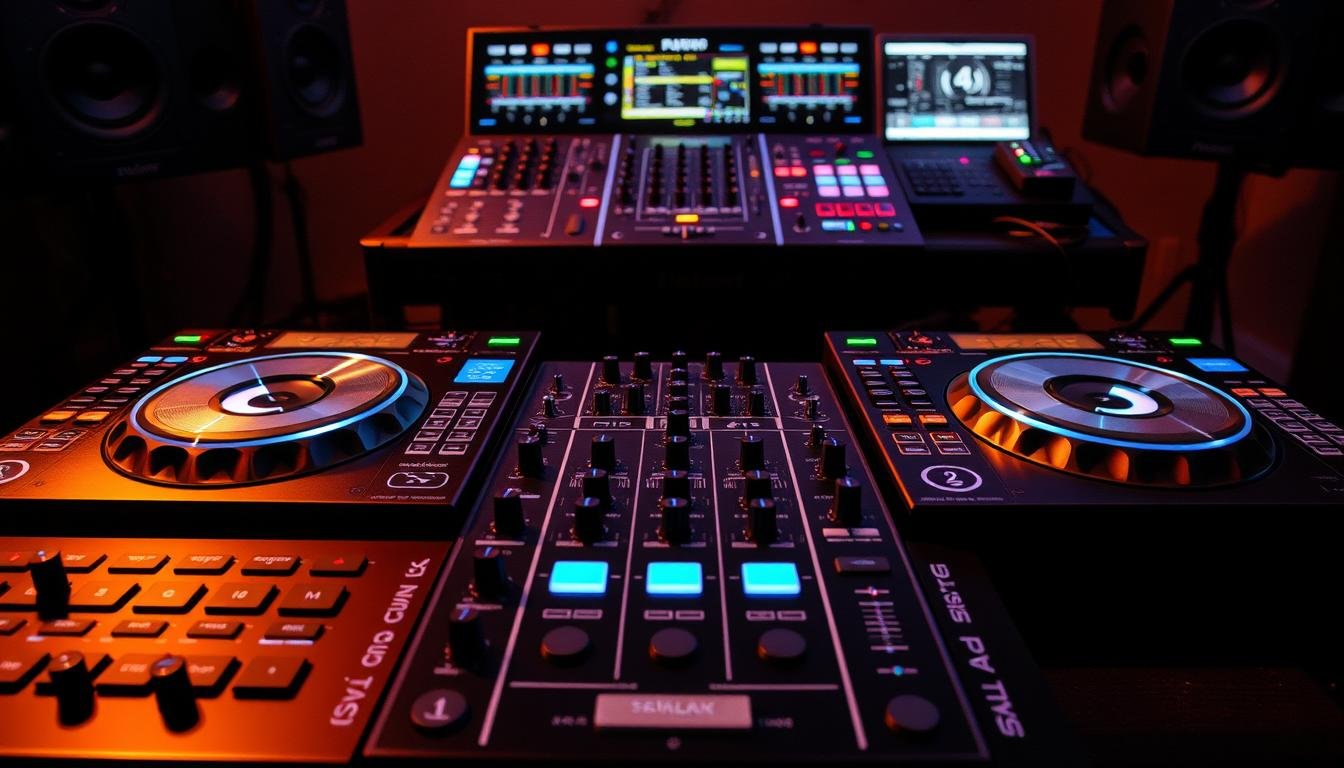


Starting your journey to becoming a DJ can be thrilling and a bit scary. But with the right help, beginners can easily find their way in the DJ world.
First, you need to learn the DJing basics. This guide will show you the first steps to becoming a DJ. You’ll learn how to set up your gear and perform your first gig.

If you want to play at a local club or make your own mixes, this DJ guide for beginners has what you need. It will give you the tools to succeed.
Key Takeaways
- Understand the basics of DJing and what’s involved in becoming a DJ.
- Learn how to set up your equipment and software.
- Get tips on how to practice and improve your DJing skills.
- Discover how to create your own unique sound and style.
- Find out how to take your DJing to the next level and perform live.
What is DJing? Understanding the Basics
DJing has grown a lot over the years. It’s now a big part of music today. DJs pick and play music for people, using things like turntables and digital controllers.
The Role of a DJ in Modern Music Culture
DJs are key in today’s music scene. They make special music moments for their fans. They choose songs, read the crowd, and change their show to fit the mood.
Different Types of DJs and Their Specialties
DJs vary based on where they play and what music they play. Knowing these differences helps us see the DJ world’s variety.
Club DJs vs. Radio DJs vs. Mobile DJs
Club DJs work in nightclubs, making the dance floor come alive. Radio DJs reach more people through the airwaves. Mobile DJs play at events like weddings and parties.
Genre Specialists vs. Open Format DJs
Genre specialists stick to certain music styles, like electronic or hip-hop. Open format DJs play many genres to please different tastes.
Essential DJ Equipment for Beginners
Starting your DJing journey means getting the right gear. As a beginner, knowing the basic equipment is key. It helps you practice and perform.
DJ Controllers: Your First Investment
A DJ controller is the core of your setup. It lets you control digital files and software. It’s a vital investment for any new DJ.
Entry-Level Controller Recommendations
For beginners, Pioneer DJ and Native Instruments have great options. The Pioneer DJ DDJ-400 and the Native Instruments Traktor Kontrol S2 are favorites.
Controller Features to Consider
When picking a controller, think about the number of channels and jog wheels. Also, look for effects controls. USB connectivity is key for easy laptop connection.
Headphones and Speakers
Quality DJ headphones are vital for beatmatching and mixing. They should have clear sound and be comfy. Speakers or monitors are also crucial for accurate sound.
Laptop Requirements and Considerations
Your laptop is the heart of your setup, running DJ software. Make sure it meets the software’s needs. It should have enough RAM and a strong processor.
Optional Equipment: Mixers, Turntables, and CDJs
While not needed for beginners, mixers, turntables, and CDJs are worth exploring. They add flexibility and professional features as you grow.
DJ Software: Choosing Your Digital Workstation
Choosing the right DJ software is key for beginners. It’s your digital workstation for mixing and playing tracks. With many options, it’s important to know the differences.
Popular DJ Software Options for Beginners
Beginners often choose software for its ease and features. Here are some popular ones:
- Serato DJ: Known for its easy interface and controller support.
- Rekordbox: Offers a professional feel with a user-friendly design, great for skill growth.
- Virtual DJ: Versatile with many features and controller support.
- Traktor Pro: Advanced features for those diving deep into DJing.
Serato DJ
Serato DJ is easy to use and works with many controllers. It’s perfect for beginners who want simplicity.
Rekordbox
Rekordbox has a professional feel but is easy to use. It’s great for beginners who want to grow and invest in better gear.
Virtual DJ
Virtual DJ is versatile and has many features. It works with many controllers, offering flexibility.
Traktor Pro
Traktor Pro is advanced but great for beginners who want to learn and grow.
Free vs. Paid Software: What’s Worth It?
Free and paid DJ software options exist. Free software is a good start, but paid offers more features and support.
“The best software for you depends on your specific needs, budget, and the type of DJing you want to do.”
Software and Hardware Compatibility
Make sure your DJ software works with your hardware. Most software supports many controllers, but check before buying.
| Software | Controller Compatibility | Price |
|---|---|---|
| Serato DJ | Wide range of controllers | $99-$129 |
| Rekordbox | Pioneer DJ controllers | $109-$219 |
| Virtual DJ | Many controllers supported | Free-$299 |
| Traktor Pro | Native Instruments controllers | $99-$299 |

Building Your Music Library
Building a music library is key to being a great DJ. A good library helps you create exciting sets. It also lets you connect with different crowds and places.
Legal Ways to Source Music
To grow your library, you must get music the right way. There are many legal ways to do this:
Digital Music Stores
Places like Beatport, iTunes, and Amazon Music have lots of tracks. You can buy single songs or albums. This gives you a huge music collection.
DJ Pools and Subscription Services
DJ pools and services like DJ Pool and Traxsource offer special tracks. They’re great for finding new and underground music.
Organizing Your Collection Effectively
After getting music, organize it well. Use tools like Serato or Rekordbox. Sort tracks by genre, BPM, and key. This makes finding songs for your shows easier.
Understanding Music Formats and Quality
Knowing about music formats and quality is important. DJs usually prefer digital files in WAV or FLAC formats. These give the best sound for professional shows.
Crate Digging: Finding Unique Tracks
Finding unique tracks is an art. Look online, in social media groups, and DJ forums. This way, you can create your own sound and stand out.
Mastering Basic DJ Techniques
Learning to DJ starts with basic techniques. These skills help you mix tracks smoothly, keep the crowd interested, and find your own style.
Beatmatching: The Foundation Skill
Beatmatching is key to DJing. It lets you switch tracks without a hitch. You adjust the songs’ tempos so their beats match up perfectly. To get good at it, listen to the kick drums and use visual cues from your DJ software.
Transitioning Between Tracks
Smoothly moving from one track to another keeps the dance floor alive. Basic mixing techniques include fading out the old track while bringing in the new one. Or, you can do a quick mix by briefly playing both tracks together.
Basic Mixing Techniques
Try out different mixing styles. For example, you can slowly introduce the new track, or switch to it suddenly.
Understanding Phrasing
Phrasing means knowing a song’s structure. It includes the intro, build-up, climax, and outro. This helps you mix tracks at the right moments, making the flow natural.

EQ and Volume Control Basics
Equalization (EQ) and volume control are vital for a balanced mix. Use EQ to fix frequency clashes and keep volumes steady.
Using Effects and Samples
Effects and samples can make your mixes more interesting. Start with simple effects like reverb and delay. Learn to use them well. Samples can add flavor or create cool transitions.
Reading the Crowd
Knowing how to read the crowd is crucial. Watch how they react and adjust your set. This might mean changing the music’s genre, tempo, or energy.
By learning these basic DJ skills, you’ll be well on your way to becoming a great DJ. You’ll be able to entertain and engage any audience.
How to Become a DJ: The Complete Step-by-Step Process
Becoming a successful DJ takes clear goals, dedicated practice, and the right resources. It’s important to know the steps to go from beginner to skilled DJ.
Setting Realistic Goals and Timelines
Setting achievable goals is key when learning to DJ. This could mean mastering a new technique each week or practicing for a certain number of hours daily. Having a clear timeline helps in tracking progress and staying motivated.
Creating a Practice Schedule
A consistent practice schedule is vital for improving DJing skills. Set specific times of the day or week for practicing beatmatching, transitioning between tracks, and using effects. A well-structured practice routine ensures steady progress.
| Day | Practice Activity | Duration |
|---|---|---|
| Monday | Beatmatching | 1 hour |
| Wednesday | Track Transitioning | 1.5 hours |
| Friday | Effects and Sampling | 2 hours |
Tracking Your Progress
Keeping track of your progress is essential to identify areas that need improvement. Record your practice sessions, note down challenges, and celebrate your achievements. This reflective practice helps in refining your skills.
“The key to success is to focus our conscious mind on things we desire not things we fear.” – Brian Tracy
Learning Resources: Courses, Tutorials, and Mentors
Using the right learning resources can significantly enhance your DJing journey. Online courses, YouTube tutorials, and experienced mentors can provide valuable insights and techniques.
Online DJ Schools and Communities
Online platforms like Pioneer DJ and DJ Forums offer structured courses and a community to connect with other DJs. These resources are invaluable for learning new techniques and staying updated with industry trends.
YouTube Channels and Podcasts for DJs
Channels like DJ TechTools and The DJ Podcast provide tutorials, tips, and industry insights. Subscribing to these can keep you informed and inspired.
By following these steps and utilizing the available resources, you can systematically improve your DJing skills and move closer to achieving your goals.
Developing Your Unique DJ Style
As you grow in DJing, creating a unique style is key to standing out. Your DJ style shows who you are through music and creativity.
Finding Your Musical Identity
To find your unique DJ style, first discover your musical identity. This means exploring different genres and finding the music you love.
Try out various genres to see what fits you and your fans. Listen to many songs, from old classics to new hits, to learn more about music.
Techniques for Standing Out in a Crowded Field
To stand out, you must offer something unique. This could be your setlists, how you mix tracks, or your energy on stage.
- Use creative transitions between songs to keep your sets exciting.
- Add original remixes and edits to make your performances special.
- Create a signature sound that makes you different from other DJs.
Balancing Crowd-Pleasing and Artistic Expression
It’s important to balance pleasing the crowd and staying true to your music. Know what your audience likes while keeping your artistic vision.
Use crowd feedback to tweak your sets and style. This way, you meet your audience’s needs while staying true to yourself.
Creating Original Remixes and Edits
Making original remixes and edits shows your creativity and adds something special to your sets. Try new things to make fresh versions of popular songs.
By adding original remixes to your shows, you can stand out from others. You’ll leave a memorable mark on your audience.
From Bedroom to Club: Getting Your First Gigs
Going from a bedroom DJ to a club performer takes skill and strategy. To move up, focus on getting your first gigs.
Creating a Demo Mix
A demo mix is key to show your talent to venues. Make sure it’s well-mixed and shows your style. Keep it short, around 15-20 minutes.
Networking in the DJ Community
Networking is vital in the DJ world. Go to events, join forums, and meet other DJs and promoters. This can open doors and give you advice.
Approaching Venues and Event Organizers
Look for venues and events that fit your style. Have a professional package ready with your demo mix, bio, and experience. Be confident and keep trying when you reach out.
Starting with Free or Low-Paying Gigs
Be ready to start with low-paying or unpaid gigs to learn. These gigs can boost your confidence and reputation.
Preparing for Your First Live Performance
After getting a gig, prepare well. Practice your set, check your gear, and plan for surprises. Arrive early to set up and get used to the venue.
By working on these steps, you’ll be on your way to your first gigs and starting your DJing career.
Building Your DJ Brand
Creating a strong DJ brand is key to success. Your brand is more than a logo or name. It’s how you present yourself to your audience.
Social Media Strategies for DJs
Social media is a great tool for building your DJ brand. Use Instagram, Facebook, and Twitter to connect with fans, share music, and promote gigs. Consistency is key on social media. Posting regularly with quality content will grow your fan base.
Creating Professional Promotional Materials
Professional materials like business cards and flyers are vital. Invest in high-quality design that matches your brand’s image.
| Promotional Material | Purpose |
|---|---|
| Business Cards | Networking and providing contact information |
| Flyers | Promoting gigs and events |
Developing a Memorable DJ Name and Logo
Your DJ name and logo are crucial. Choose a name that’s unique and memorable. Make a logo that shows your style.
Building an Online Presence
Creating a DJ Website
A professional website is your online home. It should have your bio, music, upcoming gigs, and contact info.
Streaming Platforms and Podcasts
Share your music on Spotify and Apple Music. Also, consider podcasts to reach more people.
DJ Career Paths and Income Potential
The DJ world offers many career paths, like performing, producing, and teaching. Aspiring DJs can find success in different ways, each with its own challenges and rewards.
Club Residencies vs. Touring
Many DJs start with club residencies for a steady income and loyal fans. Touring brings the excitement of new venues and audiences. Some DJs do both, keeping a residency while touring.
Festival and Corporate Events
Festivals and corporate events are great for DJs. They can earn a lot and reach many people. To get these gigs, DJs must build a strong reputation and network.
Production and Remixing
Creating original tracks and remixes boosts a DJ’s career. It increases their income through royalties and improves their artist reputation.
Teaching and Mentoring
Experienced DJs can teach or mentor newcomers. This job offers a stable income and helps the community.
Realistic Income Expectations for New DJs
New DJs should have realistic income hopes. Early gigs may not pay much, but as they grow, so does their income. A mix of performances, production, and teaching can lead to a steady income.
Diversifying their careers helps DJs achieve financial stability and creative fulfillment. Whether through performance, production, or teaching, the DJ world offers many opportunities.
Conclusion: Your Journey as a DJ
Starting your DJ journey needs dedication, creativity, and a love for music. This guide has shown you the basics, the gear you need, how to master techniques, and how to create your own style.
Remember, practice is crucial as you begin. Keep working on beatmatching, switching tracks smoothly, and trying out different effects. With effort and dedication, your passion can become a career.
Your DJ adventure is just starting. This guide’s end marks the beginning of an exciting journey. Stay focused, keep learning, and most importantly, enjoy making and sharing music with others.
FAQ
What is the best DJ software for beginners?
For beginners, Serato DJ, Rekordbox, and Traktor Pro are great. They are easy to use and work well with many DJ controllers.
What equipment do I need to start DJing?
You’ll need a DJ controller, a laptop, and DJ software to start. You might also want headphones and speakers.
How do I build a music library for DJing?
You can find music on Beatport and iTunes, or through DJ pools and services like DJ EZ. It’s important to organize your music well.
What are the key skills I need to learn to become a DJ?
Learning to beatmatch and transition tracks is key. You also need to know how to read the crowd. Don’t forget about EQ, volume control, effects, and samples.
How can I get my first DJ gigs?
Make a demo mix and network in the DJ world. Approach venues and event organizers. Start with free or low-paying gigs to get experience.
How do I develop my unique DJ style?
Find your musical identity and try new things. Mix crowd-pleasers with your own style to stand out.
What are the different types of DJs and their specialties?
DJs can be club, radio, or mobile DJs. Some focus on specific genres, while others play everything.
How can I build my DJ brand?
Use social media and create professional materials. Choose a memorable DJ name and logo. Consider a DJ website and streaming on Twitch.
What are the realistic income expectations for new DJs?
Income varies by gig type, location, and experience. Club residencies and touring can be profitable. But, have realistic expectations when starting.