

Starting to learn to play guitar is exciting. With the right help, you can play your favorite songs soon.
Knowing the guitar basics is key for a good start. This guide will help you take your first steps in music.
Key Takeaways
- Understand the importance of starting with the right guitar basics.
- Learn how to choose the appropriate guitar for your needs.
- Discover the fundamental techniques for playing guitar.
- Get started with simple exercises to improve your skills.
- Explore resources for further learning and practice.
Getting Started with Your First Guitar
Your journey with the guitar begins with choosing your first one. With many options, it can feel overwhelming. But, by focusing on what you need, you can make a great choice.
Choosing Between Acoustic and Electric
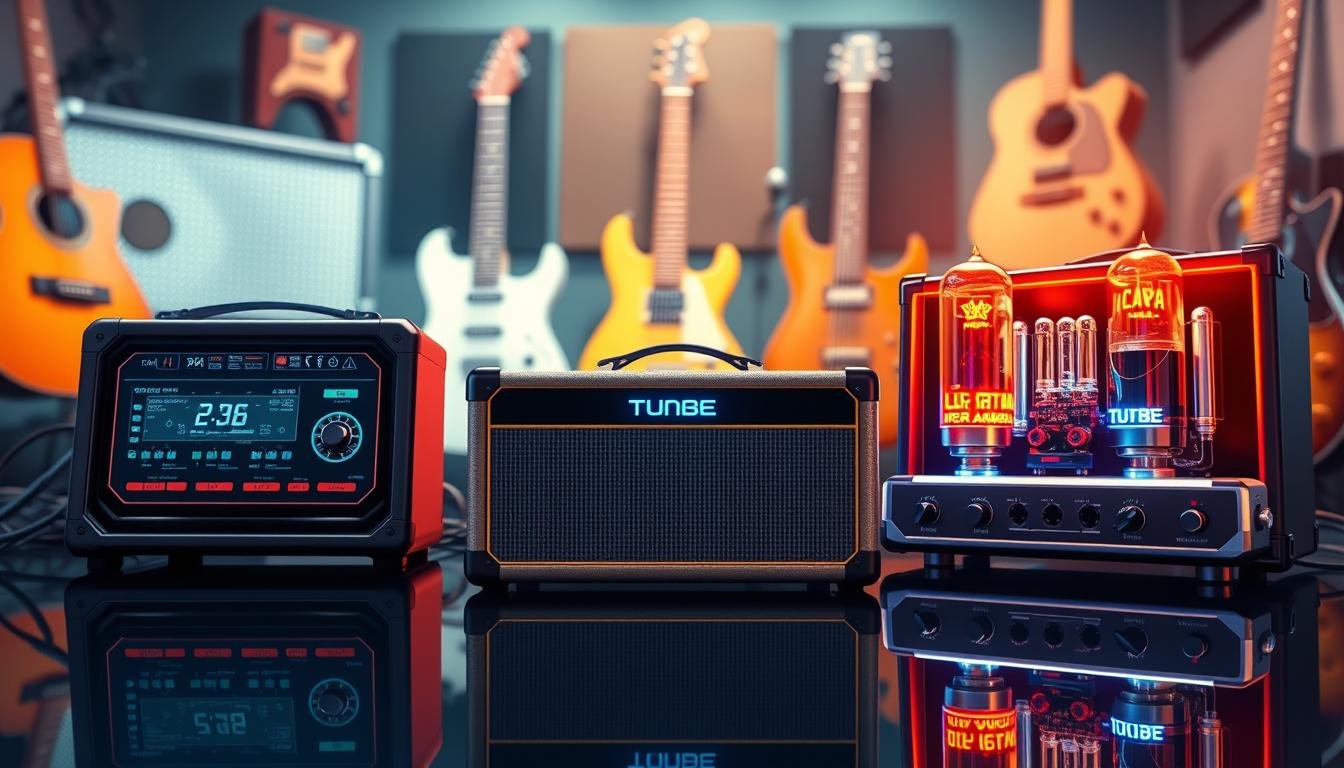
First, decide between an acoustic or electric guitar. Acoustic guitars are easy to play and don’t need an amp. They’re perfect for beginners. On the other hand, electric guitars offer more sounds and are great for rock and metal fans. Think about the music you want to play.
Essential Accessories for Beginners
After picking your guitar, you’ll need some essential accessories. These include:
- A guitar tuner to keep your guitar in tune.
- Comfortable guitar picks in different thicknesses.
- A guitar strap for playing comfort.
- A soft case or gig bag to protect your guitar.
- A music stand or tablet holder for reading music.
These accessories will make learning easier.
Setting Up Your Practice Space
Creating a good practice space is key. It should be quiet, comfy, and free from distractions. Make sure it’s well-lit and you have a good chair. A metronome can help with timing.
Having a dedicated space will encourage you to practice more.
Understanding the Parts of a Guitar
Learning about a guitar’s parts is key to becoming a great guitarist. Knowing the instrument’s anatomy helps you understand how it works. This knowledge improves your playing experience.
Anatomy of the Guitar
The guitar has several important parts. These include the body, neck, and headstock. The body has the sound hole for acoustic guitars or pickups for electric ones. The neck is where you press the strings to play different notes.
The headstock holds the tuning machines. These machines adjust the string pitch. Other key parts are the fretboard and strings. The fretboard is where you place your fingers to play chords or melodies. The strings vibrate to make sound.

| Guitar Part | Function |
|---|---|
| Body | Houses sound hole or pickups |
| Neck | Where you press strings to create notes |
| Headstock | Holds tuning machines |
| Fretboard | Where you place fingers to play |
| Strings | Vibrate to produce sound |
Tuning Your Guitar Properly
Tuning your guitar is a basic skill. It makes sure your guitar sounds its best. Standard tuning is when the strings are set to E, A, D, G, B, and E, from lowest to highest pitch.
You can tune by ear or use a tuner. But, a tuner is best for beginners.
“The guitar is an orchestra in itself.” – Joe Satriani
To tune, start with a string. Pluck it and adjust the tuning machine until the needle matches the note on your tuner. Do this for each string, moving up the guitar.
- Start with the low E string
- Adjust the tuning machine until the tuner shows E
- Repeat for A, D, G, B, and high E strings
Practicing tuning regularly sharpens your ear. It also boosts your guitar skills.
Proper Guitar Technique Fundamentals
Proper guitar technique is the base of all skills. It’s key for playing well and comfortably. Learning good technique early makes learning fun and easier.
How to Hold the Guitar Correctly
First, learn how to hold the guitar right. The method is the same for acoustic and electric guitars. Place the guitar on your left leg if you’re right-handed. Hold the neck at a slight angle for comfort and to avoid strain.
Hand and Finger Positioning
Getting your hand and finger positioning right is essential. Your fingers should be near the fretboard. Keep your hands neither too tight nor too loose. The right balance prevents fatigue and improves playing.
Proper Posture for Comfortable Playing
Keeping the right posture is crucial for playing without discomfort or injury. Sit straight with the guitar on your left leg if you’re right-handed. This posture eases strain on your back and shoulders.
| Technique | Description | Benefit |
|---|---|---|
| Guitar Holding | Resting guitar on left leg | Stable playing position |
| Hand Positioning | Fingers close to fretboard | Smooth chord and scale playing |
| Posture | Sitting up straight | Comfort and injury prevention |
The Complete Beginner’s Guide to Playing Guitar Chords
Guitar chords are the foundation of music. Learning them is rewarding. As a beginner, playing chords opens up a world of music. We’ll cover playing your first chords, transitioning smoothly, and exploring chord progressions.
Your First Three Chords: E, A, and D
Start with E, A, and D chords. They’re easy and used in many songs. To play E, put your fingers on the second fret of the fifth and fourth strings. For A, press the second fret of the fourth string. D chord is on the second fret of the third string.
Practice switching between these chords. It builds finger strength and dexterity.

Transitioning Between Chords Smoothly
Smooth transitions are key for playing songs well. Start slow, focusing on quick finger placement. Use a metronome to keep time and speed up gradually. Consistent practice is the secret to smooth transitions.
Common Chord Progressions for Beginners
Chord progressions are essential in songs. Beginners should start with simple ones like E-A-D. These are easy to learn and used in many songs. Try different progressions to understand song structure and improve your skills.
Mastering your first chords, practicing transitions, and learning progressions will help you play your favorite songs. You’ll explore the world of guitar playing.
Mastering Basic Strumming Patterns
Strumming patterns are key to guitar playing, giving songs their rhythm. Starting out, learning basic strumming patterns is vital. It helps build a strong musical base.
Downstrokes and Upstrokes Technique
Knowing downstrokes and upstrokes is crucial for strumming. A downstroke is moving your pick down, usually on the beat. An upstroke is moving it up, often on the off-beat. Practicing these helps you strum smoothly and consistently.
Simple Strumming Patterns for Beginners
Beginners should start with simple patterns. The down-down-up-down-up-down-up pattern is a great place to begin. It works well with many songs in different genres. Here are a few easy patterns to try:
- Down, down, up, down, up, down, up
- Down, up, down, up, down, up
- Down, down, down, up, down, up
Adding Rhythm and Dynamics to Your Playing
To make your playing richer, add rhythm and dynamics. Dynamics mean playing with varying loudness and softness. Try changing how hard you strum and emphasize different beats. This will make your playing more musical.
Building Finger Strength and Dexterity
To get good at guitar, you need to work on finger strength and dexterity. At first, your fingers might feel stiff and weak. But with regular practice and the right exercises, you can get better.
Essential Finger Exercises for Beginners
Start with simple exercises to boost your finger skills. Try stretching your fingers gently and holding for a few seconds. This helps make your fingers more flexible.
Another good exercise is the finger spread. Place your hand flat and spread your fingers as far as you can. Using a finger exerciser or squeezing a soft rubber ball also strengthens your fingers.
Playing chromatic scales on the guitar is also helpful. It helps your fingers work independently and get stronger.

Developing Calluses and Hand Strength
As you practice more, you’ll get calluses on your fingertips. These thickened areas come from pressing the strings against the fretboard. At first, it might hurt, but calluses mean you’re getting better and playing will become easier.
| Exercise | Benefit |
|---|---|
| Finger Stretches | Improves flexibility |
| Finger Spreads | Enhances finger independence |
| Squeezing a Rubber Ball | Builds finger strength |
| Chromatic Scales | Develops finger dexterity and strength |
Adding these exercises to your daily routine will improve your finger strength and dexterity. This makes playing chords and melodies easier and smoother.
Learning Your First Simple Songs
Starting your guitar journey with simple songs is very motivating. Playing songs you love makes learning fun and rewarding.
Simple songs need fewer chords, which is great for beginners. They help you practice changing chords, strumming, and rhythm without getting too stressed.
One-Chord and Two-Chord Songs to Start With
One-chord and two-chord songs are perfect for beginners. They have few chord changes. This lets you focus on your strumming and rhythm.
- No Woman No Cry by Bob Marley (one-chord song)
- Three Little Birds by Bob Marley (three chords, but very simple)
- Blowin’ in the Wind by Bob Dylan (two-chord song)
These songs are easy and well-known. This makes learning them more fun.
Three-Chord Songs Every Beginner Should Know
When you’re ready, try three-chord songs. They’re a bit more challenging but still simple. Some popular ones include:
- Twist and Shout by The Beatles (G, D, C)
- La Bamba by Ritchie Valens (C, F, G)
- Ring of Fire by Johnny Cash (G, C, D)
These songs help you practice changing chords and strumming. As you get better, you can try different strumming styles and add your own touch.
Learning simple songs keeps you motivated and shows your progress. As you learn more, you’ll grow more confident and ready for harder songs.
Effective Practice Strategies for Rapid Improvement
Effective practice is key to becoming a skilled guitar player quickly. Starting your guitar journey means focusing on consistent, focused practice. Setting clear goals and using the right resources can significantly enhance your progress.
Creating a Structured Practice Schedule
A good practice schedule is crucial for quick improvement. Set specific times for practice each day. For example, practice 15-20 minutes in the morning and another 15-20 minutes in the evening. Consistency helps in developing muscle memory and improving technique.
Setting Achievable Goals and Milestones
Setting achievable goals is vital for staying motivated. Break down big goals into smaller, doable steps. For instance, aim to learn a new chord each week or master a simple song in a month.
“The way to get started is to quit talking and begin doing.” – Walt Disney
Celebrate your wins to stay motivated.
Online Resources and Learning Tools
Today, many online resources and tools can help with guitar learning. Websites like Justin Guitar, Guitar Tricks, and YouTube guitar tutorials are full of helpful info. Use apps for tuning, metronomes, and chord charts to improve your practice.
By using these strategies, you’ll see rapid improvement. Remember, the secret is consistent, focused practice and using available resources.
Conclusion: Your Journey Forward with Guitar
By finishing this beginner’s guide, you’ve made a big step in your guitar journey. You’ve learned the basics, from knowing the guitar parts to mastering simple strumming.
It’s important to keep learning to get better. Try new chords, practice often, and explore different music styles. This will make practicing fun.
With regular practice, you’ll soon play your favorite songs and maybe even write your own. The most important thing is to keep enjoying the learning process.
As you get better, look into online learning tools and resources. You might also want to join online forums or find a guitar teacher to help you.
Remember, becoming a great guitarist takes time. Stay dedicated, and you’ll be playing like a pro before you know it. Keep learning, and you’ll be amazed at how far you can go.
FAQ
What type of guitar is best for a beginner?
Beginners often start with an acoustic guitar. It’s easier to play and cheaper than an electric. Fender and Taylor are great brands for beginners.
How often should I practice guitar?
Practice guitar every day, even for just 15-20 minutes. This builds finger strength and improves your technique.
What’s the best way to tune my guitar?
Use a guitar tuner or a tuning app on your phone for the most accurate tuning. Tuning by ear is also possible but takes more experience.
How long does it take to learn basic guitar chords?
You can learn basic chords like E, A, and D in a few weeks with regular practice. Focus on switching chords smoothly.
Can I learn guitar on my own or do I need a teacher?
You can learn guitar by yourself with online tutorials. But, a teacher can help you improve faster and avoid bad habits.
What are some simple songs for beginners to learn?
Start with songs that use simple chords like E, A, and D. Classic rock and folk tunes with one or two chords are good choices.
How do I build finger strength and dexterity?
Do finger stretches, bends, and chromatic scales to build strength and dexterity. Regular practice will show improvement.
What’s the best way to strum a guitar?
Practice downstrokes and upstrokes to develop a good strumming technique. Start simple and add complexity as you get better.
How can I stay motivated to practice guitar?
Set achievable goals and track your progress. Reward yourself for milestones. Find a practice buddy or join online communities for support.