
Finding the perfect guitar tone is a dream for many musicians. It’s what lets them share their unique sound and style. But, what exactly makes up this tone?
The answer is simple: it’s all about the mix of pickups, amps, and effects pedals. Each one is vital in creating the sound you hear from your guitar.

Learning how these parts work together opens up a world of sound possibilities. Whether you’re experienced or new, understanding your guitar’s tone can take your music to new heights.
Key Takeaways
- Crafting the perfect guitar tone involves a combination of pickups, amps, and effects pedals.
- Understanding how each component affects your sound is crucial.
- Experimenting with different settings can help you find your unique tone.
- The right equipment can make a significant difference in your overall sound.
- Practice and patience are key to mastering your guitar tone.
The Fundamentals of Guitar Tone
Understanding guitar tone is key for any guitarist wanting to improve their sound. Tone is shaped by many things, like pickups, amps, and effects. Knowing the basics is essential to get the tone you want.
What Creates Guitar Tone
Guitar tone comes from the guitar, the amp, and any effects. The type of pickups on your guitar greatly affects your tone. The guitar’s body and neck also shape the tone.
The Signal Chain Explained
The signal chain is the path your guitar signal takes. It’s crucial to understand it because it affects how your tone is processed. A typical chain includes the guitar, effects pedals, and the amplifier.
Analog vs. Digital Tone
The debate is between analog and digital tone. Analog is known for its warm sound, while digital offers precision. Many use both to find their perfect tone.
| Tone Characteristic | Analog | Digital |
|---|---|---|
| Sound Quality | Warm, Rich | Precise, Versatile |
| Circuitry | Analog Circuitry | Digital Signal Processing |
Understanding Guitar Tone: Pickups, Amps, and Effects Explained
Guitar tone comes from a balance of pickups, amps, and effects. These three parts make up the tone triangle. Each one is vital for your sound.
The Tone Triangle: How Components Interact
The way pickups, amps, and effects work together is complex. Pickups pick up the sound first. Then, amps make it louder and change it. Effects pedals add more to it. Knowing how they work together is key to getting the sound you want.

Balancing Your Tone Elements
It’s important to balance your tone triangle. For example, a bright pickup might need a warmer amp setting. The goal is to find the perfect mix that suits you.
| Component | Function | Impact on Tone |
|---|---|---|
| Pickups | Capture initial sound | Determines initial tone characteristics |
| Amps | Amplify and shape sound | Provides core tone and dynamics |
| Effects | Modify the sound | Adds texture and character to the tone |
Your Playing Technique and Tone
Your playing style greatly affects your guitar tone. As Jimi Hendrix said, “The story of my life is a story of my guitar, it’s a story of the things that I’ve been through with it.” How you play changes how the pickups pick up your sound, shaping your tone.
- Pick attack: Softer or harder picking changes the tone.
- Fretboard technique: Different techniques like bending or sliding affect the sound.
- Playing dynamics: Varying your playing intensity can dramatically change your tone.
Guitar Pickups: The First Stage of Tone
Guitar pickups are key for any guitarist. They capture the vibrations of the strings and turn them into an electrical signal. This signal goes to your amplifier and effects pedals to create the sound you hear.
Single-Coil vs. Humbucker Pickups
The debate between single-coil and humbucker pickups is long-standing. Each type suits different musical styles and tonal preferences.
Single-Coil Characteristics
Single-coil pickups offer a bright, crisp sound with clear highs. They’re great for jazz, country, and surf rock. But, they can pick up hum and noise, like near fluorescent lights.
Humbucker Characteristics
Humbucker pickups were made to reduce hum. They have a fuller, warmer sound and are less noisy. They’re perfect for rock, metal, and hard rock, where a thicker tone is wanted.
Active vs. Passive Pickups
There are active and passive pickups. Passive pickups use the guitar’s tone circuit. Active pickups need a battery for an onboard preamp, offering more tonal options.
Active pickups have higher output and consistent signal, great for high-gain settings. Passive pickups are more traditional but might lose high-end clarity with long cables or complex effects.
Pickup Position and Tone Impact
The pickup’s position on the guitar affects the tone. Bridge pickups are brighter, while neck pickups are warmer. Combining both offers a wide range of tones.
Specialty Pickups and Their Sounds
There are specialty pickups like P-90s and piezo pickups. P-90s have a warm, gritty sound. Piezo pickups capture a more acoustic-like tone.
Knowing about different guitar pickups helps you choose the right ones for your sound. Whether you want clarity, warmth, or a specific genre’s sound, the right pickups are crucial.
Guitar Woods and Construction: The Foundation of Tone
Guitar construction, including the choice of woods, is key to its sound. The wood used for the body, neck, and fingerboard greatly affects the sound.
Body Woods and Their Tonal Characteristics
Different body woods have unique sounds. For instance, alder offers a balanced tone. On the other hand, mahoganygives a warm, rich sound. The wood’s density and how it resonates shape the guitar’s overall sound.
- Alder: Known for its balanced tone, often used in Fender guitars.
- Mahogany: Produces a warm, rich sound, commonly used in Gibson guitars.
- Maple: Offers a bright, clear tone, often used for tops.
Neck Construction and Resonance
The neck’s build affects the guitar’s resonance. The way the neck is attached to the body, whether bolt-on or set-in, changes the tone. A bolt-on neck gives a brighter sound, while a set-in neck offers more sustain.
Scale Length and String Tension
The scale length affects string tension and sound. Guitars with longer scales, like Fender guitars, have higher tension and a brighter sound. Those with shorter scales have less tension and a warmer sound.

Amplifiers: Shaping Your Core Sound
Understanding amplifiers is key for any guitarist wanting to improve their sound. Amplifiers are crucial in shaping your guitar’s tone. They offer a wide range of options for different musical styles.
Tube vs. Solid-State vs. Digital Amps
The type of amplifier you pick greatly affects your tone. There are three main types: tube, solid-state, and digital amps. Each has its own special qualities.
Tube Amp Characteristics
Tube amps are known for their warm, rich sound and natural distortion. They use vacuum tubes to amplify the signal. This can be overdriven for a gritty sound. They are loved by blues and rock guitarists for their expressive sound.
Solid-State Benefits
Solid-state amps use transistors, making them reliable and easy to maintain. They offer a clear tone, perfect for jazz and clean rock music.
Digital Amp Flexibility
Digital amps use digital processing to mimic various amplifier types and effects. They are very flexible, allowing for a wide range of tones and presets. This makes digital amps great for musicians who need to change sounds during a show.
Preamp and Power Amp Stages
An amplifier has two main parts: the preamp and the power amp. The preamp boosts the signal and shapes the tone. The power amp drives the signal to the speakers, controlling volume and dynamics.
EQ Controls and Tone Stacks
EQ controls are vital for adjusting your tone. Most amps have a tone stack with bass, midrange, and treble controls. Knowing how to use these controls can greatly improve your sound, helping you create a unique tone.
Speaker Types and Cabinet Design
The type of speaker and cabinet design also affect your tone. Different speakers have unique sounds, and the cabinet’s design impacts sound projection and resonance. Choosing the right speaker and cabinet is key to getting the tone you want.
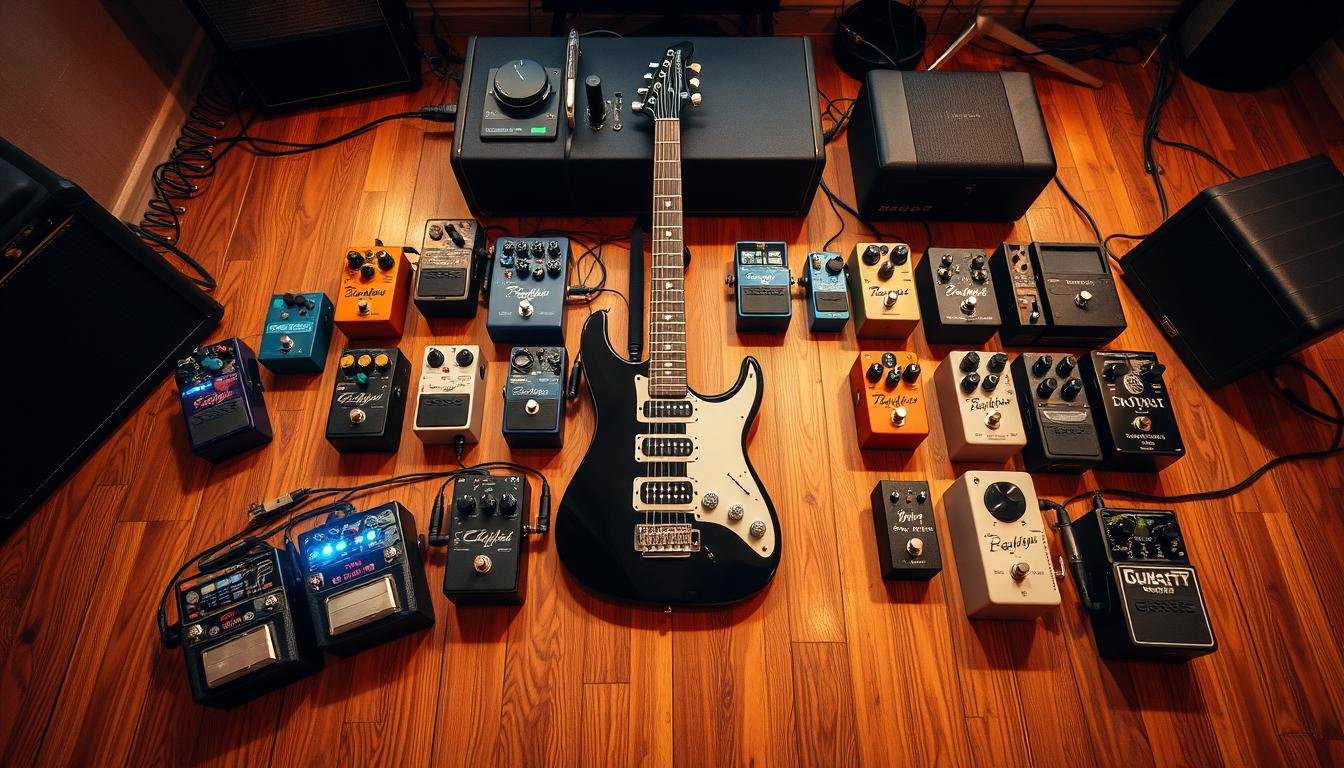
Effects Pedals: Coloring Your Tone
Guitarists use effects pedals to change and make their tone unique. These pedals can make small tweaks or big changes. They let musicians create their own sound.
Gain-Based Effects
Gain-based effects pedals change the guitar signal’s gain. This creates different levels of distortion. They are key in many guitarists’ setups.
Overdrive Pedals
Overdrive pedals add a warm distortion to the sound. It’s like an overdriven amp. They’re great for a crunchy, bluesy tone.
Distortion Pedals
Distortion pedals make a louder, fuzzier sound than overdrive. They’re perfect for rock and metal.
Fuzz Pedals
Fuzz pedals make a very fuzzy sound. It can go from a bit gritty to very distorted. They’re for experimental sounds.
Modulation Effects
Modulation effects pedals change the guitar signal in cool ways. They make sounds move and change.
Chorus, Phaser, and Flanger
These pedals widen and deepen the sound. Chorus makes it sound like an ensemble. Phasers and flangers create sweeping sounds.
Tremolo and Vibrato
Tremolo pedals change the volume, making it waver. Vibrato pedals change the pitch, adding a special touch.
Time-Based Effects
Time-based effects pedals play with the timing of the sound. They create space and ambiance.
Delay Types and Uses
Delay pedals repeat the sound, making an echo. They add depth and interest. They can also make complex sounds.
Reverb Varieties
Reverb pedals mimic different places, from small rooms to big halls. They add space and realism to the sound.
Signal Chain Order and Its Impact
The order of effects pedals matters a lot. Changing the order can change the sound a lot. It’s fun to try different orders.
| Effect Type | Description | Common Use |
|---|---|---|
| Overdrive | Warm, natural distortion | Blues, Rock |
| Distortion | Aggressive, fuzzy distortion | Rock, Metal |
| Fuzz | Extreme, fuzzy distortion | Experimental, Avant-Garde |
| Chorus | Rich, ensemble-like effect | Various genres |
| Reverb | Simulates natural ambiance | Ambient, Spatial effects |
Digital Modeling and Profiling: Modern Tone Solutions
Digital modeling and profiling have changed how we get guitar tones. They let us try many tones without needing lots of gear.
Multi-Effects Processors
Multi-effects processors are all-in-one devices for effects. They can do simple overdrive to complex sounds. Line 6 and Strymon make some of the best ones.
Amp Modelers and Profilers
Amp modelers mimic different amplifiers digitally. Profilers go further by capturing a specific amp’s unique sound. This means we can get very accurate tones.
| Technology | Description | Key Benefit |
|---|---|---|
| Amp Modelers | Digital emulation of amplifiers | Versatility in tone selection |
| Profilers | Captures specific amp characteristics | Highly accurate tone replication |
| IR Technology | Captures cabinet and mic characteristics | Realistic speaker and cabinet sound |
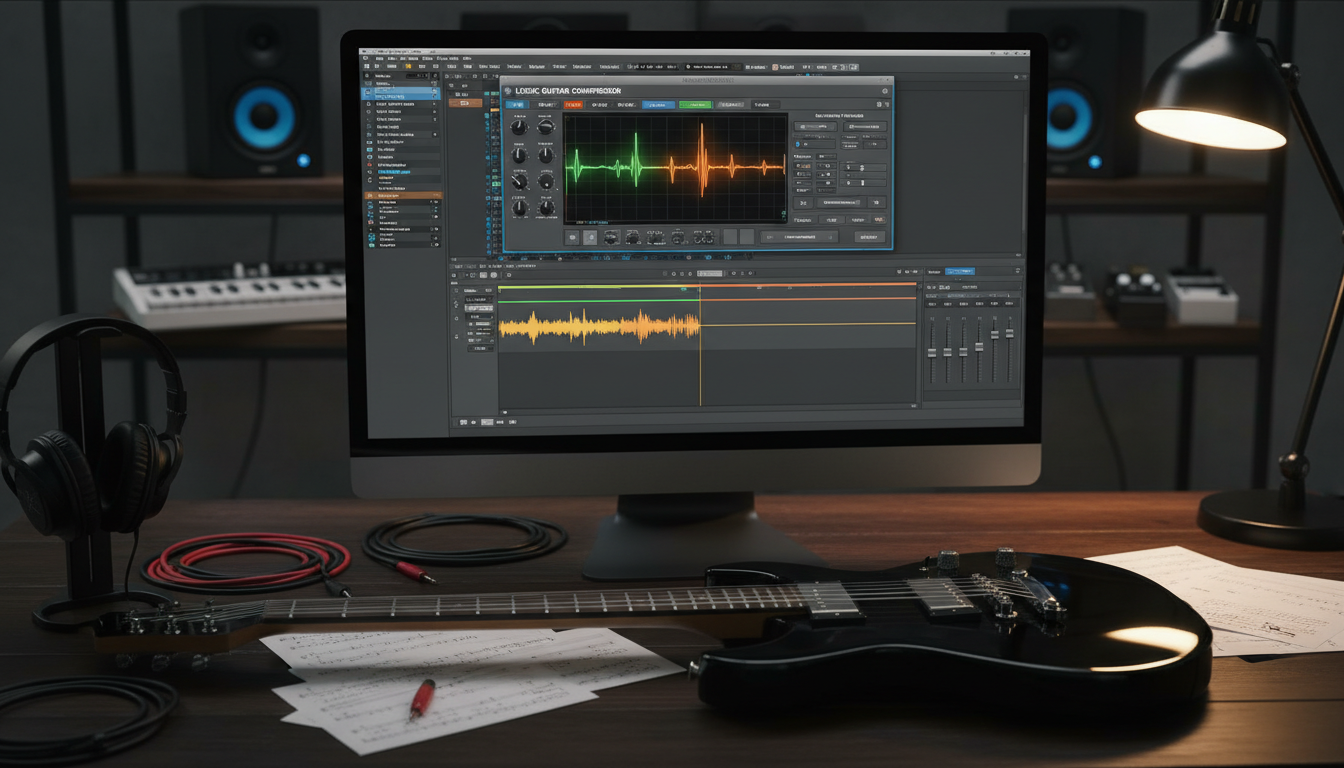
DAW-Based Guitar Processing
Using DAWs to tweak guitar sounds is very flexible. It lets us fine-tune our tones with great precision.
IR (Impulse Response) Technology
IR tech captures the sound of guitar cabinets and mics. It makes simulations sound real in recordings and live shows.
These modern tools help guitarists get a wide range of tones easily. Digital modeling and profiling are key for today’s guitarists.
Iconic Guitar Tones and How to Achieve Them
From Jimi Hendrix’s psychedelic sounds to Metallica’s heavy riffs, iconic guitar tones are key in music history. These legendary sounds have inspired many guitarists and continue to shape music today.
Classic Rock Tones
Classic rock is famous for its rich, full-bodied guitar tones. These tones have become iconic in music.
Jimi Hendrix’s Psychedelic Sound
Jimi Hendrix’s unique sound was both psychedelic and captivating. To get this tone, use a mix of fuzz pedals and a Marshall amp.
Jimmy Page’s Led Zeppelin Tone
Jimmy Page’s work with Led Zeppelin changed rock music. His guitar tone was crucial. He used a Les Paul with a Marshall stack.
Eric Clapton’s Woman Tone
Eric Clapton’s “Woman Tone” is known for its warm, rich quality. It’s achieved with a Gibson guitar, a Marshall amp, and specific settings.
Metal and High-Gain Tones
Metal music is known for its aggressive, powerful guitar tones. These are often achieved with high-gain settings and specific equipment.
Eddie Van Halen’s Brown Sound
Eddie Van Halen’s “Brown Sound” is a metal guitarist’s benchmark. It requires a high-gain amp, specific EQ settings, and playing technique for a warm, aggressive tone.
Metallica’s Rhythm and Lead Tones
Metallica’s guitarists are famous for their heavy rhythms and soaring leads. Their tone comes from high-gain amps, precise EQ settings, and strong playing.
Blues and Jazz Tones
Blues and jazz guitar tones are warm and expressive. They’re often created with specific guitars, amps, and playing techniques.
B.B. King’s Sweet Spot
B.B. King’s tone is clear and emotionally deep. He used a Gibson ES-355 and a specific amp setting for this.
Wes Montgomery’s Thumb Technique
Wes Montgomery’s thumb technique created a unique, warm tone. His technique, guitar, and amp defined jazz guitar in his time.
Modern and Experimental Tones
Today’s guitarists are always exploring new sounds. They experiment with equipment, techniques, and effects to create unique tones.
| Iconic Guitarist | Tone Characteristics | Equipment |
|---|---|---|
| Jimi Hendrix | Psychedelic, experimental | Fuzz pedals, Marshall amp |
| Jimmy Page | Full-bodied, layered | Les Paul, Marshall stack |
| Eddie Van Halen | Aggressive, high-gain | High-gain amp, specific EQ |
| B.B. King | Warm, expressive | Gibson ES-355, specific amp setting |
Troubleshooting Common Tone Issues
Finding the perfect guitar tone is a never-ending quest. Troubleshooting is a big part of this journey. Guitarists face many tone problems that can mess up their sound. Knowing how to fix these issues is key to getting the tone you want.
Eliminating Unwanted Noise
Unwanted noise is a big problem for guitarists. First, check your guitar’s electronics and cables for damage. Using top-notch cables and a shielded pedalboard can cut down on hum and buzz. As Eric Clapton said, “The tone is in the fingers.” But even the best players need a clean signal chain to sound great.
Fixing Muddy or Thin Tones
A muddy or thin tone can be really disappointing. Adjusting your EQ settings can help. For a muddy tone, cut the low-end frequencies. For a thin tone, boost the midrange. Trying different pickup settings can also enhance your tone.
Dealing with Volume and Gain Staging Problems
Gain staging is key for a clear, undistorted tone. Make sure your gain levels are balanced in your signal chain. Too much gain causes distortion, while too little makes your signal weak.
Balancing Tone in a Band Mix
In a band, your tone needs to fit well with others. Use EQ to make your guitar stand out. Cutting frequencies that clash with other instruments makes your guitar sound clearer. As Jimi Hendrix said, “The story of my guitar is a very long one.” Getting your tone right is part of that story.
By tackling these common tone problems, guitarists can greatly improve their sound. Whether playing live or recording, a well-troubleshooted tone is crucial for success.
Building Your Personal Tone Arsenal
Building a personal tone arsenal means knowing what sound you like and how to get it. It’s about finding a unique sound that shows who you are as a musician.
Identifying Your Core Sound
To find your core sound, listen to your favorite guitarists. Think about what you like about their tone. Is it warm, bright, or sustained? Try different settings on your guitar and amp to find your true sound.
Budget-Friendly Tone Improvements
You don’t have to spend a lot to improve your tone. Budget-friendly improvements include changing strings, tweaking amp settings, or trying new pedals. Even small tweaks can make a big difference.
Versatility vs. Specialization
Choosing between versatility and specialization depends on your music style. If you play many genres, a versatile tone is best. If you focus on one, aim for that perfect sound.
Recording vs. Live Performance Considerations
Your tone might need to change for recording versus live performance. For recording, a precise, controlled tone is key. Live, you might want a sound that’s strong and can adapt.
Conclusion
Understanding your guitar tone is a journey. It mixes knowledge, experimentation, and personal touch. We’ve looked at key parts like pickups, amps, effects pedals, and digital modeling.
Your guitar tone comes from many parts working together. Knowing how these parts interact helps you create a sound that’s yours. Whether you’re experienced or new, the secret to a great tone is understanding the signal chain and balancing your sound.
Keep in mind, the journey to your guitar tone is as important as the tone itself. Enjoy exploring and trying new things. With time and effort, you’ll find a tone that shows who you are as a musician.
FAQ
What is the tone triangle in guitar tone?
The tone triangle is about how pickups, amps, and effects pedals work together. They shape the sound of your guitar.
How do single-coil and humbucker pickups differ?
Single-coil pickups give a bright, crisp sound. Humbucker pickups offer a fuller, warmer tone and less hum.
What is the difference between analog and digital tone?
Analog tone comes from physical parts and sounds warm and rich. Digital tone uses digital processing for a wider range of sounds.
How do different body woods affect guitar tone?
Different woods change the sound of your guitar. Alder gives a balanced sound, ash is bright, and mahogany is warm and rich.
What are the characteristics of tube, solid-state, and digital amps?
Tube amps have a warm, dynamic sound. Solid-state amps are reliable and clear. Digital amps offer versatility and many tonal options.
How do gain-based effects pedals work?
Gain-based pedals like overdrive and distortion change the guitar signal. They add gain and saturation.
What is the role of IR (Impulse Response) technology in guitar tone?
IR technology captures the sound of different cabinets and speakers. It lets you shape your tone more accurately and flexibly.
How can I achieve iconic guitar tones like Jimi Hendrix or Eddie Van Halen?
To get famous tones, try different pickups, amps, and pedals. Study the techniques of legendary guitarists.
How can I eliminate unwanted noise from my guitar tone?
To get rid of noise, check your signal chain for interference. Use noise-reducing pedals and adjust your settings.
What are some budget-friendly ways to improve my guitar tone?
Improve your tone on a budget by trying new amp settings and effects. Adjust your playing technique too.
How do I balance my tone in a band mix?
To balance your tone, adjust your amp and effects. Use EQ pedals or amp EQ to find your place in the mix.