
Welcome to your guitar-playing journey! If you’ve ever wanted to play your favorite songs but felt lost with traditional sheet music, you’re in the right place. Guitar tablature for beginners is a simple, visual way to start making music without needing years of formal training.
Tabs are a guitarist’s secret weapon. Unlike complex musical notation, tablature shows you exactly where to place your fingers on the fretboard. You’ll see which string and which fret to press, making it incredibly straightforward for anyone picking up the instrument.

This guide will help you learn guitar tabs fast and get you playing actual songs today. By the end, you’ll understand the tab system, recognize common symbols, and play simple sequences with confidence. Whether you’re into classic rock riffs or modern pop melodies, this skill opens countless doors.
The best part? You don’t need any music theory knowledge whatsoever. If you’ve struggled with other learning methods, tablature provides a fresh, practical approach that just makes sense. Let’s get started and unlock your guitar potential.
Key Takeaways
- Guitar tablature shows you exactly where to place your fingers on the fretboard, making it easier than traditional sheet music
- You can learn the basics of reading tabs in just minutes and start playing songs immediately
- No prior music theory knowledge is required to understand and use guitar tablature effectively
- Tabs work for all music styles, from classic rock and blues to pop and metal
- Understanding tab symbols and numbers is the foundation for playing thousands of songs
- Tablature is the most practical learning tool for beginner and intermediate guitarists
What Are Guitar Tabs and Why Should You Learn Them?
Guitar tabs changed how people learn to play guitar. They make learning easy with visual guides. You learn where to place your fingers, not abstract symbols.
With tabs, you can start playing songs quickly. No need to spend months on traditional sheet music.
Tablature uses six lines for the guitar’s six strings. Numbers on these lines tell you which fret to press. This makes learning easier for beginners.
Learning guitar with tabs is easy and accessible. You don’t need expensive lessons. Many guitarists learned from online tabs.
Standard Notation vs. Tablature
Standard sheet music is complex. It requires understanding notes and positions on the fretboard. This takes years to master.
Tablature is simpler. A “3” on the second line means press the third fret. No need to translate.
Standard notation is great for rhythm and expression. But tabs focus on playability. They let you play right away.
Perfect for Beginners
Guitar tabs are great for beginners. They show exact finger positions. No need to know music theory.
Learning songs with tabs is easy. Your brain connects numbers with playing actions. This builds muscle memory fast.
There are many free tabs online. You can learn songs without spending money. This is a big advantage.
Learning with tabs is quick. You can play simple songs in one session. This keeps beginners motivated.
What Tabs Can Teach You
Tabs teach more than simple melodies. They show single-note riffs, solos, and chord progressions. They’re useful for rhythm or lead guitar.
The “Smoke on the Water” riff is iconic. Its tab is simple but powerful. It’s a great first riff for beginners.
Learning tabs teaches you many skills. You learn melodic patterns, chord voicings, and scales. You also learn technical skills and song structure.
- Melodic patterns that create memorable guitar lines
- Chord voicings and how they’re positioned across the fretboard
- Scale positions used in solos and improvisation
- Technical skills like hammer-ons, pull-offs, slides, and bends
- Song structure including verses, choruses, and bridges
As you get better, tabs become more complex. They help you grow from simple riffs to complex solos. The same system that taught you your first riff will help you master solos from your heroes.
Understanding the Six-Line Tab System
Learning to read tabs is all about understanding the six lines on the page. These lines mirror the strings on your guitar. Once you get this, reading tabs is as easy as looking at your fretboard.
Each line on the tab represents a string on your guitar. This makes tabs easy for beginner guitar lessons. You don’t have to figure out where to place your fingers.
How the Lines Represent Your Guitar Strings
The tab system uses six lines stacked on top of each other. Each line is for a string in standard tuning. The layout matches your guitar’s strings when you hold it.
This makes guitar string notation easy to follow. The top line is your high E string. It’s the thinnest string, closest to the floor.
The Top Line Is Your Thinnest String
The top line is your high E string. It’s the thinnest string, also called the first string. It’s closest to the ground when you play.
This string is called “high E” because it plays the highest notes. It’s the first string you reach when moving your hand down from the ceiling.
The Bottom Line Is Your Thickest String
The bottom line is your low E string. It’s the thickest string, producing deep tones. It’s closest to your chin when holding the guitar.
This string plays the lowest notes. The upside-down appearance can be confusing at first. But remember, tabs show strings from your viewing angle, not from someone watching you play.
Reading from High E to Low E
Standard tuning arranges your guitar strings in a specific order. From thinnest to thickest, the strings are tuned to E-B-G-D-A-E. Knowing this helps you follow tabs and communicate with other musicians.
Here’s a detailed breakdown of each string:
| String Number | Note Name | Tab Line Position | Physical Characteristics |
|---|---|---|---|
| 1st String | High E | Top Line | Thinnest, highest pitch, closest to floor |
| 2nd String | B | Second from Top | Thin, bright tone, second highest pitch |
| 3rd String | G | Middle-Upper Line | Medium gauge, middle-high register |
| 4th String | D | Middle-Lower Line | Medium-thick, middle-low register |
| 5th String | A | Second from Bottom | Thick, deep tone, second lowest pitch |
| 6th String | Low E | Bottom Line | Thickest, lowest pitch, closest to chin |
A helpful memory trick is “Eddie Ate Dynamite, Good Bye Eddie” to remember the string names. Many guitar players learn this in their first beginner guitar lessons and use it throughout their musical journey.
Holding Your Guitar While Reading Tabs
Proper positioning makes tabs easier to read. When you hold your guitar right, the tab’s layout matches your fretboard.
Your posture affects how well you can play. Whether sitting or standing, keep these tips in mind:
- Place your music at eye level so you can see both the tab and your guitar without straining your neck
- Sit upright with the guitar resting comfortably on your leg, keeping the neck angled slightly upward
- Position your laptop or tablet on a music stand rather than flat on a desk for better viewing angles
- Ensure adequate lighting on both your fretboard and your reading material
- Keep your picking hand relaxed and positioned over the strings so you can quickly move between them
The goal is to quickly translate tab to playing. When your reading position feels natural, you’ll play more smoothly.
Many guitarists find it helpful to touch each string while saying its name. Start with the low E string at the bottom and move up to the high E at the top. This physical connection helps you remember the visual pattern.
Remember, tabs are designed to be intuitive. The six-line layout is a deliberate visual representation of your instrument. Once you understand this, you can pick up any tab and know which strings to play.
How to Read Guitar Tabs in 10 Minutes: Numbers and Frets
Guitar fret numbers are the language of tablature, and learning to read them takes just minutes. These simple digits tell you exactly where to place your fingers on the fretboard. Once you understand this basic numbering system, you’ll be able to play thousands of songs.
The beauty of tablature is its directness. Unlike traditional music notation that requires years of study, tabs give you instant, visual instructions. Each number corresponds to a specific fret on your guitar neck.
What the Numbers Mean on Tab Lines
Every number you see on a tab line represents a fret on your guitar. When you see a “3” on the bottom line, you press down the third fret on the low E string and pick that string. It’s that simple.
The tab system eliminates guesswork. You don’t need to know music theory or note names. The numbers show you the exact physical location where your finger should go.
Single Numbers Show Individual Notes
When you encounter a single number on one line, that’s one note to play. For example, if you see a “5” on the second line from the top, place your finger behind the fifth fret on the B string. Then pick that string to produce the note.
This one-to-one relationship makes how to play tabs incredibly straightforward. Each number equals one finger position and one picked note.
Fret numbers start at the headstock and increase as you move toward the guitar body. Fret 1 is closest to the nut. Fret 12 is where you’ll typically see double dot markers on most guitars.
A number like “15” means you’ll need to reach quite far down the neck. Beginners usually work with numbers between 0 and 7, which keeps everything comfortable and within easy reach.
Reading Numbers Horizontally Versus Vertically
The arrangement of numbers on tabs tells you about timing and technique. Reading direction matters just as much as the numbers themselves. This is where tabs show you not just what to play, but how to play it.
Understanding horizontal versus vertical placement is essential for playing songs correctly. Many beginners get confused here, but the rules are actually quite simple.
Horizontal Numbers Play in Sequence
When numbers appear side by side across the tab, play them one after another from left to right. This creates melodies, riffs, and single-note passages. Think of it like reading a sentence in English.
For example, if you see “3-5-7” on one line, you play the third fret, then the fifth fret, then the seventh fret in that exact order. This creates a musical phrase or melody line.
Vertical Numbers Play Simultaneously
Numbers stacked directly on top of each other should be played at the same time. This is how tabs show chords and power chords. You press all the indicated frets and strum the strings together.
When you see numbers aligned vertically, prepare all your fingers on the correct frets before strumming. This coordination creates the full, rich sound of chord playing.
| Number Arrangement | How to Play | Musical Result | Common Uses |
|---|---|---|---|
| Horizontal (side by side) | Play one note after another, left to right | Melodies, riffs, solos | Lead guitar parts, song intros, bass lines |
| Vertical (stacked) | Play all notes at the same time | Chords, power chords, harmonies | Rhythm guitar, accompaniment, full chords |
| Mixed (diagonal patterns) | Combine sequential and simultaneous playing | Arpeggios, fingerstyle patterns | Acoustic songs, classical pieces, fingerpicking |
The Zero and Open Strings
The number “0” is special in tablature. It means play the string open without pressing down any fret. Simply pick or strum the string as it is.
Open strings produce a distinctive ringing tone. They’re used constantly in acoustic music and are essential for many famous songs. The open strings on a standard-tuned guitar are E, A, D, G, B, and E from lowest to highest.
Zero appears frequently in easy guitar tabs because open strings are simple to play. Beginners can create beautiful music using mostly open strings combined with just a few fretted notes.
Playing Your First Tab Sequence
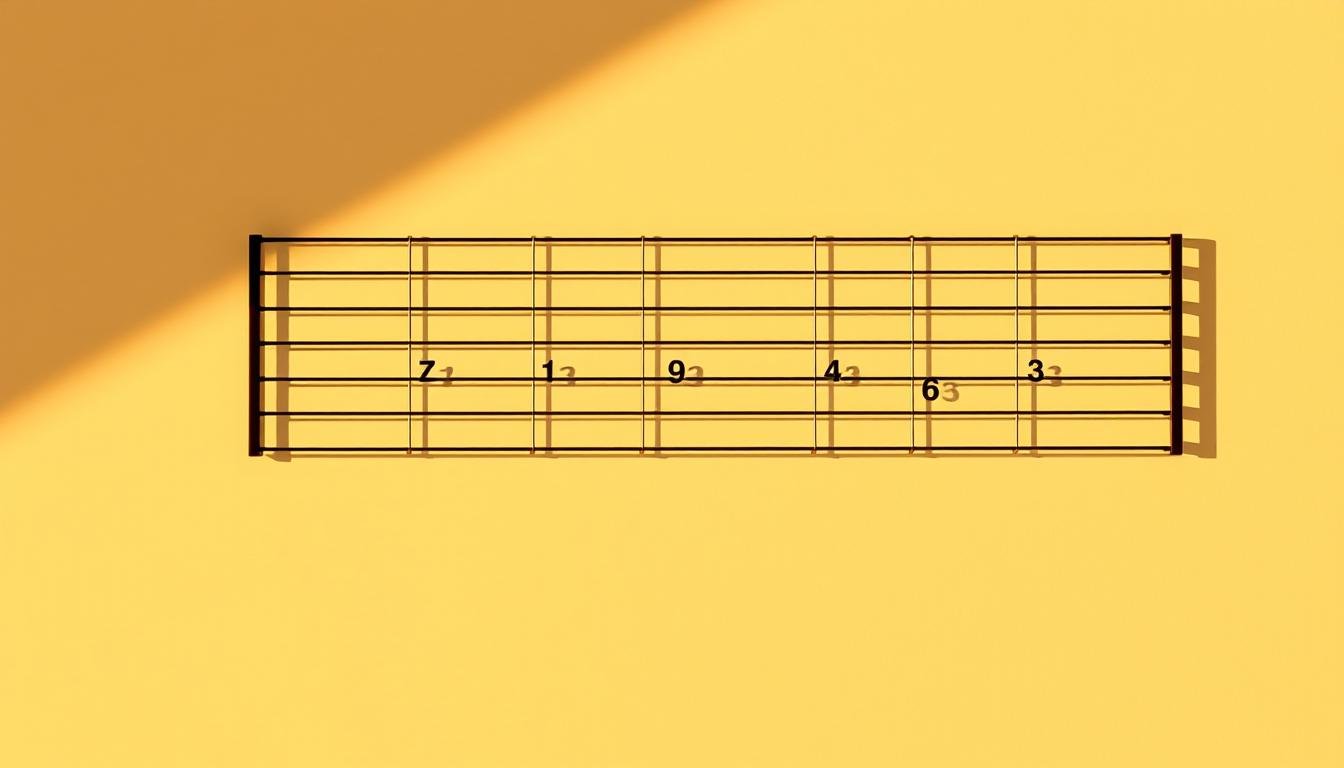
Let’s put everything together with a recognizable riff. The opening to “Seven Nation Army” by The White Stripes is perfect for practicing your new tab-reading skills. It uses simple fret positions and sounds great immediately.
Here’s the famous riff written in tablature:
- Low E string: 7-7-10-7-5-3-2
- Play each number in sequence, letting each note ring briefly
- All notes are on the same string, making it beginner-friendly
- The rhythm is steady and even, with equal spacing between notes
Start slowly and focus on accuracy. Place your finger firmly behind each fret, not on top of the metal fret wire. Pick each note cleanly before moving to the next position.
This exercise demonstrates everything you’ve learned. You’re reading numbers left to right, understanding that higher numbers mean higher frets, and playing a sequence that creates an instantly recognizable melody. Once you can play this smoothly, you’ve mastered the fundamentals of how to play tabs.
Practice this sequence until it feels natural. Then try finding other simple riffs online. You now have the core skills to learn hundreds of songs directly from tablature.
Essential Tab Symbols Every Guitarist Must Know
Guitar tab symbols are like a secret code for guitar players. They show how to play each note with feeling and style. Learning these symbols helps turn simple playing into music that moves people.
Think of these symbols as the punctuation of guitar music. Just as commas and exclamation points change sentences, tab symbols change how notes sound. Once you learn them, you’ll see them everywhere.
Hammer-Ons and Pull-Offs
Legato techniques make your playing smooth and connected. These symbols are key in rock, blues, and metal. They make your playing sound professional and polished.
The h Symbol for Hammer-Ons
An “h” between numbers like 5h7 means hammer-on. Pick the 5th fret, then quickly move to the 7th without picking again. The string’s momentum creates the second note.
Hammer-ons are used in “Stairway to Heaven” by Led Zeppelin. Start slow to get the second note right without picking it.
The p Symbol for Pull-Offs
The “p” symbol is the opposite of hammer-on. Notation like 7p5 means start with both fingers on the fretboard. Pick the 7th fret, then pull off to the 5th.
This technique needs a light plucking motion. Aim for both notes to sound strong and connected.

Slides and Bends
Pitch-altering techniques add character to your playing. These symbols are common in blues, rock, and country. They make solos memorable and exciting.
Forward Slash and Backslash for Slides
A forward slash (/) slides up, a backslash (\) slides down. For example, 5/7 means pick the 5th fret and slide up to the 7th. The note should glide smoothly.
Jimi Hendrix used slides in “All Along the Watchtower.” Keep firm pressure for clear notes.
The b Symbol for String Bends
The “b” symbol means bend a string. Notation like 7b9 means fret the 7th fret and bend to the 9th. Sometimes, it’s just “bend” above the note.
B.B. King and Eric Clapton built their sounds on bending. Start with thinner strings and practice slowly.
Vibrato and Muted Notes
These symbols add texture and rhythm. They contrast ringing notes with percussive accents. Knowing these markings helps you play any song exactly right.
Wavy Lines and Tilde for Vibrato
Wavy lines or a tilde (~) above a note means vibrato. Apply it by bending and releasing the string quickly. The width and speed of your vibrato changes the effect.
Classical players use narrow, fast vibrato. Blues players prefer wider, slower movements. Try both to find what fits your music.
X Marks for Dead Notes
The “X” symbol means a muted or “dead” note. You create this by lightly resting your fingers on the strings. When picked, it sounds like a rhythmic “chunk.”
Funk and rock rhythm guitarists use dead notes for groove. This technique is in songs by Red Hot Chili Peppers and Rage Against the Machine.
Palm Muting and Harmonics
These symbols are essential for guitarists. Palm muting is in every rock and metal song. Harmonics create beautiful, bell-like tones. Both expand your sound dramatically.
Palm muting is shown as “P.M.” or with dotted lines. It’s a tight, chunky tone for heavy riffs. Metallica to modern djent artists use it.
Natural harmonics are marked with diamond brackets or “harm.” above frets. They create ethereal tones at specific points on the fretboard. Touch the string lightly over the fret wire and pick while lifting your finger.
Harmonics add magic to acoustic pieces and intros. Once you learn them, you’ll use them creatively in your playing.
| Symbol | Technique Name | How It Sounds | Common Usage |
|---|---|---|---|
| h | Hammer-On | Smooth ascending connection | Rock, blues, metal leads |
| p | Pull-Off | Smooth descending connection | Fast runs, legato passages |
| / or \ | Slide | Gliding pitch change | Blues, rock, country |
| b | Bend | Expressive pitch raise | Solos, blues, expressive leads |
| ~ or waves | Vibrato | Shimmering, vocal quality | Sustained notes, emotional playing |
| X | Dead/Muted Note | Percussive chunk | Funk, rock rhythm |
| P.M. | Palm Mute | Tight, chunky tone | Metal, punk, hard rock |
| ◇ or harm. | Natural Harmonic | Bell-like chime | Acoustic pieces, intros |
These guitar tab symbols might seem overwhelming at first. But with practice, they become second nature. Start with one or two techniques at a time, mastering them before moving on.
Every professional guitarist uses these symbols. Learning them lets you recreate any sound you hear. More importantly, it lets you express your own musical ideas with emotion and clarity.
Reading Rhythm and Timing in Guitar Tabs
Guitar tabs are great for showing which frets to play, but they often miss the timing. This is a big challenge when following a guitar tab tutorial. But, learning rhythm notation doesn’t need years of music theory.
Many tabs include rhythm markers to help with timing. Others leave it up to your ear. Either way, you can learn guitar tabs fast once you grasp timing in tablature.
Understanding Note Duration Markers
The best tabs have visual clues for note duration. These markers turn a simple number sequence into a full musical instruction. They act as a timing blueprint for your playing.
Advanced tabs might include stems and beams above the numbers. These look like traditional sheet music. A stem is a vertical line, and beams connect notes together.
These markings in a tab notation guide show rhythmic relationships. Longer stems with no beams mean slower notes. Beamed groups connect faster notes within the same beat.
The direction of stems doesn’t affect playing. They’re just visual aids for organizing rhythm on the page.
Whole Notes, Half Notes, and Quarter Notes
Knowing basic note values improves your rhythm reading. A whole note lasts four beats in 4/4 time. You hold this note while counting “1-2-3-4” before moving on.
A half note gets two beats. If tapping your foot, you hold the note for two taps. Quarter notes receive one beat each, making them the basis of most rhythm counting.
Eighth notes move twice as fast, with two notes in one beat. When tabs show these values, you see exactly how long each note should ring out.
- Whole note = 4 beats (count: 1-2-3-4)
- Half note = 2 beats (count: 1-2)
- Quarter note = 1 beat (count: 1)
- Eighth note = 1/2 beat (count: 1-and)
Counting Beats and Measures
Learning to count beats makes your playing precise. Most songs use 4/4 time, with four beats per measure. Count “1-2-3-4” as you play through the tab.
Vertical lines in tabs mark bar lines that separate measures. These divisions help organize the song into manageable parts. Each measure has the same number of beats throughout the song.
Try tapping your foot steadily while reading tabs. Each tap represents one beat. This physical connection helps you internalize timing before playing.
Using a metronome greatly improves your timing. Start slow at 60 beats per minute, then increase speed as you get more confident. This practice builds your internal clock.
When Tabs Don’t Show Rhythm Information
Many free tabs online skip rhythm notation. They show the correct frets but leave timing up to you. This can be frustrating for beginners, but there are strategies to help.
Listen to the original recording while following the tab. Your ears will naturally fill in the missing rhythm information. Match what you hear to the numbers on the screen.
Start with songs you already know well. Familiar melodies make it easier to place notes in the right timing, even without specified durations. Your musical memory guides you.
Pay attention to the spacing between numbers in tabs. While not standardized, many tab creators use wider spacing for longer note durations. Closer numbers often suggest faster playing.
Video tutorials that sync tabs with audio are great learning tools. You can watch the numbers highlight in real-time while hearing the correct rhythm. This combination speeds up your learning.
Don’t let missing rhythm information discourage you. The extra effort of referencing recordings improves your ear training skills. These skills are invaluable as you progress in your guitar journey.
With practice, you’ll learn to infer rhythm from context. The combination of visual tabs and auditory reference gives you a complete picture. This is better than either method alone.
How to Read Chord Diagrams in Tablature
Chords make your guitar playing come alive, and reading them in tabs is simpler than you think. While single notes play melodies and riffs, chord tabs let you strum along with your favorite songs. This provides the rhythmic foundation that makes music feel complete. Most popular songs, like those by Ed Sheeran and Taylor Swift, use simple chord progressions that you can learn quickly once you know how to read them in tablature format.
The beauty of reading chords in tabs is that they use the same six-line system you’ve already learned. The only difference is how the information is displayed across those lines. Instead of reading individual notes one at a time, you’ll see multiple numbers aligned together. These numbers tell you which strings to press and strum simultaneously.
Stacked Numbers Mean Play Together
When you see numbers stacked vertically across multiple tab lines, this signals that you need to play all those notes at the same time. This is exactly what defines a chord—multiple notes sounding together to create harmony. Think of it like reading a vertical slice through the tab instead of following it horizontally.
Here’s a simple example of what a chord looks like in tab format:
e|—0—
B|—1—
G|—0—
D|—2—
A|—3—
E|—x—
All those numbers lined up vertically tell you to press those frets on those strings and strum them as one motion. The “x” on the low E string means don’t play that string at all—an important detail for proper chord voicing that prevents muddy or dissonant sounds.
Common Chord Shapes in Tab Format
Learning to recognize common chord shapes in tab format will dramatically speed up your ability to read easy guitar tabs. Once you’ve memorized a few foundational chords, you’ll spot them instantly in songs and know exactly where your fingers should go. These basic chords appear in thousands of popular songs across every genre.
Reading a G Major Chord in Tabs
The G major chord is one of the most popular chords in guitar music. In tab format, it looks like this:
e|—3—
B|—0—
G|—0—
D|—0—
A|—2—
E|—3—
To play this chord, place your middle finger on the 3rd fret of the low E string, your index finger on the 2nd fret of the A string, and your ring finger on the 3rd fret of the high e string. The other three strings are played open (unfretted). Strum all six strings together to hear the full, rich sound of G major.
This chord appears in countless songs from “Sweet Home Alabama” by Lynyrd Skynyrd to “Wonderwall” by Oasis. Once you can play it smoothly, you’ve unlocked a huge repertoire of music.
The C major chord is another essential shape that every guitarist needs to master. When you learn how to play tabs with this chord, you’ll notice it has a slightly different fingering pattern:
e|—0—
B|—1—
G|—0—
D|—2—
A|—3—
E|—x—
For C major, press your ring finger on the 3rd fret of the A string, your middle finger on the 2nd fret of the D string, and your index finger on the 1st fret of the B string. The high e and G strings are played open, and remember that “x” on the low E string—don’t strum it!
This chord pairs beautifully with G major and appears in songs like “Let It Be” by The Beatles and “No Woman No Cry” by Bob Marley. Together, these two chords give you the foundation to play hundreds of popular songs.
Strumming Patterns and Chord Changes in Tabs
Reading chord tabs involves more than just knowing finger positions. You also need to understand when to change between chords and how to strum them rhythmically. Some tabs include arrows or rhythm notation above the chord diagrams to show strumming patterns—downstrokes and upstrokes that create the groove of the song.
Simple songs like “Horse with No Name” by America use basic chord progressions that repeat throughout the entire song. The tab will show you the chord sequence, and you’ll play each chord for a certain number of beats before switching to the next one.
Don’t get discouraged if chord changes feel awkward at first. Every guitarist experiences this challenge when they’re learning. Your fingers need time to build muscle memory for each chord shape and develop the coordination to switch smoothly between them.
Practice transitioning between two chords slowly at first. Focus on getting your fingers in the right position without worrying about speed. As you repeat the movement dozens of times, your hand will naturally learn the motion, and the transitions will become fluid and effortless.
Advanced Tab Techniques and Special Notations
Guitar tablature has special notations that show the full expressiveness of professional playing. These symbols might look complex at first. But learning them lets you play your favorite songs with style and power.
These symbols are like the difference between basic reading and reading poetry. They tell you how to play notes, not just which ones. Learning them early helps you understand more tabs as you get better.
Don’t worry, these techniques are easier than they seem. With practice, you’ll use them naturally.
Tapping and Artificial Harmonics
Tapping and artificial harmonics are found in rock and metal tabs. They create unique sounds that sound magical. Learning their notation helps you play exciting solos.
The t Symbol for Tapping
A lowercase “t” above a number means tapping. This technique uses your picking hand to hammer on the fretboard. Eddie Van Halen used it in “Eruption.”
Tapping lets you play fast sequences and wide intervals. The notation looks like this: 12t-5-8. You tap the 12th fret, then pull off to the 5th and 8th frets.
Start with simple tapping patterns. It feels awkward at first but gets easier with practice.
Brackets and AH for Artificial Harmonics
Artificial harmonics create high-pitched notes in rock and metal solos. They’re marked as “AH” or with brackets in tabs. Sometimes, they’re marked as or with “A.H.” nearby.
Unlike natural harmonics, artificial ones work on fretted notes. You create them by picking and then touching the string with your thumb. This produces a bell-like tone.
These harmonics need precise hand positioning. Practice slowly to get consistent results.
Tremolo Picking and Rake Symbols
Tremolo picking and rake notation add speed and texture to your playing. They’re key for genres like metal and surf rock.
Tremolo picking involves picking a note quickly to create a shimmering effect. It’s marked with “tr” or repeated notes like 5-5-5-5-5-5. The goal is to blur individual notes into a continuous sound.
This technique is used in surf rock and metal. Start slow and increase your speed as you get faster.
Rake notation shows up as wavy lines or X marks. It means dragging your pick across muted strings before hitting the note. This adds a percussive accent to your playing.
The rake adds rhythmic punch to your lead lines. Practice muting strings and using the raking motion with your pick.
Whammy Bar Notation and Dive Bombs
Vibrato arms let you bend pitch dramatically. The notation includes wavy lines, arrows, or labels like “dive” or “dip.”
A simple vibrato notation might show a wavy line above sustained notes. More dramatic techniques have special labels. A “dive bomb” marking means to push the bar down hard, then release.
Steve Vai and Joe Satriani made whammy bar techniques famous. These effects range from subtle vibrato to wild pitch swoops.
If your guitar has a tremolo system, start with gentle pressure. You can add more dramatic dives as you get more confident.
Reading Alternate Picking Indicators
Some tabs include symbols for picking hand technique. Down arrows (∏ or “n”) and up arrows (V or “^”) above notes indicate whether to pick down or up.
Alternate picking means strict down-up-down-up motion. This technique is crucial for speed and efficiency. Following the pattern helps you develop proper technique.
Many beginner lessons focus on alternate picking. While not every tab includes these indicators, understanding them helps with detailed tabs. Practice slowly, focusing on smooth motion between strokes.
As you progress, alternate picking becomes automatic. Your hand learns the most efficient motion for any sequence.
These advanced guitar techniques notation symbols might seem overwhelming now. But understanding them prepares you for more tabs. Many techniques are more accessible than they seem with practice and patience. You don’t need to master everything immediately—simply recognizing these symbols lets you understand your favorite songs and gradually incorporate new techniques as you’re ready.
Practice Tips to Master Tab Reading Quickly
Learning tab reading quickly involves the right songs, listening techniques, and mental exercises. Many guitarists struggle because they lack a good practice strategy. With the right approach, you can learn guitar tabs fast and play your favorite songs in weeks, not months.
Learning tabs is like learning a new language. Start with simple sentences, not Shakespeare. The same goes for guitar tablature for beginners.
Start with Simple Songs You Already Know
Choose songs you’ve heard many times to build confidence with tabs. Knowing the melody helps you check if you’re reading the tab right. This feedback loop speeds up your learning.
Familiar songs also help with rhythm and timing. You know when notes should be long or short.
Happy Birthday and Mary Had a Little Lamb
These songs are great for beginners because they use simple melodies. “Happy Birthday” stays on the first three frets of the high E and B strings. It’s easy to follow.
“Mary Had a Little Lamb” teaches smooth string movement and steady rhythm. Both songs can be learned in under 10 minutes. This gives you an instant confidence boost to keep practicing.
Playing these songs for friends and family early on makes tab reading feel rewarding. It’s not frustrating anymore.
Simple Riffs from Popular Rock Songs
Once you’ve mastered simple melodies, try iconic rock riffs. The opening riff to “Sunshine of Your Love” by Cream uses just the D and A strings across three frets. It creates a powerful sound.
“Day Tripper” by The Beatles has a memorable riff that teaches string alternation. The main riff from “Iron Man” by Black Sabbath introduces power chord positions and palm muting techniques.
These songs are perfect for beginners because they’re instantly recognizable. Nailing that first riff makes you feel like a real guitarist. This motivation is invaluable for continued progress.
Use Audio Recordings Alongside Tabs
Reading tabs in silence is like learning a foreign language without hearing it spoken. Playing along with the original recording makes your practice sessions more effective.
This approach trains your eyes, fingers, and ears. Professional guitar teachers always emphasize this method.
The best musicians seamlessly connect what they see, hear, and play. Tablature is just one part of that.
Modern resources make this easier than ever. YouTube videos often sync tabs with audio playback. Apps like Ultimate Guitar and Songsterr include playback features that let you slow down difficult sections without changing pitch.
Playing along with recordings also reveals timing information that tabs typically omit. You’ll learn when to hold notes longer and how to phrase melodies musically.
Practice Reading Tabs Before You Play
Separating reading practice from playing practice is a powerful technique. This method is used by professional musicians to build mental connections faster.
By practicing observation skills independently, you strengthen the neural pathways between visual symbols and physical actions. This groundwork makes playing feel more natural and automatic.
Visual Recognition Exercises
Look at tabs without your guitar for 5-10 minutes daily. Point to each number and mentally name the string and fret position. For example, see a “7” on the third line and think “7th fret of the G string.”
This exercise builds automatic recognition. When you do pick up your guitar, your fingers move to the correct position without hesitation. It’s similar to how musicians practice sight-reading sheet music away from their instruments.
Try this progression: Start by identifying individual notes slowly, then increase speed until you can scan a line of tab and instantly know every position. Next, challenge yourself to name notes in random order rather than sequentially.
Mental Rehearsal Techniques
Visualization activates similar brain regions as physical practice, making it a powerful tool to learn guitar tabs fast. Before bed, spend 5 minutes imagining yourself playing a tab sequence you’re working on.
Picture your left hand forming each fret position and your right hand plucking or strumming. Hear the notes in your mind as you visualize playing them. This mental rehearsal strengthens muscle memory without physical fatigue.
Olympic athletes and concert musicians use this technique regularly. Studies show that combining mental practice with physical practice produces better results than physical practice alone.
Common Mistakes Beginners Make and How to Avoid Them
Every guitarist who masters tabs goes through an awkward learning phase filled with typical errors. Understanding these common pitfalls helps you avoid weeks of frustration and bad habits.
The good news? These mistakes are completely normal and easily correctable with awareness and focused attention.
| Common Mistake | Why It Happens | How to Fix It |
|---|---|---|
| Mixing up string order | The visual layout seems inverted—top line is the thinnest string | Always remind yourself: “Top line, high pitch” before starting any tab |
| Playing horizontal notes together instead of sequentially | Numbers side-by-side can look like chords when they’re actually melodies | Look for vertical alignment—only perfectly stacked numbers play simultaneously |
| Skipping zeros (open strings) | Zero doesn’t seem like a “real” instruction compared to fret numbers | Treat zeros as important as any other number—they’re crucial to many melodies |
| Using inefficient fingering | Not thinking about which finger is closest to each fret | Follow the “one finger per fret” rule in a four-fret span (index=1st, pinky=4th) |
| Rushing through tabs without clean technique | Excitement to play songs quickly leads to sloppy execution | Practice slowly first until every note rings clearly, then gradually increase speed |
Another frequent issue is trying complex songs too early. That thrilling guitar solo might look manageable, but if you can’t play simple melodies cleanly, you’ll get discouraged.
Start with songs that feel slightly too easy rather than slightly too hard. Building solid fundamentals with simple material creates a foundation for tackling advanced techniques later. Every professional guitarist learned “Smoke on the Water” before mastering “Stairway to Heaven.”
Remember, awkwardness is temporary. With consistent tab reading practice of just 15-20 minutes daily, reading tablature becomes second nature within a few weeks. You’ll soon glance at a tab and immediately know where your fingers should go, transforming written symbols into beautiful music almost automatically.
Conclusion
You now know how to read guitar tablature for beginners. The six-line system, number placements, and basic symbols are clear. You can start using this knowledge right away.
Grab your guitar and pick a simple tab for a song you love. Start with something easy that uses open strings and lower frets. Tablature lets you play thousands of songs without expensive lessons or years of music theory.
Remember, getting better takes practice. Your first tries might feel slow and awkward. That’s okay. Every skilled guitarist started where you are now. The key difference is time spent playing.
Use the symbols and techniques you learned as guides. Keep this guide handy for unfamiliar notation. Join online guitar communities to ask questions and share your progress.
The path from reading your first tab to playing complete songs is quicker than you think. Be patient with yourself. Celebrate small wins. Most importantly, enjoy making music. Your guitar is ready, the tabs are waiting, and you’re all set to begin.
FAQ
Can I really learn to read guitar tabs in just 10 minutes?
Yes, you can learn the basics of guitar tablature in about 10 minutes. It’s simple—six lines represent your six strings, and numbers show which frets to press. While it takes just minutes to learn the basics, mastering it takes practice. Think of it like learning the alphabet versus reading fluently; the basics are quick, but applying them smoothly takes hands-on practice.
Do I need to know how to read traditional sheet music before learning tabs?
Absolutely not. Guitar tablature is easy to learn because it doesn’t require traditional music knowledge. You don’t need to understand treble clefs, key signatures, or note names. Tabs show you exactly where to place your fingers, making them perfect for beginners. Millions of guitarists have learned through tabs without ever reading standard notation.
What’s the difference between the top and bottom lines in a guitar tab?
The top line in a tab represents your thinnest string (high E string), closest to the floor. The bottom line represents your thickest string (low E string), closest to your chin. This might seem counterintuitive at first, but once you get it, reading tabs becomes natural.
What does the number zero mean in guitar tabs?
Zero in guitar tabs means play that string “open”—without pressing down any fret. Simply pluck or strum the string without touching it. Open strings are used a lot in guitar playing and create a clear sound. For example, “Blackbird” by The Beatles uses open strings a lot.
How do I know if I should play notes one at a time or all together?
Numbers placed horizontally are played one after another. Numbers stacked vertically are played together. This makes timing and coordination easy once you understand it.
What does “3h5” or “5p3” mean in guitar tabs?
“h” means hammer-on, where you pick the first note and then hammer down on the higher fret. “p” means pull-off, where you start on the higher fret and pull off to the lower note. These techniques are used in many songs, like “Stairway to Heaven” by Led Zeppelin.
Why don’t most guitar tabs show rhythm or timing information?
Many tabs online focus on what to play, not when. The best way to learn timing is to listen to the song while reading the tab. Some tabs include rhythm notation, but for most songs, your ears will guide you.
What does the “x” symbol mean when I see it in a chord tab?
An “x” on a string means don’t play that string. For example, in a C major chord tab, you might see an “x” on the low E string. You can mute it by lightly touching it with your finger or avoid it with your pick. Proper string muting is key for clean chords.
How can I tell which finger to use for each fret number?
Most tabs don’t specify which finger to use. But, guitarists usually follow a pattern: index for the first fret, middle for the second, and so on. As you get better, you’ll find the most efficient fingerings.
What’s the best way to practice reading tabs as a complete beginner?
Start with simple songs you know well, like “Happy Birthday” or “Smoke on the Water” by Deep Purple. Practice with the original recording playing alongside the tab. Spend 15-20 minutes daily, gradually moving from single notes to chords.
Where can I find reliable guitar tabs for songs I want to learn?
Ultimate Guitar is the largest tab resource, with millions of songs and user ratings. Songsterr offers interactive tabs that play along with you. YouTube has countless video tutorials that show tabs and audio together. For classic rock and metal, Guitar World and Premier Guitar publish official tabs.
What does a forward slash or backslash between numbers mean?
A forward slash (/) means slide up to a note. A backslash (\) means slide down from it. Slides are used in blues and rock to add expressiveness, like in “All Along the Watchtower” by Jimi Hendrix.
How long does it take to become fluent at reading guitar tabs?
With daily practice of 15-30 minutes, most beginners become fluent in 2-4 weeks. The initial concepts are quick, but mastering them takes repetition. Your progress will speed up as you learn more songs.
Can I learn complex guitar techniques just from reading tabs?
Tabs show you what to play and which techniques to use. For basic techniques, tabs and audio recordings are enough. For advanced techniques, video tutorials help with proper hand positioning and motion.
What does a wavy line or tilde symbol mean above tab numbers?
Wavy lines or tilde symbols indicate vibrato—rapidly bending the string up and down. This creates a shimmering sound, adding emotion to sustained notes. Every great guitarist has a unique vibrato style.
Are guitar tabs accurate, or do they contain mistakes?
Tab accuracy varies. User-submitted tabs can have errors, but highly-rated ones are usually accurate. Official tabs are the most accurate but often cost money. For important songs, compare multiple versions or invest in official transcriptions.